
Survey Results: Our Readers Reflect on What Football Means to Them
Ahead of the 2026 World Cup, AramcoWorld’s question, “What does football mean to you?,” generated hundreds of replies from readers about playing and/or watching the sport. Here’s a sampling of responses.
We Asked; You Answered
AramcoWorld wanted to know what resonates culturally about football, or soccer. So we posed a question, “What does football mean to you?” Hundreds weighed in with memories and thoughts about the traditions and camaraderie they have experienced playing and/or watching. “It’s evening time, back from school. Boys meet on football field, running and kicking a ball, laughing and enjoying. That’s me as a 13-year-old—lots of fun!” recalled Nizar Alli, 86, of Tanzania. “Watching a professional match is like witnessing a living gallery of art while enjoying a precious moment of friendship,” Aboutajedyne Slimane, 59, of Morrocco, said. What follows is a sampling of responses from around the globe.
Credit: Shutterstock; Matthew Bromley
Every match day, we re-create my grandmother’s traditional pre-game meal, a ritual steeped in stories of past victories and shared hopes for the future. This simple act of cooking and eating together, while cheering on our team, binds us to each other and to our cultural roots, making the game a celebration of who we are.
Football brings the world together. Years ago I attended a World Cup game, and I met fans from Cameroon and Canada. We sang, we sobbed and made new friends. I don’t remember the score.
In Wales, sport and culture are very close to each other in people’s lives. When we qualified for the Men’s World Cup in Qatar in 2022, the first time we qualified since 1958, this was accompanied by a cultural festival across Wales in villages and towns with new poetry, music and performances accompanying watching football together on television. The whole country got behind the team, and participation in football has risen substantially.
Growing up in Rajasthan, football was never just a game—it was an excuse for the whole neighborhood to gather. We would watch big matches of the FIFA World Cup on a small TV, sharing chai and snacks late into the night. The cheers, the chants and the shared excitement made us feel connected to the world, reminding us that even from a small town, we are part of something global.
When I was a kid, every two months we had to show our parents the school grades. At home, good grades meant my father would take me to the soccer game on a Wednesday night to see my team play. This was more than a prize, but our very special program I will never forget.
Football to me is the friendship and discipline that is part of being on a team. I also look for that in the major teams I follow.
In Tunisia, the popular song “Ya Chadli ya Belhassen” captures our football spirit—it’s the rhythm of unity that fills cafés and streets when the national team plays. Every beat turns cheering into celebration, reminding us that pride and joy are shared feelings. For Tunisians, football is where hearts beat as one.
You may also be interested in...
A Generous Bowl of Guacamole With Love From a Turkish Chef
Food
Surely, Yavuz Ozborme’s fine-tuning of the avocado dip in a quest for continuous improvement is a metaphor for adjusting to life since he and his brother came to London and opened Buffalo Grill in Greenwich.
Journalist Leyla Hamed Finds Her Voice in Football's Human Stories
Moroccan Spanish journalist Leyla Hamed has built a career telling the human stories inside football, the world's largest sport.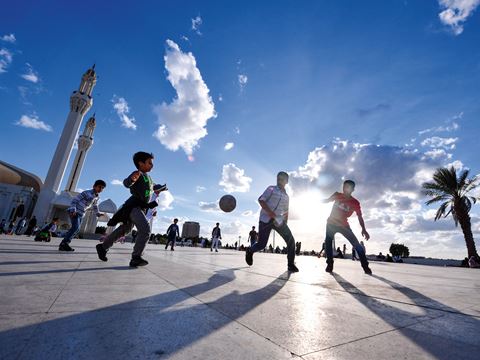
Children Collect Memories of Football That Shape Their Souls
Children Learn Life Lessons Through the Joy of Football