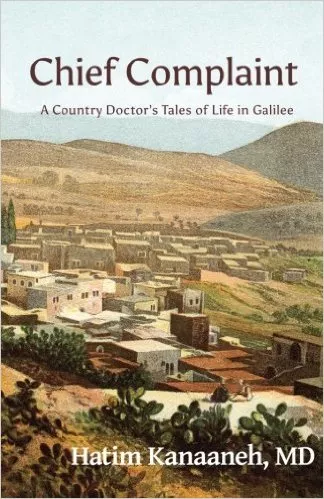
Chief Complaint: A Country Doctor's Tales of Life in Galilee
Piney Kesting
Hatim Kanaaneh
Just World Books, 978-1-93598-234-0, $20.99 pb.
Author Hatim Kanaaneh was 11 in 1948 when Palestinians who remained behind during the Nakba (Diaspora) became reluctant citizens of the newly formed state of Israel. Twenty-two years later, with degrees from Harvard University, Kanaaneh returned to his village of Arrabeh in Galilee as its first Western-trained physician. Chief Complaint is a collection of fictionalized vignettes based on cases during his half-century of practicing medicine. “I have set myself the task of telling the story of my village to the world, in the hope of breaking the imposed silence and isolation of the Palestinian community in Israel,” he explains. “Insomnia,” for example, tells the story of Yunis, an elderly exile who returns for the first time to visit the ruins of his village of Lubya and recover the coffeepots his wife buried in a neighbor’s yard as they fled in 1948. Yunis’s grandson Fadi wants the heirloom pots sent to him in Berlin, but in the end it is agreed that they remain in Galilee. “It was enough that they had been exiled from their homeland,“ Fadi tells his grandfather, saying they “will stay and anchor his descendants as they ply the stormy seas of their diaspora.” Kanaaneh writes with the wisdom of a healer who knows that his senior patients often came for more than medical advice—and he knew them as more than patients, too.
You may also be interested in...

Architecture and Affect in the Middle Ages—Our Book Review
Author Paul Binski takes readers on a multisensory tour of medieval cathedrals across Europe.
Saeb Eigner Brings Readers Closer to the Artists of the Middle East
Artists of the Middle East emphasizes the breadth of an artistic community that spans nations, styles and mediums while challenging the assumption that these artists are at once the same as each other and different from those in the West.