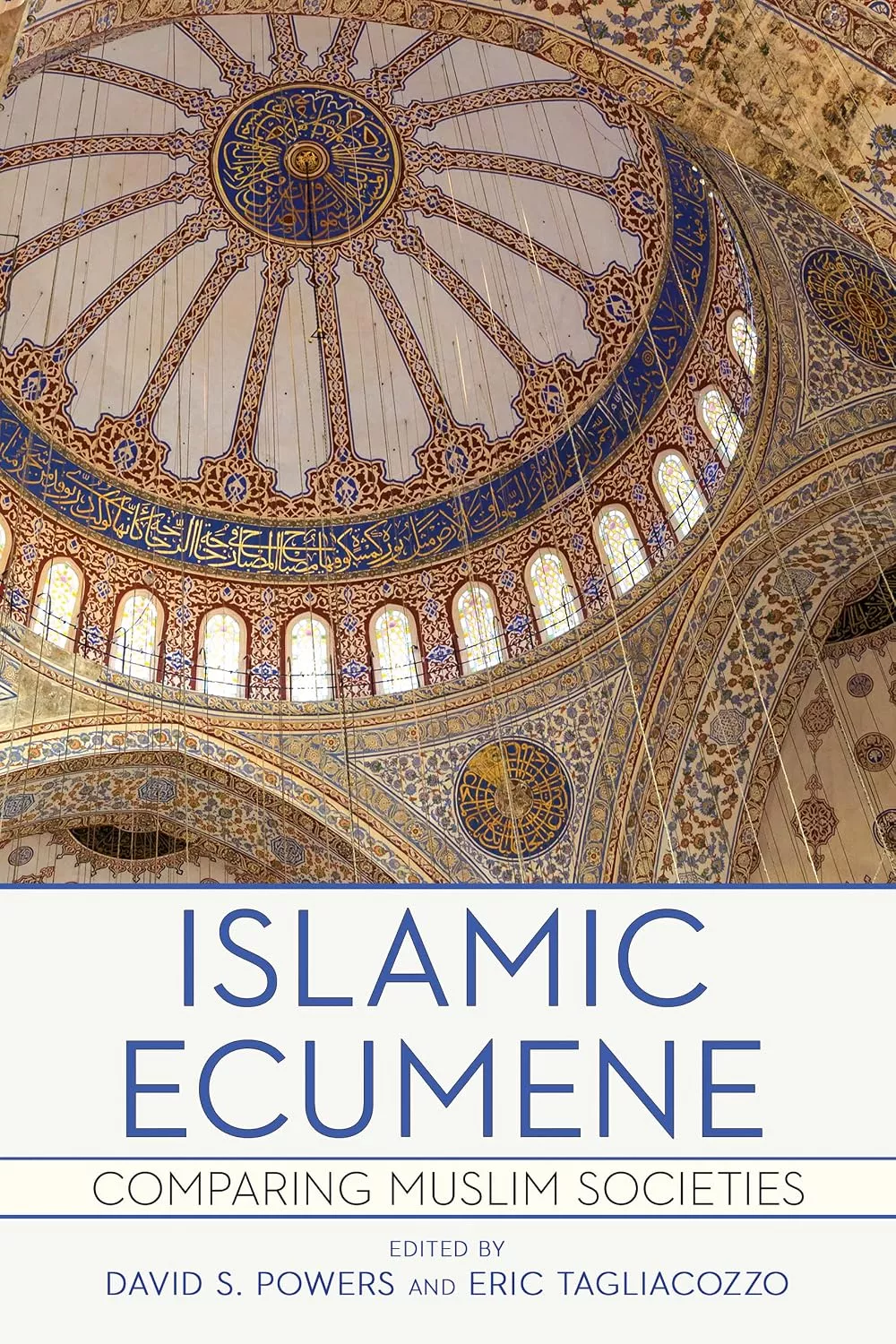
Essay Collection Islamic Ecumene Reveals Complexity—Our Book Review
Adilzhan Anay
Islamic Ecumene: Comparing Muslim Societies
David S. Powers and Eric Tagliacozzo, eds., Cornell University Press, 2023.
Islamic Ecumene opens with a firm refusal: Islam cannot be contained within a single geography, tradition or political form. Edited by David S. Powers and Eric Tagliacozzo, both professors of history at Cornell University, this collection of 22 essays advances a simple yet consequential claim. The Muslim world is not a unified or monolithic civilization but rather a historically layered ecumene shaped by centuries of regional choice, encounter, translation and experience. This insistence that Islamic life has always emerged not through sameness but through plurality binds this volume together.
“By transcending geographic and temporal boundaries, we hope to offer a longer and broader view of the ties that bind Muslim societies.”
Powers and Tagliacozzo, both long devoted to the study of Islamic history and culture, bring together scholars from historical, anthropological and political thought. Rather than narrowly define Islam, the editors allow the collection to examine how Muslims across time and place understood themselves and one another. The collection resists the reductive narratives that dominate contemporary political discourse and mainstream media portrayals.
Three essays in particular stand out for how effectively each illuminates a different angle of the Islamic “ecumene”—intellectual hybridity, the trauma of colonial bureaucracy and the agency of institutional reform.
Historian James Pickett’s study of 19th-century Bukharan madrasas, for example, is essential reading for those seeking to understand cultural fluidity. Pickett questions whether these institutions of modern Uzbekistan can meaningfully be described as “Persian.” While imbued with Persian literary culture, Pickett shows their intellectual foundations rested on Arabic logic and jurisprudence. The convergence of Turkic, Persian and Arab traditions produced a scholarly environment that defies a single civilizational label.
Shifting to the mechanisms of state control, Benjamin Claude Brower’s essay on “name regulation” in Algeria stands out for its chilling analysis of the quieter mechanisms of imperial power. The forced simplification of Muslim names—stripped of familial, tribal and spiritual meaning—appears at first as administrative routine, but Brower reveals it as identity erasure. The historian contends that colonization begins not with gunfire but the filing cabinet, showing how the archive wounds long after violence subsides, reshaping lives across generations.
Finally, Middle East historian Mehmet Darakçıoğlu’s evaluation of the Ottoman Bureau of Translation offers a necessary counter-narrative focused on adaptation rather than erasure. Founded in the early 19th century, the bureau trained officials fluent in French and European political thought. Translation acted as a bridge through which new political concepts seeped into the empire. Darakçıoğlu illustrates how administrative renewal begins on the page before it takes institutional form.
As these essays intersect, a central insight emerges: Muslim societies do not flow as a single river but braids as a world shaped by power, reform, ethics and historical memory. Islamic Ecumene excels in its restraint, favoring close case studies over sweeping theory and allowing complexity to accumulate rather than forcing resolution.
In an age that rewards simplification and loud certainty, this volume offers a rare disciplined invitation to think. It presents Muslim life as dynamic, internally diverse and historically entangled, reminding readers that Islam has always been lived at crossroads.
You may also be interested in...
A Scholarly Look at Football in the Middle East—Our Book Review
This collection, edited by Abdullah Al-Arian, explores the early history and growing influence of football throughout the region.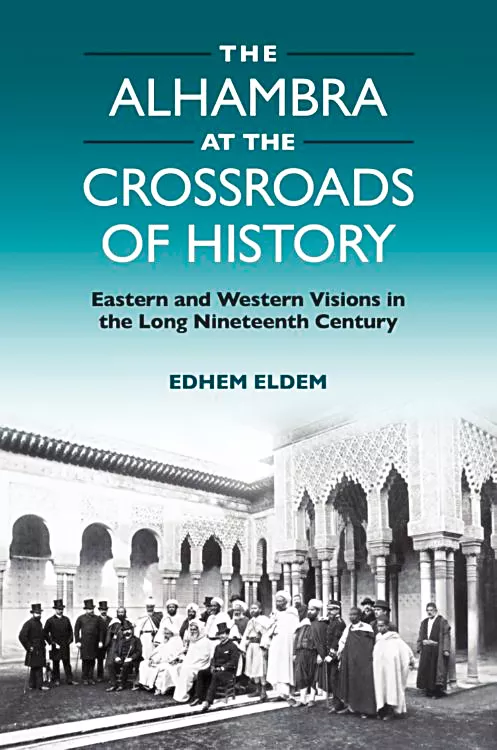
The Alhambra at the Crossroads of History—Our Book Review
The Alhambra at the Crossroads of History shows how the 13th-century Andalusi palace complex in Granada, modern Spain, generates often conflicting meanings at the same time—meanings actively constructed and sometimes misread. Edhem Eldem, an Istanbul-based history professor, traces its role in shaping social and cultural identities across imperial Europe, Arab North Africa and Ottoman Türkiye from the 18th to the early 20th centuries.