Spotlight on Photography: Discover the Marshes of Iraq in a Visual Story by Wilfred Thesiger
“In the Marshes of Iraq” — November/December 1966
November/December 1966
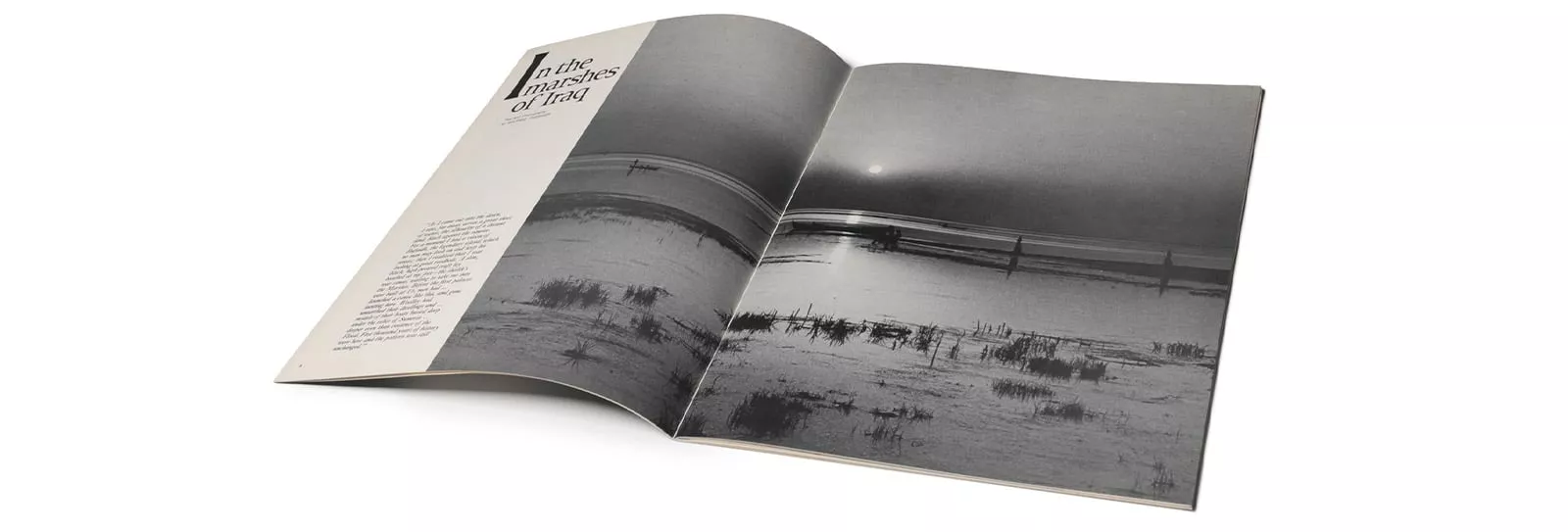
As we celebrate the 75th anniversary of AramcoWorld this year, we are looking back at some of the memorable and visual story spreads in the magazine. In the past, AramcoWorld has written about the cultural impact of a simple reed hut like those in the marshes of Iraq and built recently in Houston, Texas. That journey really began in 1964, with the publishing of Wilfred Thesiger’s book The Marsh Arabs. His travelogue connected the world to a culture and people few had known or experienced. AramcoWorld amplified that connection in the November/December 1966 issue with the story "In the Marshes of Iraq."
“… then I realized that I was looking at great reedbeds. A slim black, high-prowed craft lay beached at my feet—the sheikh’s war canoe, waiting to take me into the Marshes. Before the first palaces were built at Ur, men had … launched a canoe like this and gone hunting here. … Five thousand years of history were here and the pattern was still unchanged.”
— Wilfred Thesiger, The Marsh Arabs
You may also be interested in...

How to Discover Egypt From the Inside Out
Arts
Rather than just telling travelers where to go, the guidebook Egypt: Inside Out by Trevor Naylor offers an inside-out perspective that evokes the experience of being there, inviting readers to embrace an almost meditative travel discipline of slowing down to take in the details and complexities of Egypt, moment by moment.
AramcoWorld: 75 Years of Visual Storytelling Through Photography
Arts
History
Part 2 of our series celebrating AramcoWorld’s 75th anniversary this year highlights “visual vagabonding”—the magazine’s expanded use of vibrant images over the decades to fulfill the mission of cultural connection.
"Duet": Senegalese Double Portrait
Arts
“Duet” comes from the Latin root word duo which means two. The Duet series focuses on double portraits, a tradition in West Africa.