A Conversation With Islamesque Architecture Book Author Diana Darke
In Islamesque Diana Darke argues that Europe’s most celebrated architecture, including the Palermo Cathedral in Sicily, owes its sophistication to cultural exchanges with forgotten Muslim craftsmen.
Historian Diana Darke had spent years puzzling over the zigzag designs that ran around the courtyard of her home in the old city of Damascus, Syria. Her neighbors dismissed it as decorative, but Darke couldn’t shake the feeling they meant something more.
One night, while watching a documentary, she discovered these zigzags were also the ancient Egyptian hieroglyph for water, a pattern that first appeared as early as 4000 BCE and came to symbolize the water springs beneath Damascus itself.
That moment led her on a journey to trace the motif across centuries and continents, from Coptic churches in Egypt to the dazzling facades of Palermo Cathedral in Sicily, where Arab craftsmen carved geometric precision and symbolic meaning into stone. In her latest book, Islamesque: The Forgotten Craftsmen Who Built Europe’s Medieval Monuments, she argues that Europe’s most celebrated architecture owes its sophistication to these cultural exchanges—hidden in plain sight, waiting to be read like the zigzags in her own Damascus courtyard.
Courtesy of Diana Darke; Top : Tara Todras-Whitehill
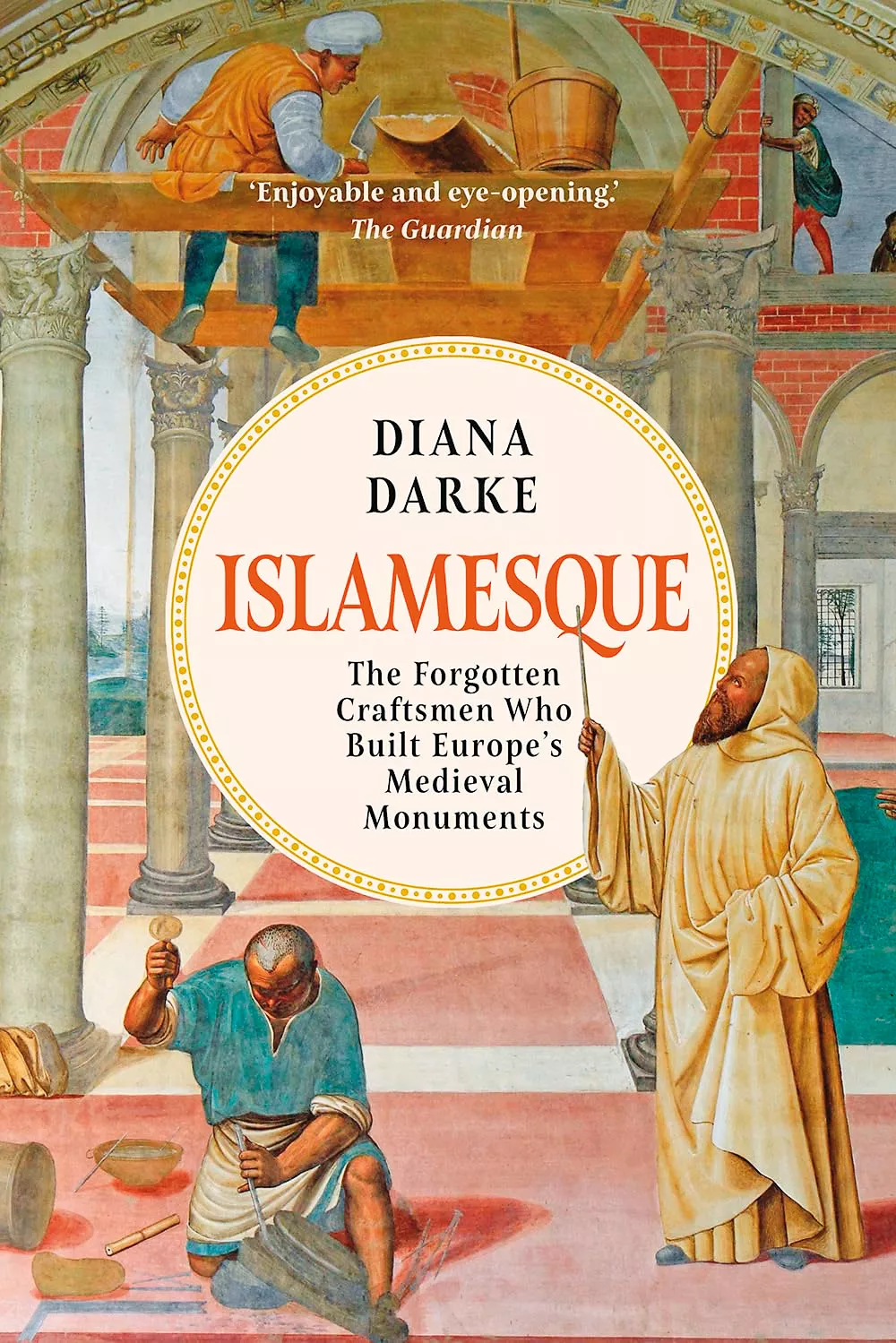
ISLAMESQUE: The Forgotten Craftsmen Who Built Europe’s Medieval Monuments Diana Darke. Hurst Publishers, 2024.
You write in Islamesque of how many of Europe’s architectural masterpieces are rich with Arab influence. So, why choose to highlight the Palermo Cathedral?
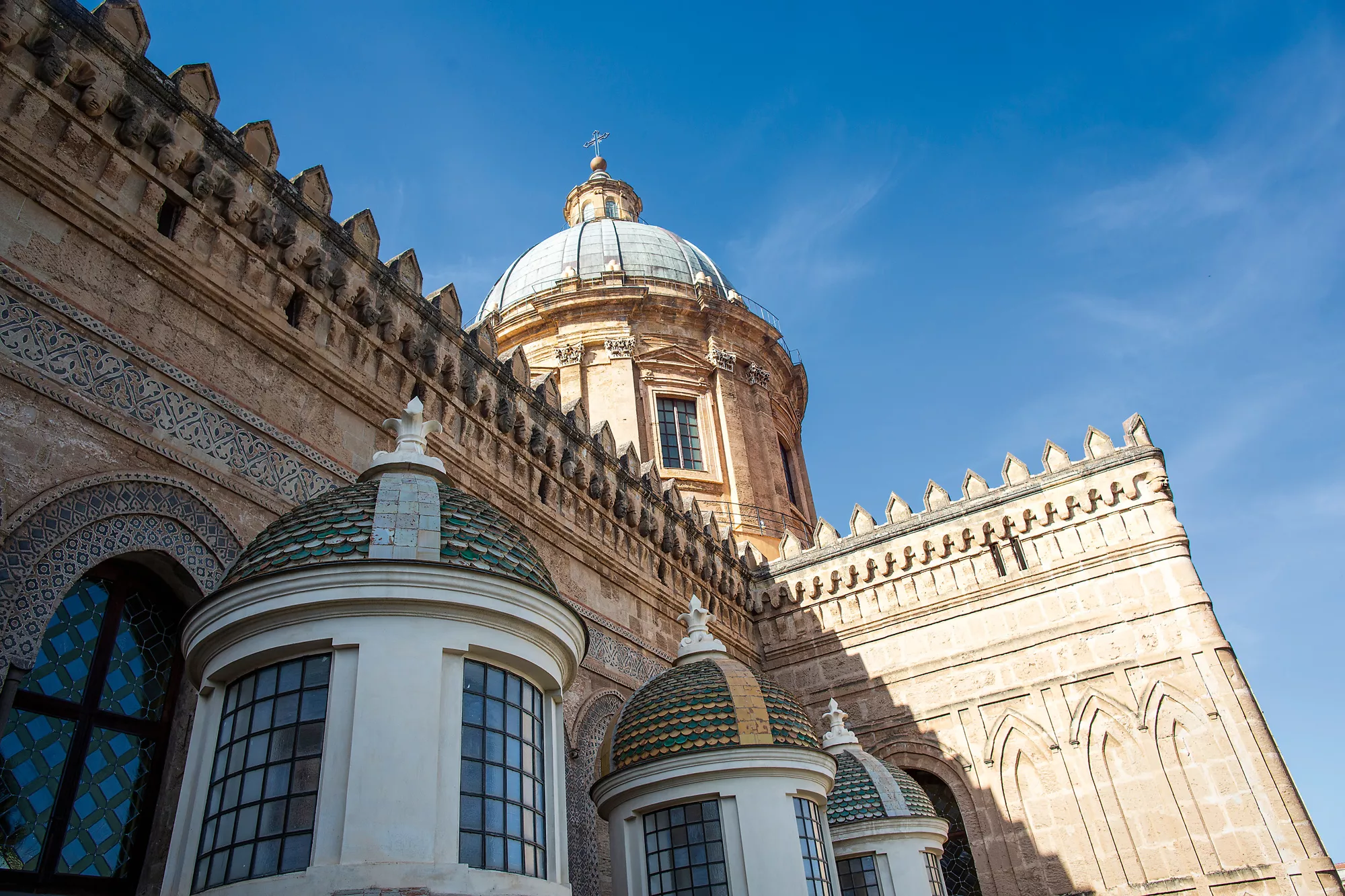
The patterning of the exterior of the Palermo Cathedral at the east end shows a high level of skill. It’s like some immense piece of woven carpet with a taracea inlay, a very specific Islamic skill, where the black lava contrasts with the white limestone, and it makes these black-and-white patterns with eight-pointed stars. The geometry required to make a pattern like that over such a huge surface is just phenomenal. It is not the sort of thing that you learn in just a couple of generations.
Well, it would seem in this case almost 300 years, from the early ninth century CE to well past the second half of the 11th century. You write it took three Arab dynasties—the Aghlabids, the Fatimids and the Kalbids—to transform Sicily’s architectural landscape.
What became very clear to me during my research is that everything with architecture moves very slowly. And the only reason for some new, apparently sudden change is when new craftsmen come in. Even the buildings of Norman Sicily have a continuity from its predecessors because, of course, the Normans hired local Muslim craftsmen. They were basically between 150 and 200 years ahead of their time, and they dominated masonry, carpentry and metalwork, the three essential components of construction.
But then the Norman conquest began in 1061 CE and the destruction of what was mostly built preceding it. Do you find it ironic that they then turned around and hired Arab craftsmen, engineers and masons to rebuild everything?
My goodness, the quality of the palaces and the mosques that the Normans saw probably took their breath away in terms of sheer beauty of esthetics. They realized there was nothing close that their own craftsmen could produce. People think about Gothic architecture and assume it was completely inspired from Christian craftsmen. And what I’m trying to prove is that they only learnt their craft from the Muslims who came before them.
And yet most of the credit for these architectural marvels gets misplaced throughout history. How does that happen?
When Sicily’s new rulers saw the extent of the level of skill that the Muslims had over their own craftsmen, this inevitably generated a little bit of a rivalry. So, over the course of a couple of centuries, as Christian craftsmen inherited these skills, they set up professional guilds from which they excluded all Jews and Muslims. At that point it becomes an exercise in creating a monopoly.
So, what does this mean for average Sicilians’ understanding of the Arab influence that surrounds them today?
The average Sicilian is probably not very aware of it. There are pockets of academia that are aware of it—like Giuseppe Bellafiore, a professor of architecture [in] Palermo that I quote extensively from. He produced an incredible book on the Palermo Cathedral. Really forensic, examining every little thing about it. But how many people have read that book? A handful, probably. When I borrowed it from the London library, it hadn’t been taken out for years.
Tara Todras-Whitehill

You may also be interested in...
What It Takes to Feel Ramadan Again
Arts
Creative minds rebuild Ramadan traditions through deliberate acts of memory and care.
From Leather to Labs: The Science of Football Design
Culture
The ball's continually refined materials and construction affect its behavior, quietly reshaping how the game is played.
Artist Stefania Artusi Khalfi Maps Palermo's Arab Society
Culture
An artist looks past the history books to uncover the hidden landscape of Sicily's capital.