Celebrating Antoni Gaudí, Visionary Architect, 100 Years Later
Spain has designated 2026 as the Year of Gaudí to mark a century since the death of the visionary Catalan architect who drew on Islamic design elements.
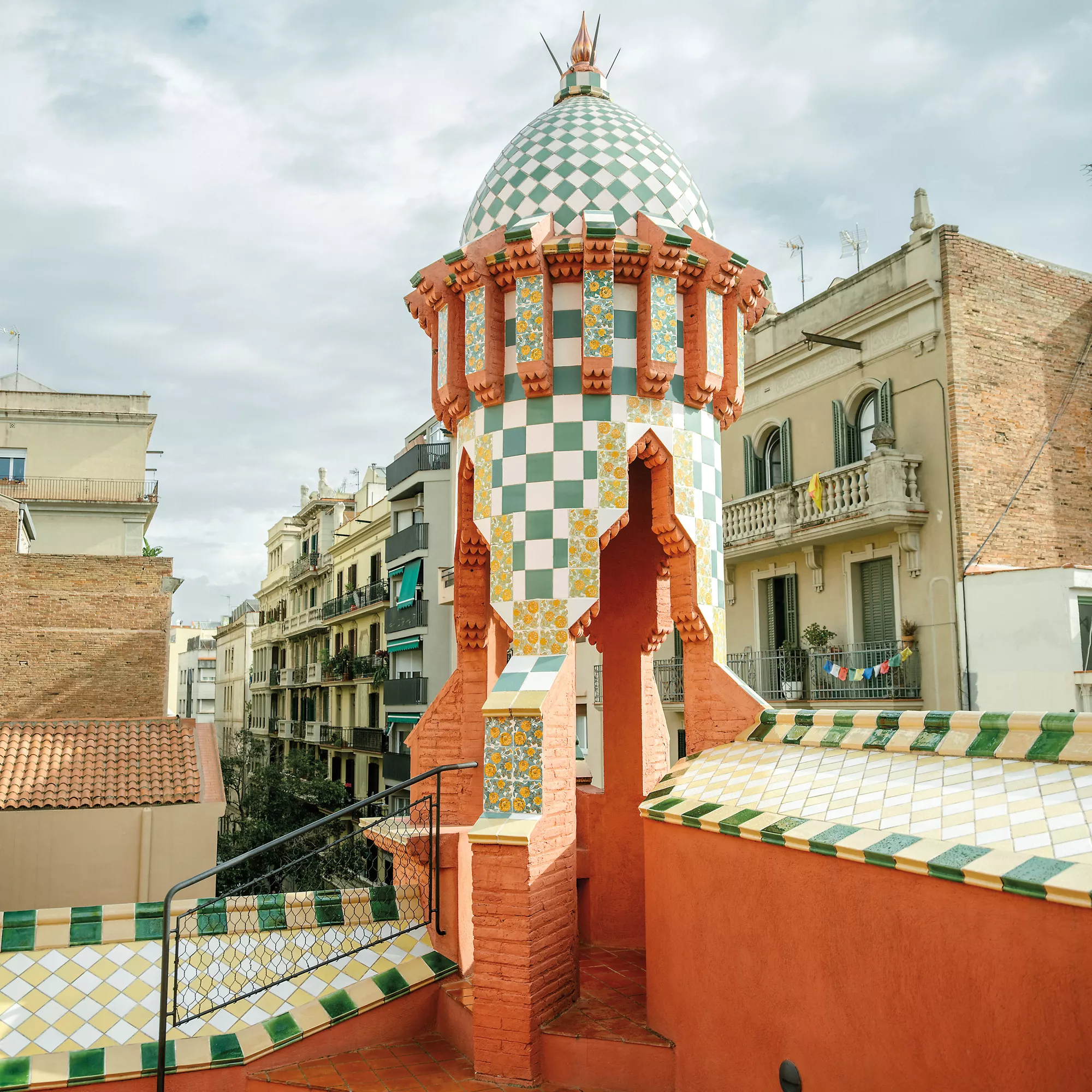
On an ordinary street in Barcelona, an extraordinary building rises from the ground. It is crowned with minaretlike turrets and clad in checkerboards of green and white tiles. The house seems misplaced, like an architectural postcard from beyond Spain's borders.
The building contains echoes of Mudéjar architecture, a distinctive style created by Muslim craftsmen in medieval Spain who wove Islamic artistic techniques into Christian buildings.
Latticework evoking the carved wooden screen known as mashrabiya covers its windows, while the three-dimensional decoration called muqarnas, creating honeycomb-shaped niches, covers a vaulted ceiling.
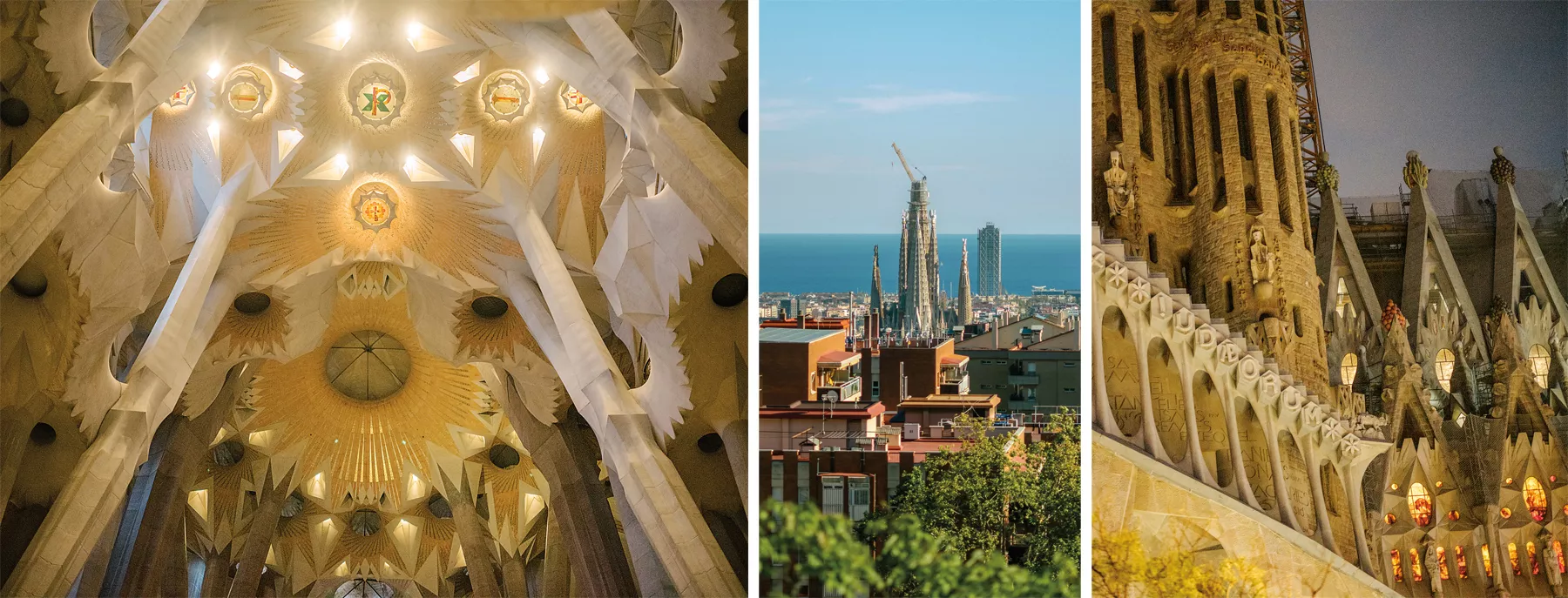
Geometry and history meet in Gaudí’s ambitious Sagrada Família. Basalt, granite and sandstone, not known for their delicate properties, take on ethereal qualities, inside and out. Light pours in through stained-glass windows—changing the way visitors experience the place depending on the time of day. Top Casa Vicens, Catalan architect Antoni Gaudí’s first major commission, shows his early dialogue with Islamic and Mudéjar architecture— geometry, rhythm and ornament shaping the rooftop tower of the landmark in Barcelona, Spain, where Gaudí worked almost exclusively.
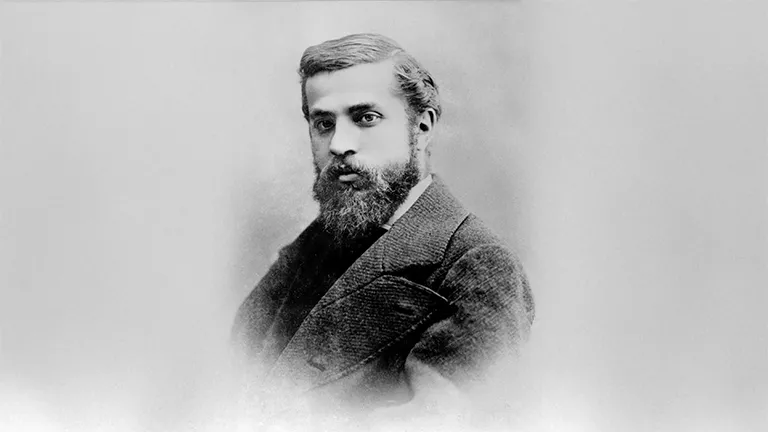
Madman or Genius: Who was Antoni Gaudí?
Antoni Gaudí y Cornet (1852-1926) was a groundbreaking Catalan architect who worked almost entirely in or near Barcelona, Spain.
Early influences: Attributed geometric instinct to father, boilermaker who shaped metal into complex forms. As sickly but curious child, spent time at country house in Ruidoms, on coast south of Barcelona, surrounded by Mediterranean pines, Prades Mountains and seashells, whose forms would surface in his buildings.
Shaping of worldview: Moved at 16 to Barcelona with older brother to pursue education amid Industrial Revolution and La Renaixença, cultural revival that aimed to elevate Catalan language and identity. Fusion of modernity and tradition left lasting impression.
Unconventional student: Clashed with teachers at architecture school but excelled at drawing, geometry and history. Experimented with visionary but unbuilt proposals and inventive furniture designs. Upon graduation in 1878, director of school, Elies Rogent, famously said: “We have either given a diploma to a madman or to a genius.” Opened first architectural studio that year and began career marked by bold blend of art and utility.
Sources: Encyclopedia Britannica, Gaudí Foundation
The building is Casa Vicens, the first major project of Antoni Gaudí, an architect whose name has become synonymous with Barcelona.
Born in 1852, Gaudí is widely considered the father of Modernisme, Catalonia's version of art nouveau.
"The important thing to understand about Gaudí's relationship to Islamic art is that it was part of his search for truth in architecture," said Carlos Canals Roura, founder and honorary president of the Gaudí Foundation.
"He experimented with different styles and influences to create his own methodology. I think that is the genius of Gaudí."
The Gaudí Foundation is celebrating his legacy with a traveling exhibition that uses interactive technology to explore Gaudí's artistic imagination. Starting in Tokyo, the international tour is expected to last several years.
“He was an artist who transcended cultural boundaries, embracing truth and beauty wherever he could find it.”
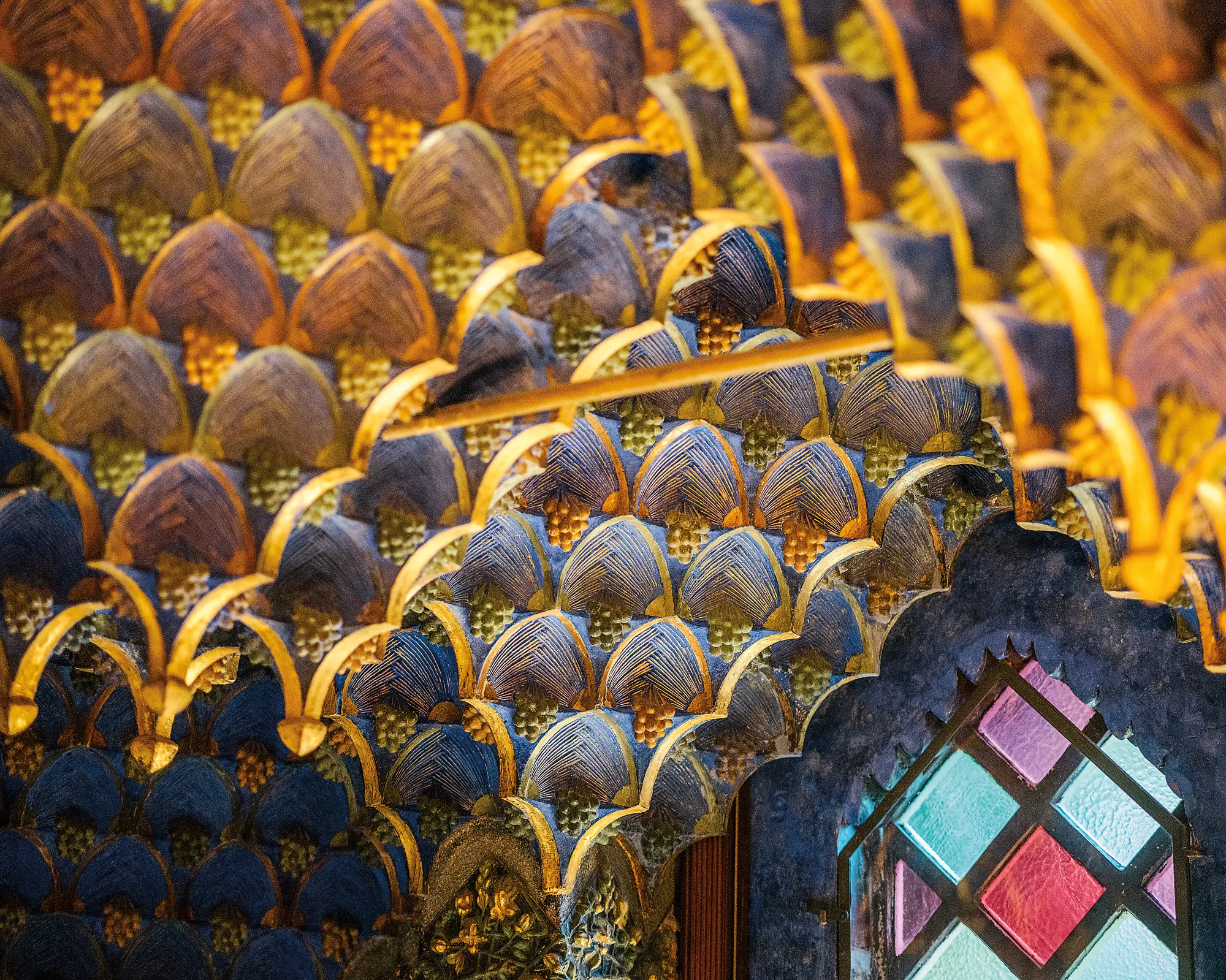
The smoking room of Casa Vicens features a vaulted ceiling with the nichelike Islamic decorative muqarnas painted in lapis-lazuli with gold accents.
Inspiration from the East
As a student at the Barcelona School of Architecture in the 1870s, Gaudí immersed himself in books containing images of Egyptian, Indian and Persian buildings. His early notebooks are full of observations about the Alhambra in Granada, one of the best-preserved palaces of the historical Islamic world.
Orientalism was in vogue in all branches of the arts at the end of the 19th century. But Gaudí did not use Eastern references for exotic flourish.
"I think what Gaudí did really well in his architecture is that his Islamic influences were more complex than just borrowing its forms," said Sofya Abramchuk, former head of design at the Gaudí Foundation who established the Originate Institute, headquartered in Barcelona, to promote creative innovation inspired by Gaudí's work.
"He was an artist who transcended cultural boundaries, embracing truth and beauty wherever he could find it, and integrating all of it into his work in new and unique ways."
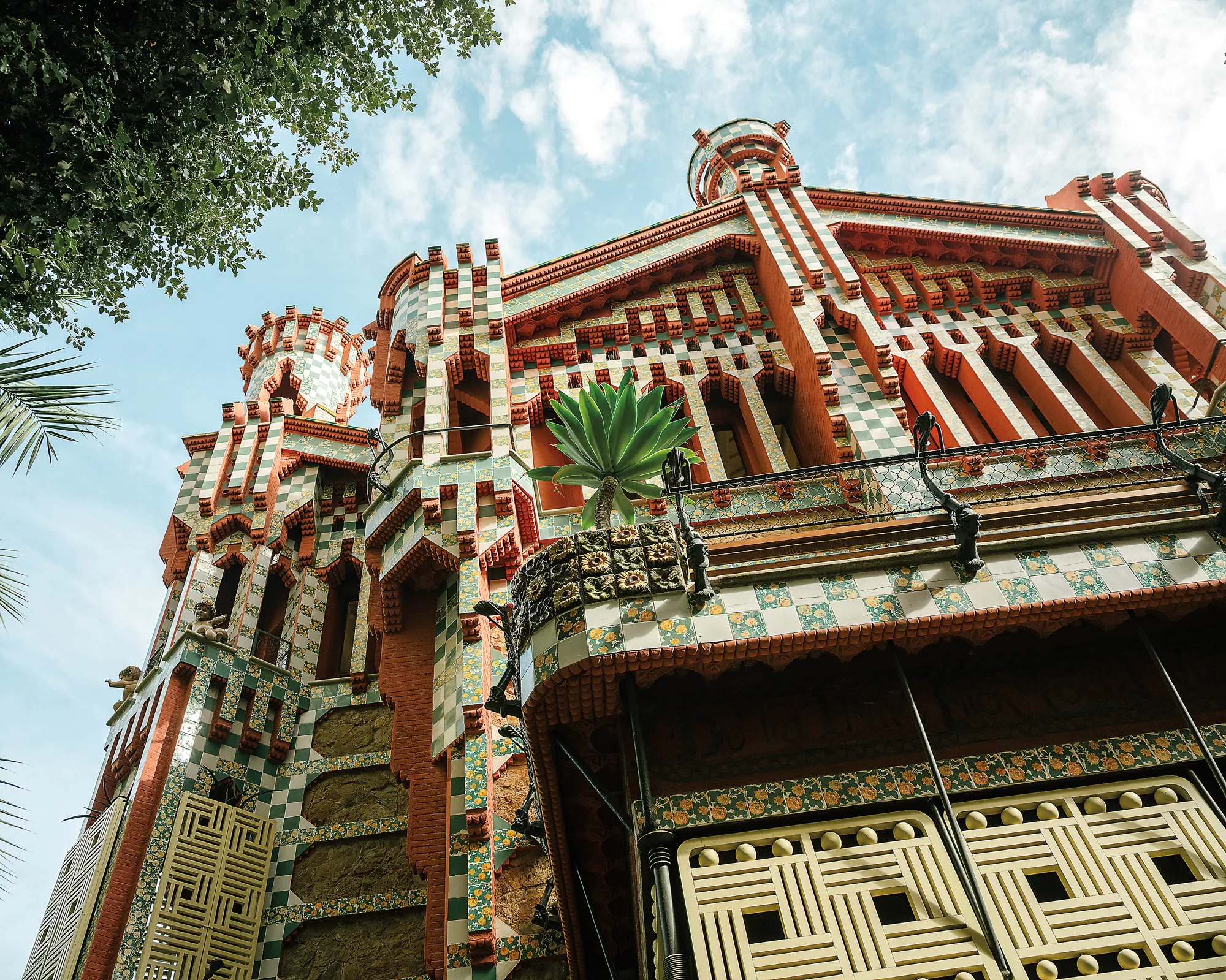
With colorful tile and exposed brick, Casa Vicens differs from Gaudí’s later works because of its straight lines and strong Oriental inspiration.
“Gaudí recognized in Islamic esthetics the same spirituality he sought to re-create in his own spatial concepts.”
Shortly after Casa Vicens, Gaudí took on a commission in the small town of Comillas in northern Spain. The result was El Capricho, a colorful house that mixes architectural styles.
There are clear Islamic overtones in the minaretlike tower, while the pointed arches framing the windows are reminiscent of Gothic architecture. The house is decorated with ceramic tiles that alternate between yellow sunflowers and green leaves.
"Gaudí's obsession was color," said Mireia Freixa, professor emerita at the University of Barcelona. "Ceramic tiling as found in Oriental architecture offered him an easy way to add color to a building. In my view, Orientalism was not an end in itself. It performed an architectural function."
In 1892, Gaudí received a commission that could have placed him directly in the Islamic world: the design for a Catholic church in Tangier, on the northern tip of Morocco. Although the project was never built, its surviving sketches offer a window into Gaudí's approach.
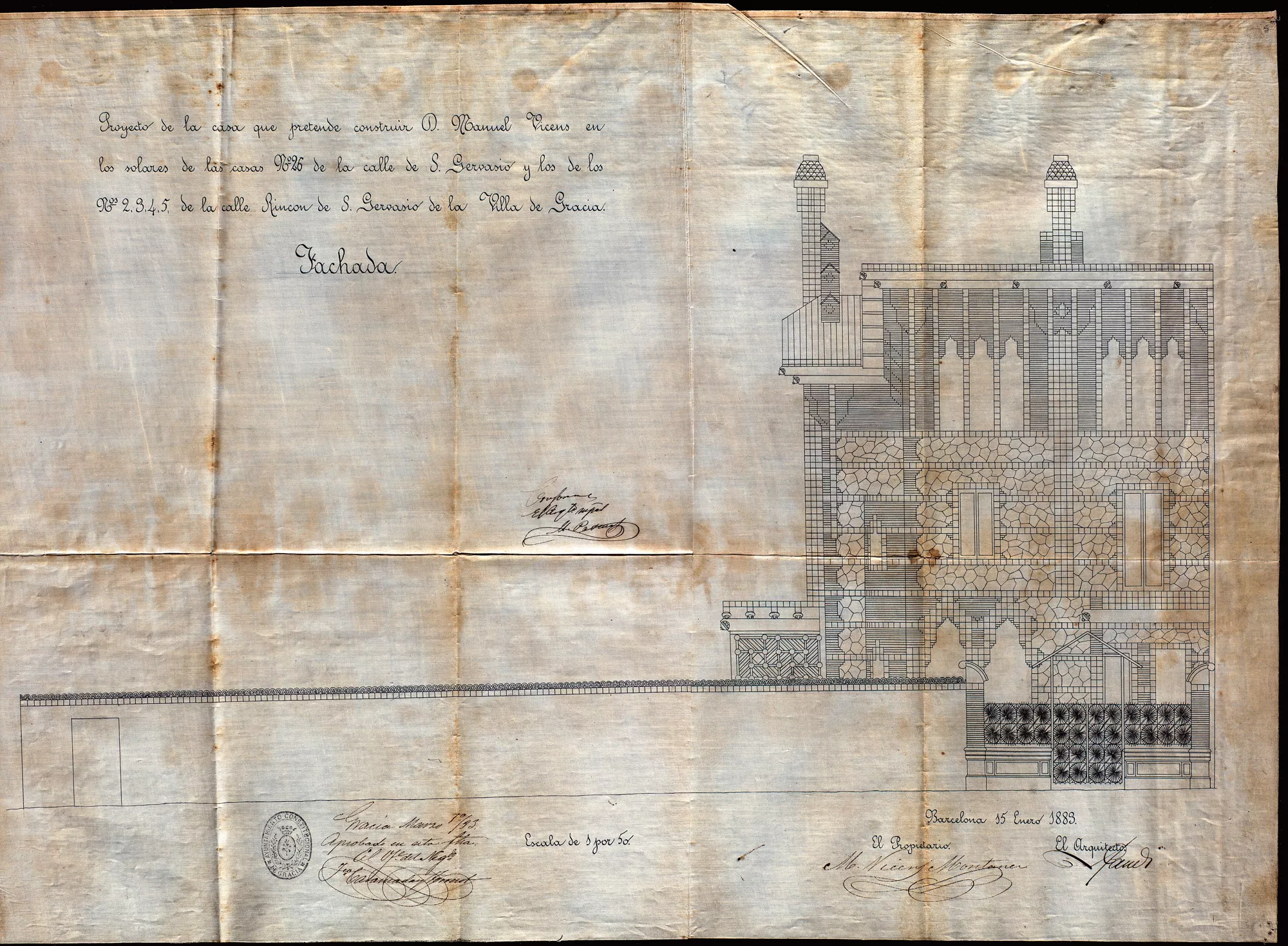
Gaudí signed this rendering of the facade of Casa Vicens on January 15, 1883, marking the beginning of his work on the project, which was completed in 1885.
Antoni Gaudí. Arxiu Municipal del Districte de Gràcia
Far from imposing a European style onto North African soil, Gaudí envisioned a building that harmonized with the local aesthetic environment.
Concepció Peig, a researcher in architectural and artistic heritage, and Manuel Arenas, an architect, studied Gaudí's original drawings in depth, publishing their interpretation of his vision for the church in Gaudí in Tangier.
"The meaning of Gaudí's work lies in his architectural language," said Peig. "Each element combines form, function and metaphor. His architecture appeals to the senses, memory and the imagination. He wanted to create architecture that spoke."
Gaudí's sketches for Tangier depict a building crowned with tall, slender towers that resemble Egyptian dovecotes. Given the Islamic context, these would not have been bell towers. Their purpose, Peig and Arenas concluded, was to help manipulate the light entering the church.
"For Gaudí, it is the play of light that transforms a room into a sacred space," said Arenas. "An external dome allows light to enter, then an internal dome filters the light through perforations. The patterns of light constantly change with the sun. We see the same use of double domes in Islamic architecture."
Although the Tangier church never rose from the ground, the project revealed Gaudí's engagement with the spiritual underpinnings of Islamic design: light as a manifestation of the sacred, geometry as a metaphor for divine order.
"Gaudí saw that Islamic geometry derives from mathematical principles that are also connected to divine unity," said Abramchuk. "He used geometry as a spiritual language, rather than just copying patterns."
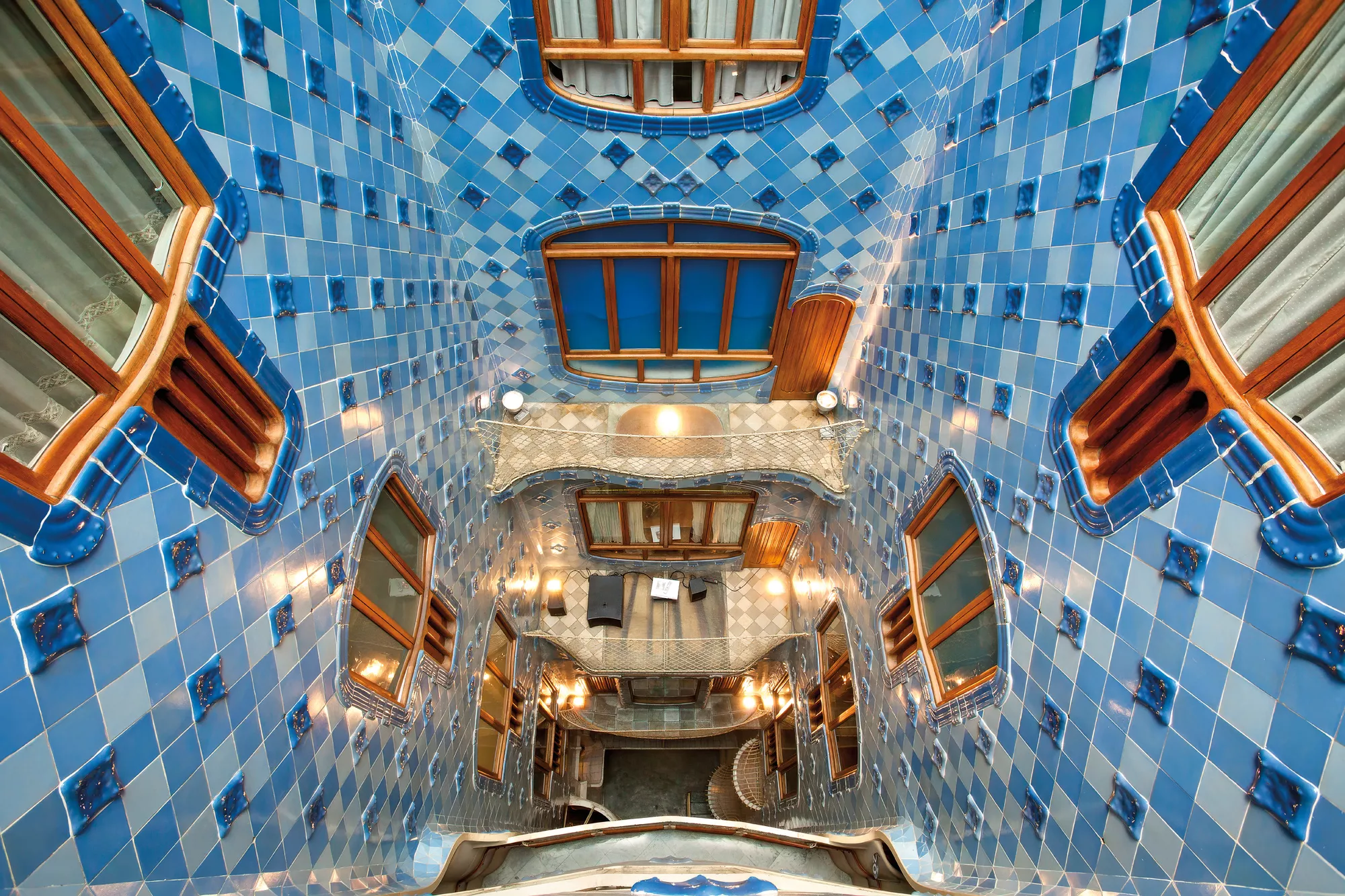
The Patio of Lights at Casa Batlló demonstrates Gaudí’s engagement with Andalusian architectural principles, particularly the use of courtyards, glazed tiles and graduated color to modulate light.
Getty Images/Sylvain Sonnet
Gaudí’s use of form and color
By the turn of the 20th century, Gaudí's style was evolving rapidly. The overtly Islamic references of his early works gave way to more fluid, organic forms.
Casa Batlló is one of Barcelona's best-known landmarks. With its sinuous lines, it feels worlds away from the geometry of Islamic architecture. But Gaudí's use of light and his integration of structure with ornament still speak of his early inspirations.
The house centers around an inner courtyard that channels sunlight and ventilation, much like a riad, or traditional Islamic home. The courtyard walls are covered in square tiles that modulate through different shades of blue, in a design that is quietly ingenious.
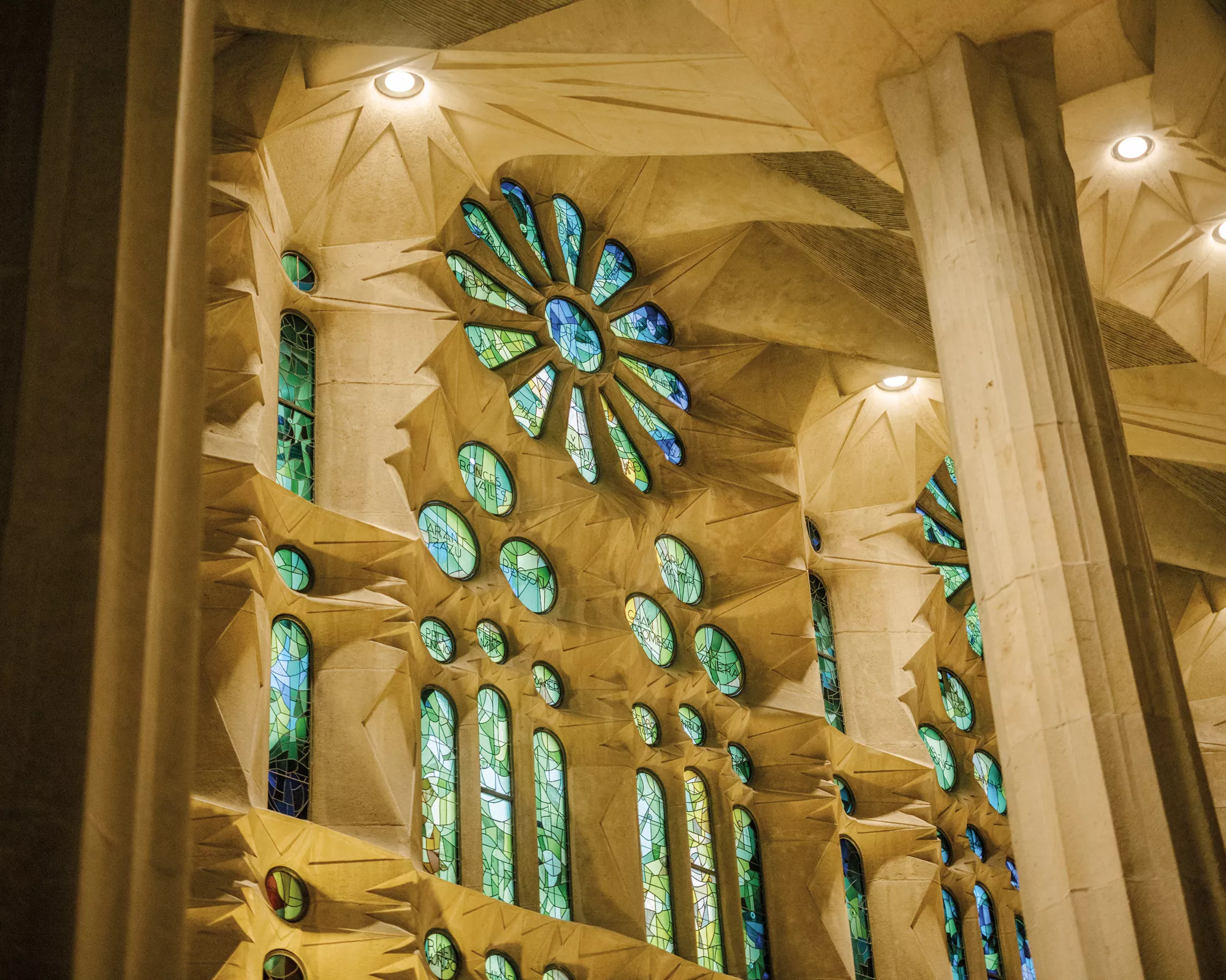
The architect’s approach to stained glass at the Sagrada Família draws on both Gothic architecture and Islamic art, where color and light are treated as immersive, spiritual forces.
Gaudí, 100 Years Later
A century after his passing, Barcelona and the rest of the world see architect Antoni Gaudí as a bridge between art nouveau and modern expressive architecture. In an era of industrialization and mass production, he prized craftsmanship.
Number of UNESCO World Heritage Sites: 7, including the Sagrada Família, Spain’s most visited monument and in whose crypt he is buried. Still unfinished.
Known for: Adapting designs to different climates, landscapes and historical contexts while maintaining distinctive style and vision.
Sphere of influence: Influenced contemporaries and later generations including Portuguese Pritzker laureate Álvaro Siza, Japanese architect and artist Von Jour Caux (aka Toshiro Tanaka) and Canadian American postmodern architect Frank Gehry as well as urban planners and designers.
Sources: Gaudí Foundation, UNESCO World Heritage Centre, RTF (Rethinking the Future)
"Gaudí used dark blue tiles at the top and progressively lighter blue as you go down, until the lowest tiles are white," said Judith Urbano, associate professor at the International University of Catalonia. "Likewise, the windows at the top are small and gradually get bigger as you descend. This is because Gaudí wanted to create more or less uniform light throughout the building."
Beneath the roof, Gaudí created a vaulted attic notable for its series of white catenary arches that have been compared to a ribcage.
"In Arabian architecture you find horseshoe arches and lobed arches," said Urbano.
"Gaudí innovated by using the catenary arch, the shape a chain forms when hanging under its own weight. He loved this arch because gravity, nature itself, dictates the shape."
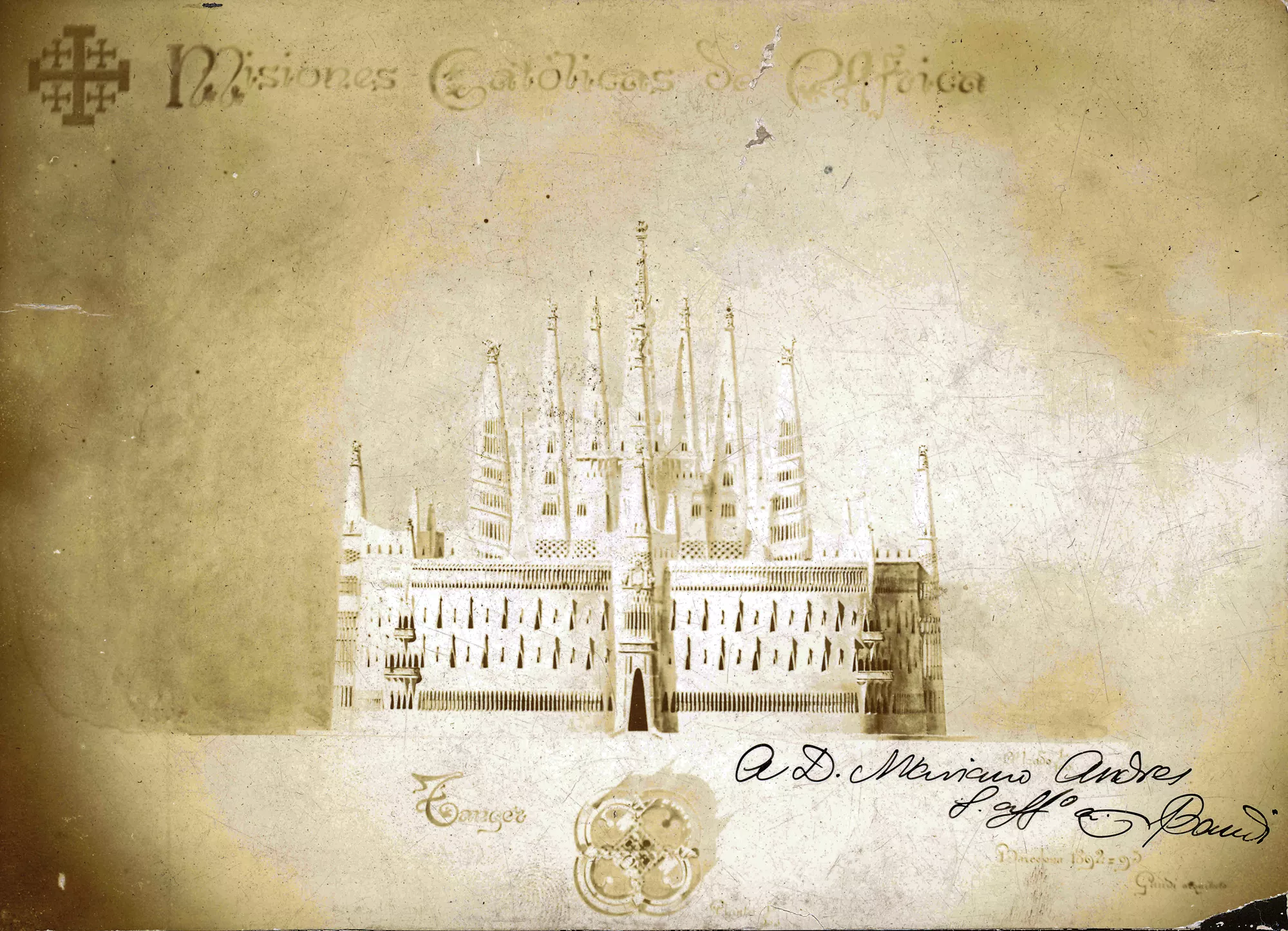
An 1892-1893 drawing depicts the facade of Gaudí’s Tangier, Morocco, project—one ultimately unrealized.
Peig and Arenas, Gaudí en Tanger
Casa Batlló's facade is covered with a mosaic of shattered ceramic, a technique known as trencadís. These tile patterns have been compared to zillij, the geometric mosaics found on Moroccan walls and fountains.
Whereas zillij relies on precision-cut pieces, trencadís embraces irregularity. But both turn small fragments into shimmering patterns that play with light and shadow.
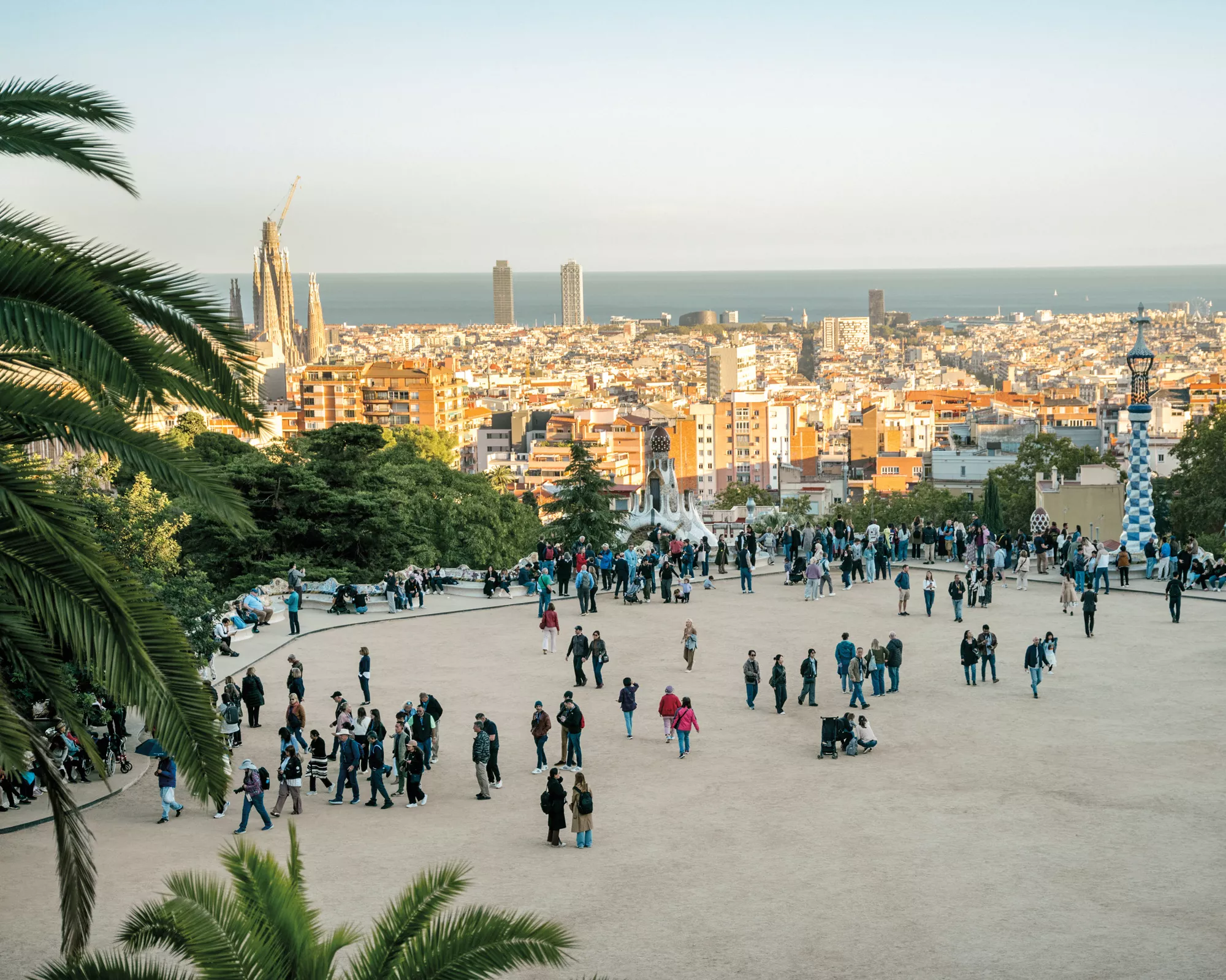
Another famous Gaudí landmark—Park Güell—stretches over a hillside overlooking Barcelona. In the trencadís mosaics that decorate its various structures, Gaudí and his collaborator, Josep Maria Jujol, gave free rein to their creative imaginations.
A long serpentine bench undulates around the main terrace. It is covered with abstract, seemingly random trencadís patterns that combine nature, geometry and hidden symbols.
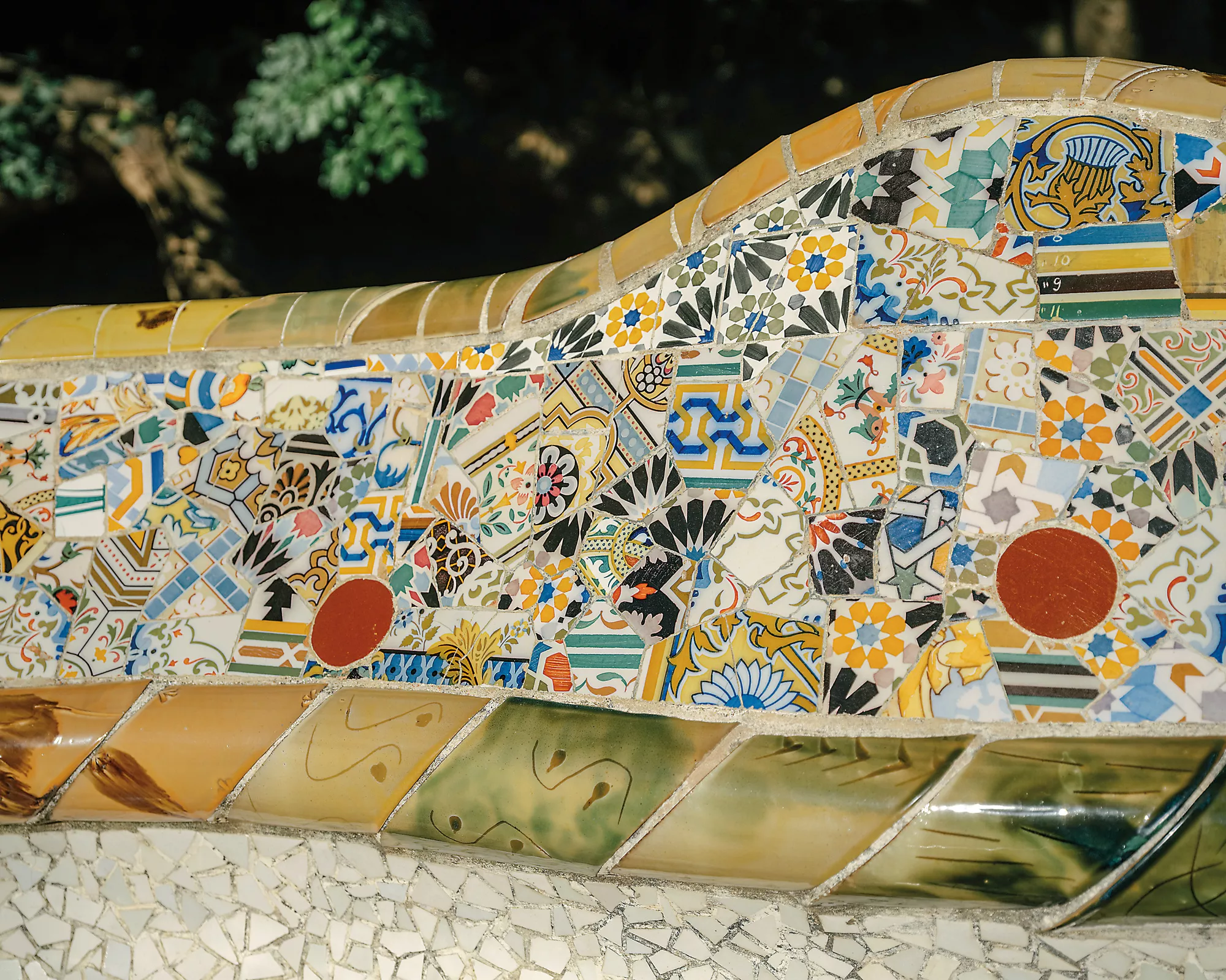
A serpentine bench, above, curves around the main terrace of Park Güell, below, another famous Gaudí landmark in Barcelona. The bench’s surface is clad in trencadís, mosaics with abstract arrangements.
Architecture master’s final project
In central Barcelona, a jagged cluster of spires pierces the sky, flanked by even taller cranes. The Sagrada Família—Gaudí's final project—has been under construction since 1882 for a mix of historical, political and economic reasons, as well as the need for highly skilled artisans to implement his ambitious vision. A large section of the central tower was lifted into place in October 2025, making it the tallest church in the world.
Near the top of the spires, the words Hosanna and Excelsis are spelled out in white ceramic tiles. The letters are arranged vertically and increase in size the higher up they go, an optical adjustment that ensures they read evenly from ground level.
"In Islamic architecture, you often see calligraphy, invocations, on the walls," said Joan Aicart, an author and historian. "Such inscriptions are not very common in Christian architecture. But Gaudí put them on the towers of the Sagrada Família."
When Gaudí inherited the project in 1883, the foundation of a Gothic church was already in place. But the rest—the unique structure, the airy geometry, the manipulation of light—belonged to his own architectural vision.
Inside, gently slanting columns of basalt, granite and sandstone branch out like trees, creating a structural forest that supports and distributes the weight of the building. Light pours in through stained glass windows in a carefully orchestrated dance: blues and greens in the morning, golden tones at sunset.
"Gaudí recognized in Islamic esthetics the same spirituality he sought to re-create in his own spatial concepts," said Diana Darke, a Middle East cultural historian and author of Stealing From the Saracens and Islamesque.
"He was inspired by the relationship between nature and the divine that he saw in Islamic art and architecture, sensing God in the same spatial uncertainties, the same interplay between light and shadow."
In addition to architecture, Gaudí is remembered for creative contributions to the design of gardens, sculpture and other decorative arts.
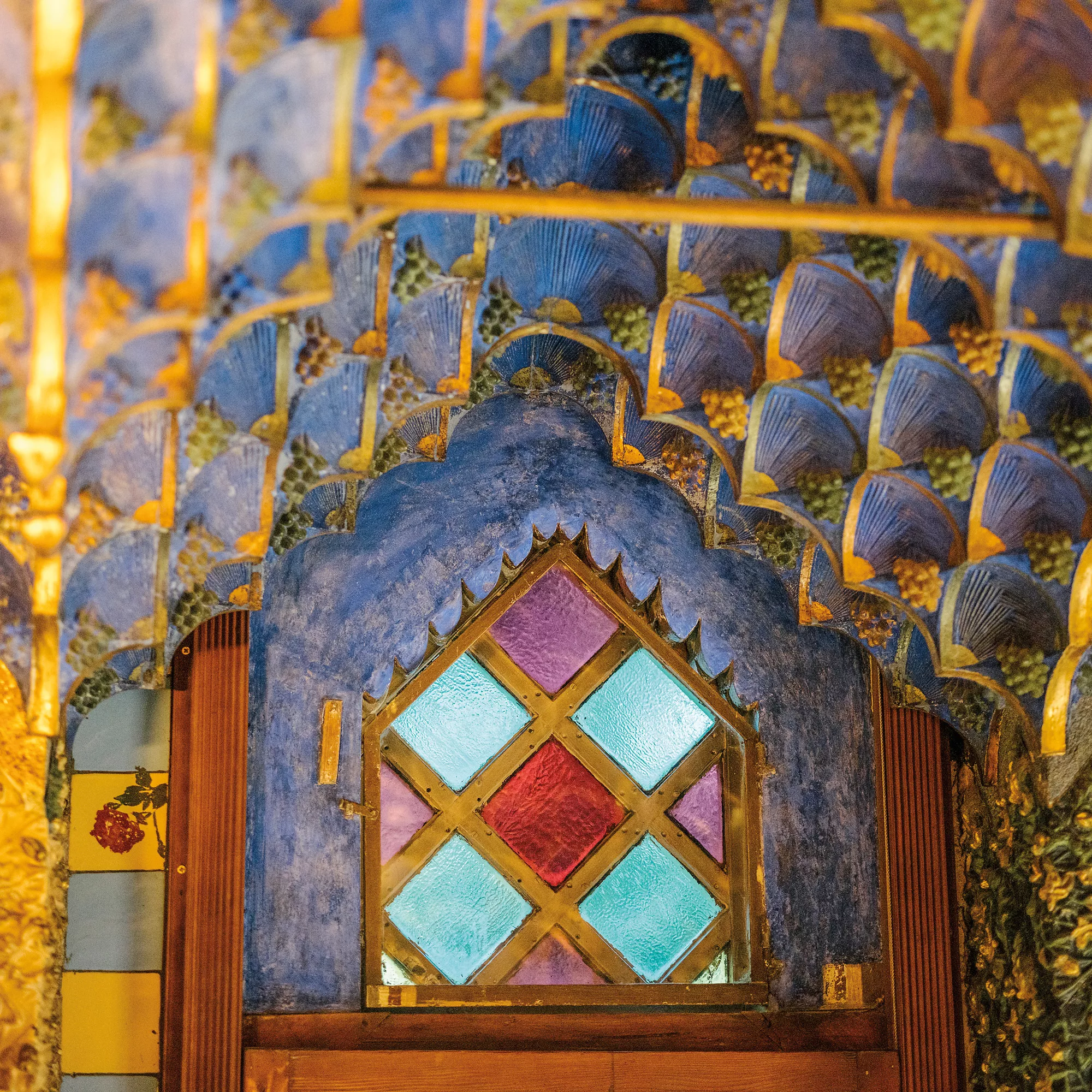
Another view of Casa Vicens, Gaudí’s first major project.
As the Sagrada Família rises toward completion, it carries echoes of a lifetime fascination with the Islamic world: the arches of Andalusi palaces, the filtered light of mosques, the imagined church spires of Tangier.
Gaudí's genius lay in his ability to take inspiration from Islamic architecture, interweaving it with other influences, to create a style unmistakably his own.
His buildings are not only world-famous landmarks of Barcelona. They are the embodiment of a long architectural dialogue between cultures, written in color, light and stone.
About the Author
Jacky Rowland
Based in London and Paris, Jacky Rowland is an actor, playwright and broadcaster who writes about art, theatre, music and culture. She is a former correspondent for the British Broadcasting Corporation and Aljazeera English.
Matthieu Paley
Photojournalist Matthieu Paley specializes in documenting people and regions that are often misrepresented and is committed to issues relating to diminishing cultures and the environment. He is a regular contributor for National Geographic.
You may also be interested in...
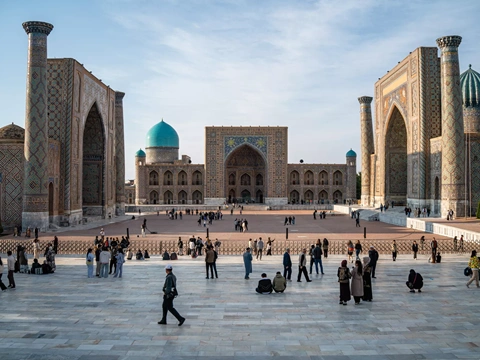
Inside the Fight To Preserve Samarkand’s Ancient Wonders
With earthquakes, weather, tourism and time threatening some of the world's most celebrated Islamic architecture, restorers ensure that the knowledge behind the monuments survives alongside the buildings themselves.
Chef Shane Delia’s Rosewater Sutlaç With Pistachio Crumble
Food
Chef and restaurateur Shane Delia re-creates a rice-and-milk pudding he discovered along Türkiye’s Black Sea coast, one of many sutlaç found on menus in the region; this recipe gets additional texture from a pistachio crumble.
Journalist Leyla Hamed Finds Her Voice in Football's Human Stories
Moroccan Spanish journalist Leyla Hamed has built a career telling the human stories inside football, the world's largest sport.