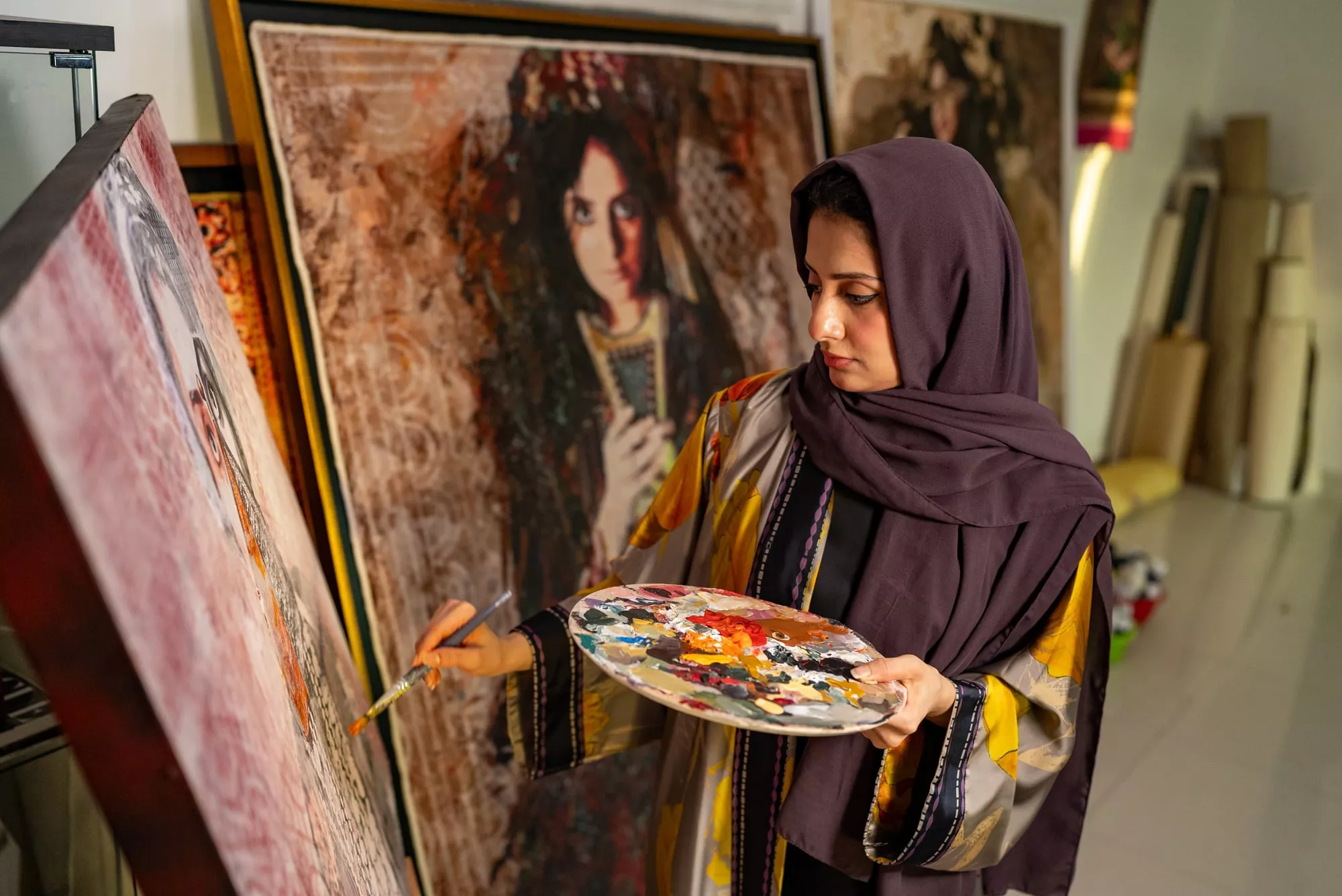
Fatimah Al-Nemer: Art Beyond Esthetics
Saudi Arabian visual artist Fatimah Al-Nemer's contemporary pieces place women at the center of an exploration of identity and heritage.
6 min
Written by Sayed Ahmed Ridha Photographed by Shereen Rafe'e
Editor's note: This story is translated from its original publication by Al-Qafilah, an Aramco magazine covering literature, arts and science.
Since childhood, visual artist Fatimah Al-Nemer has found in drawing a space that transcends the bounds of hobby to become "a tool for survival."
She began with black and white, moving toward light and calligraphy before making the image of the woman the central theme of her work. Her first encounter with the canvas was infused with emotion mixed with a higher awareness.
"I felt I was breathing through the painting," recalls Al-Nemer, who was born in Qatif in Saudi Arabia's Eastern Province, "and that it gave me another language to express myself."
This early awareness later guided her experience and deepened over time, allowing her artistic practice to exceed esthetics to become an expression of her intellectual and life visions blended into the artwork itself.
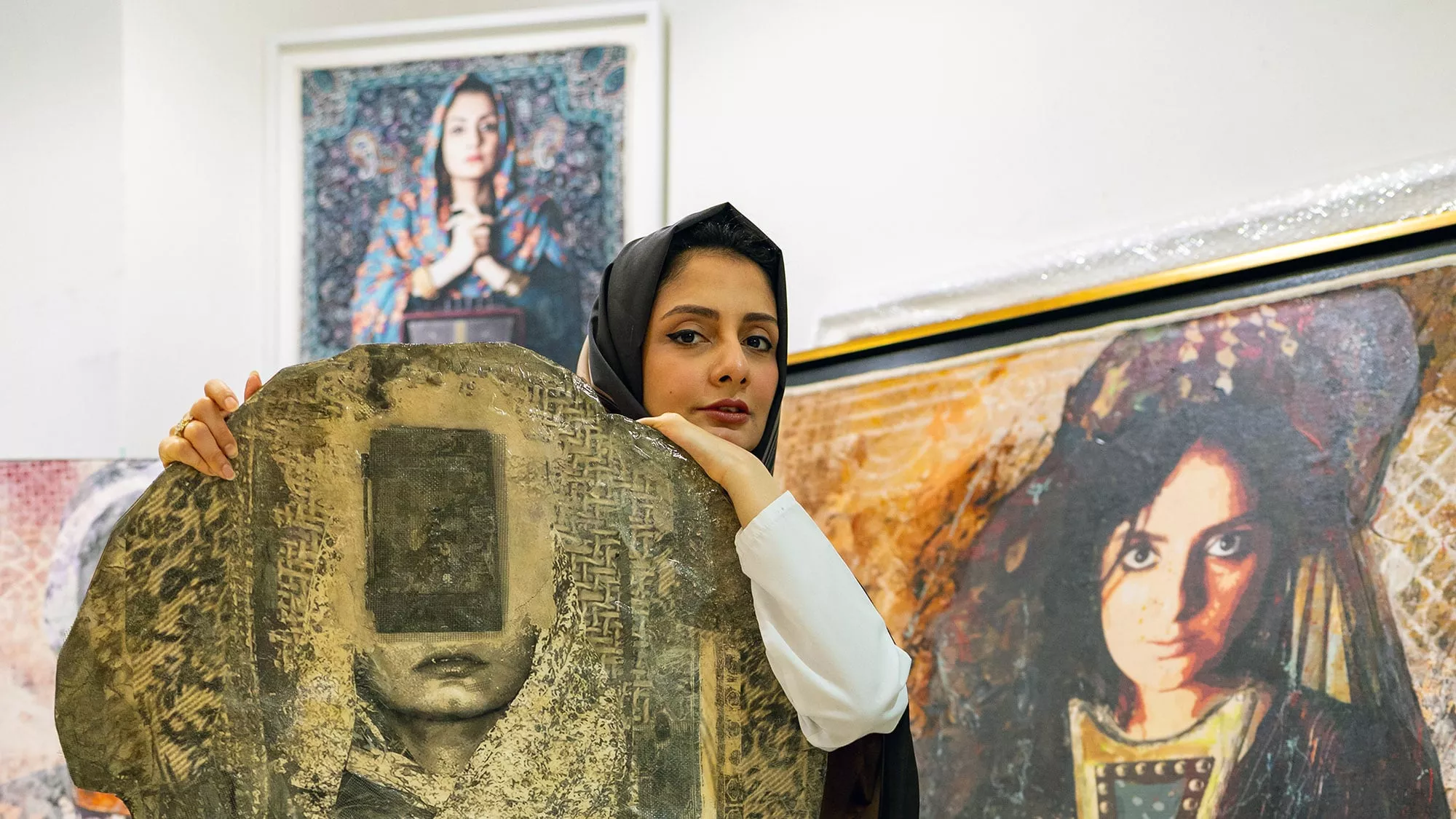
Visual artist Fatimah Al-Nemer explores questions of "identity, womanhood, humankind, place and the body's memory."
Al-Nemer fell in love with art from her earliest moments with the brush. This passion evolved into a deeply rooted concept within her creative structure, enriched through her travels and exposure to multiple cultures that shaped a stylistic wealth visible across her work.
Through her paintings, folk references intersect with rituals and practices, intertwining with memory and the body to form a symbolic visual language. This language established a strong presence that began in the Gulf art scene, connected to the Arab cultural fabric and expanded toward global horizons.
The Identity Question, A Never-Ending Search
At an artist's early stages, a question arises: What is the founding moment when art shifted from a fleeting passion into a professional destiny that charts life's course?
Reflecting today, having accumulated experience and heightened awareness, Al-Nemer reveals that an existential question consumed the first work she considered mature: "Who am I within this dense legacy of memory and tradition?"
That question stuck with her but didn't stay there. It expanded into an open space "questions identity, womanhood, humankind, place and the body's memory through multiple mediums."
This self-examination became the key to Al-Nemer's rediscovering her formative awareness.
"My family gave me my roots and identity, and 'woman' was my first mirror: my mother and grandmother."
She places special importance on the stories she heard, as they shaped her worldview. The place itself became foundational to memory.
"It planted in me a rich visual memory," she says: "folk ornaments, sea colors and the scents of the Eastern Province cities that cling to memory."
Additionally, popular culture, with its symbols and legends, provided material on which she still draws:
"It supplied me with symbols and stories I invoke in my works to narrate our identity to a global audience in a way that reflects the depth of our experience and history."
Women Are a Key to Deciphering History and Legends
Al-Nemer summons these symbols to build an artistic path where visual and critical elements intertwine and the local meets the universal.
Women embody an esthetic inquiry into their existence within a social and cultural context. For Al-Nemer, the woman is not a passing figure in Gulf narratives but rather the memory and identity of the place:
"My works declare that women are not transient—they are a living identity and a source of pride," she explains.
Al-Nemer also reframes existence visually through the search for buried memory, folktales, rituals and heritage to reconstruct the narrative in contemporary artistic form:
"In the presence of the woman, I draw strength, living identity, story, and an artistic language that reveals the depth of our culture and the beauty of our heritage."
Social critique appears subtly through Al-Nemer's esthetics.
"My criticism is not stated directly—it seeps through beauty. I rely on calligraphy, ornamentation and local materials while infusing them with questions about women and identity."
Thus, her work balances depth without becoming either direct ideological critique or empty decoration.
Al-Nemer does not classify her art as strictly feminist but as a human project:
Women in my work are not a separate subject but a key to decoding history, stories and rituals that shape our collective consciousness."
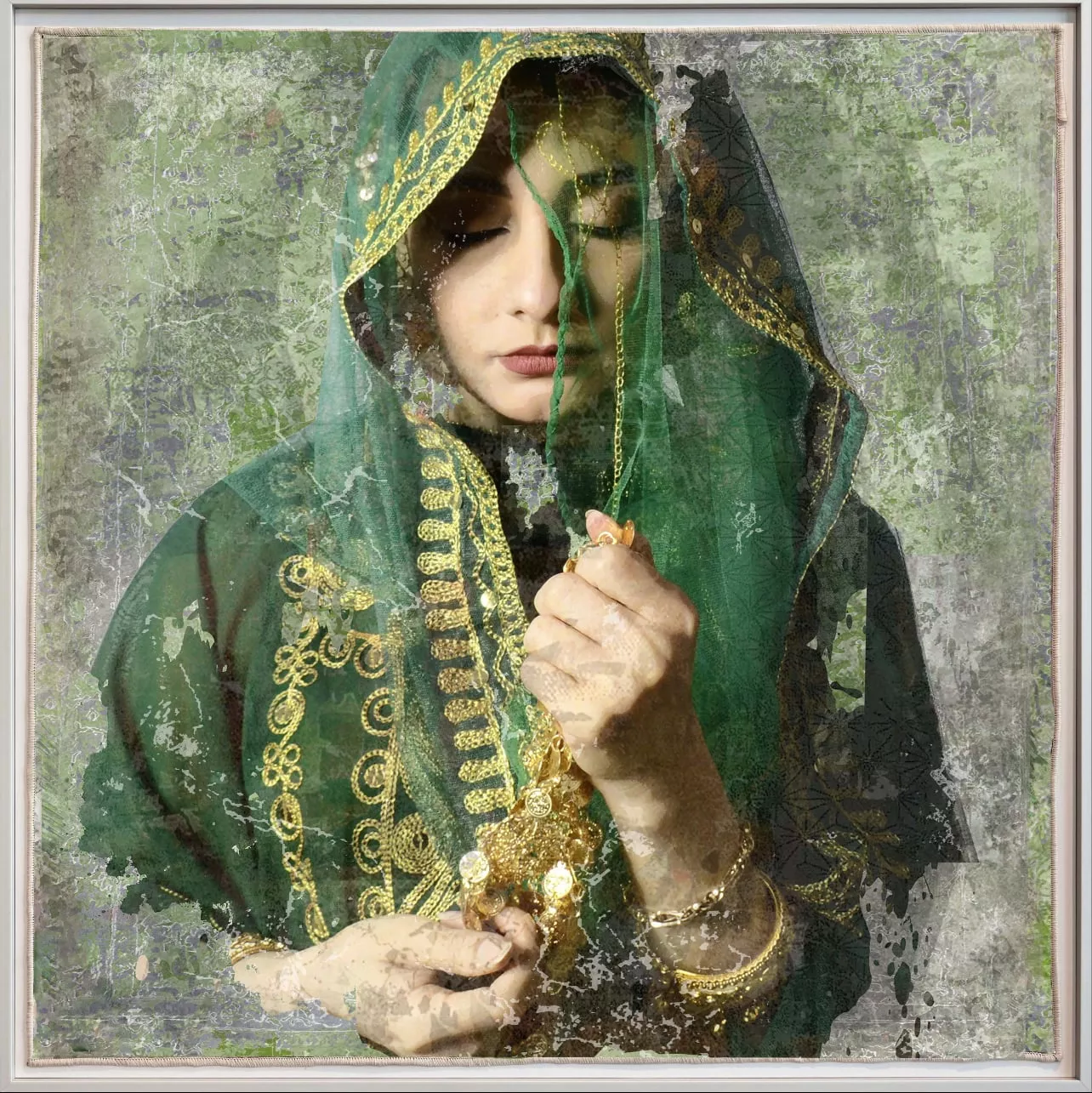
"Daughter of the Land," 2021
Materials Saturated with Memory
Al-Nemer incorporates folk materials—palm fiber, carpets, embroidery, textiles and henna—transforming them into vibrant narratives of women who spent their lives in dialogue with needle and thread.
Her choice of materials carries meaning beyond technique:
"It is an act of reviving heritage and ancestral memory so that the artworks become spaces where stories and roots breathe and continue across generations."
Ornamentation becomes a "vessel of meaning," each element holding a question, symbol or story rather than mere consumable folklore.
Color, she says, becomes "a dual being—sometimes cultural connotations and sometimes a visual rhythm balancing composition and creating emotional impact."
Open Path Between Research and Experimentation
Al-Nemer's process moves gradually: from notes to textual and visual research, followed by material experimentation, then sketches and finally execution.
The experimentation stage consumes most of her energy "because it reveals the limits of the material and opens new possibilities."
Even after exhibition, she still sees possibilities for expansion or modification, making the work an open project growing over time.
She notes visual research often precedes textual research—text can sometimes restrict the image instead of expanding it.
Icons, Intertextuality and Place
Al-Nemer handles icons carefully, especially those regarding religious or social sensitivities.
"Boldness is not breaking taboos, but questioning them intellectually and esthetically," she maintains.
She draws intertextually from historical Arab and Islamic arts to ask: "What remains alive? And how can it exist within contemporary discourse?"
The icon thus becomes a state of existence, influence and inspiration—a bridge linking past to present, the individual to society, and heritage to contemporary art.
Al-Nemer recalls her hometown, Qatif—sea, markets, clay houses, ornaments and women's clothing—as her first visual archive. Yet she reshapes it in a contemporary language:
"Every piece I create is testimony to the authenticity of place and my pride in a deeply rooted identity," she says.
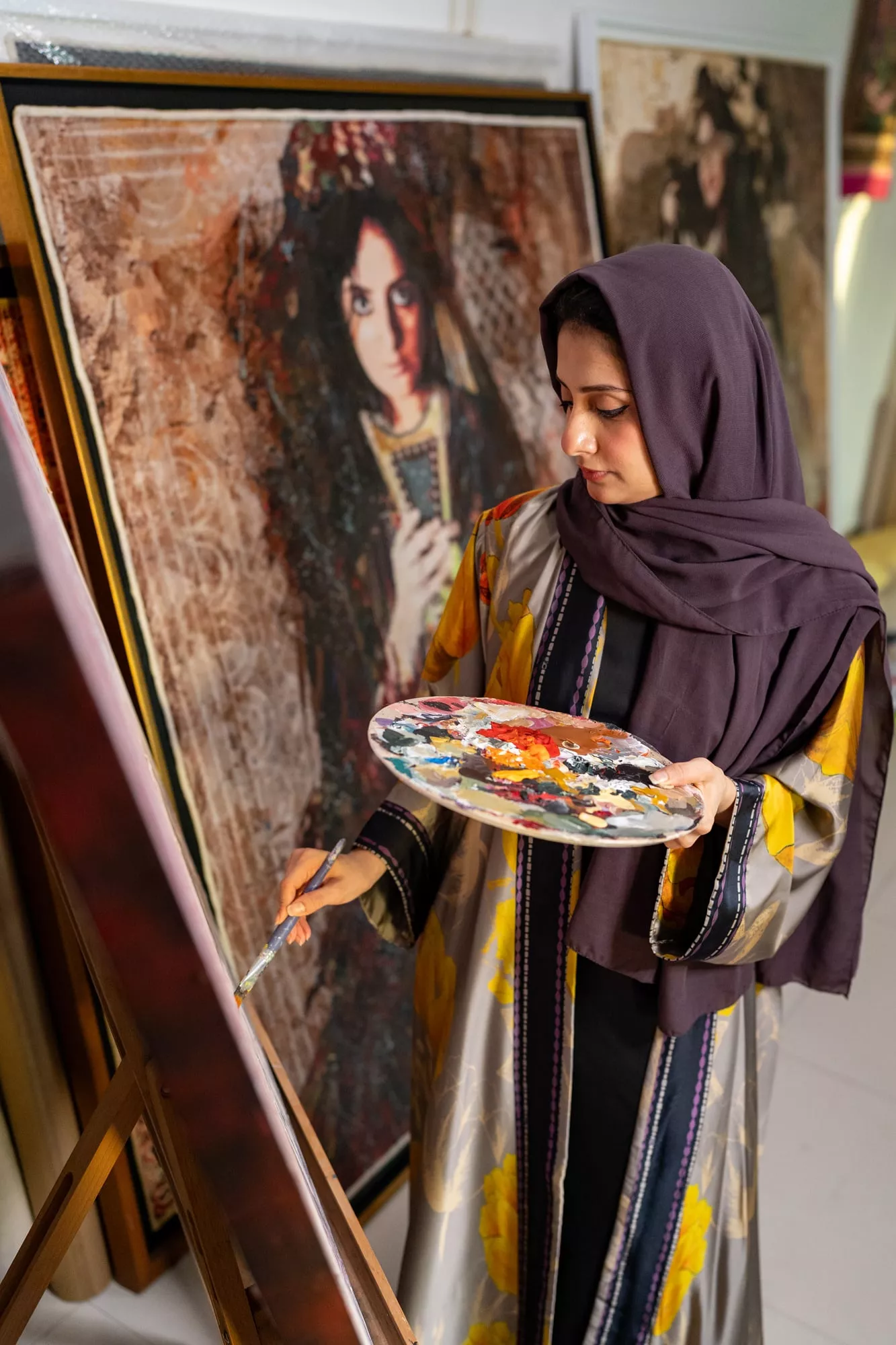
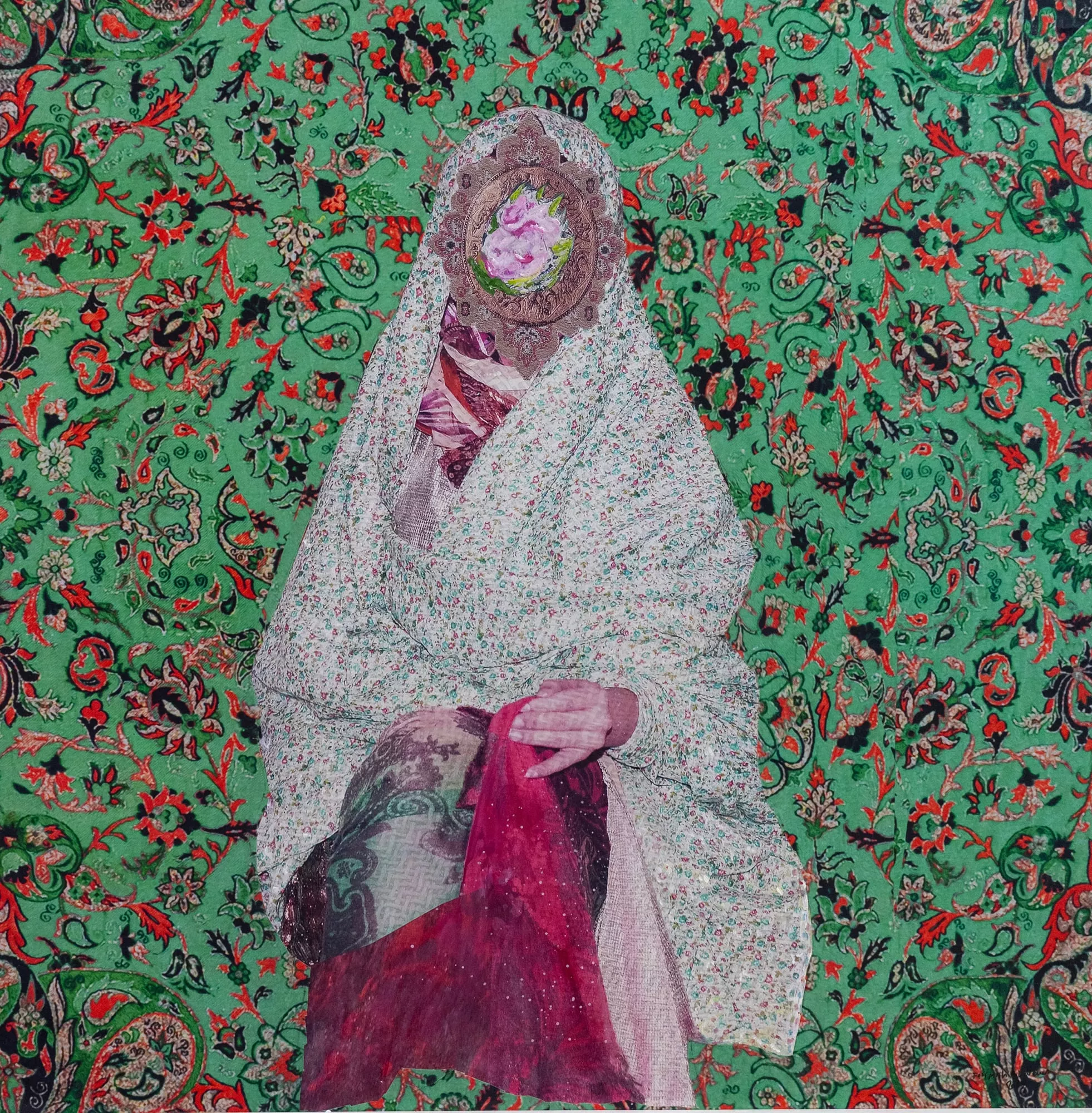
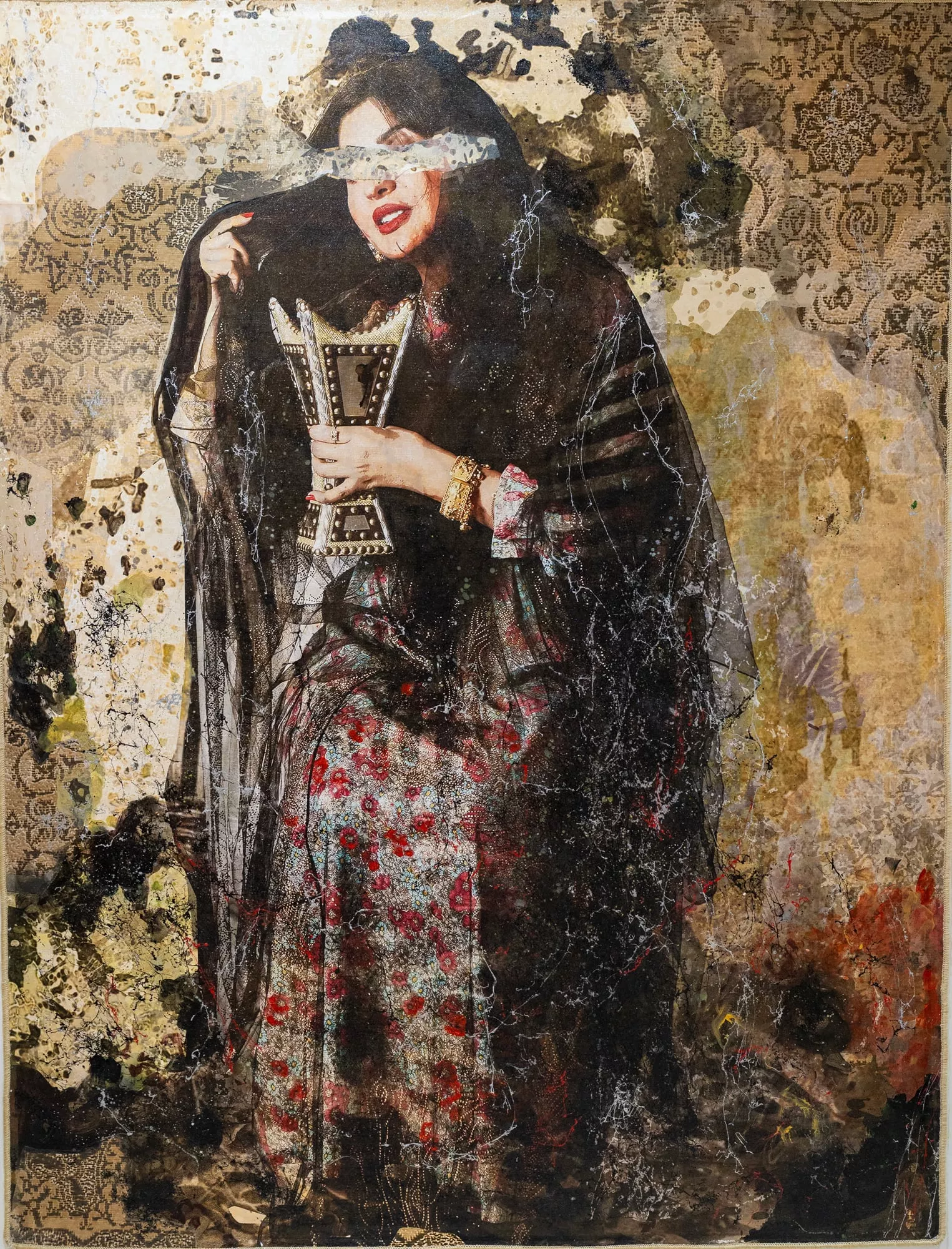
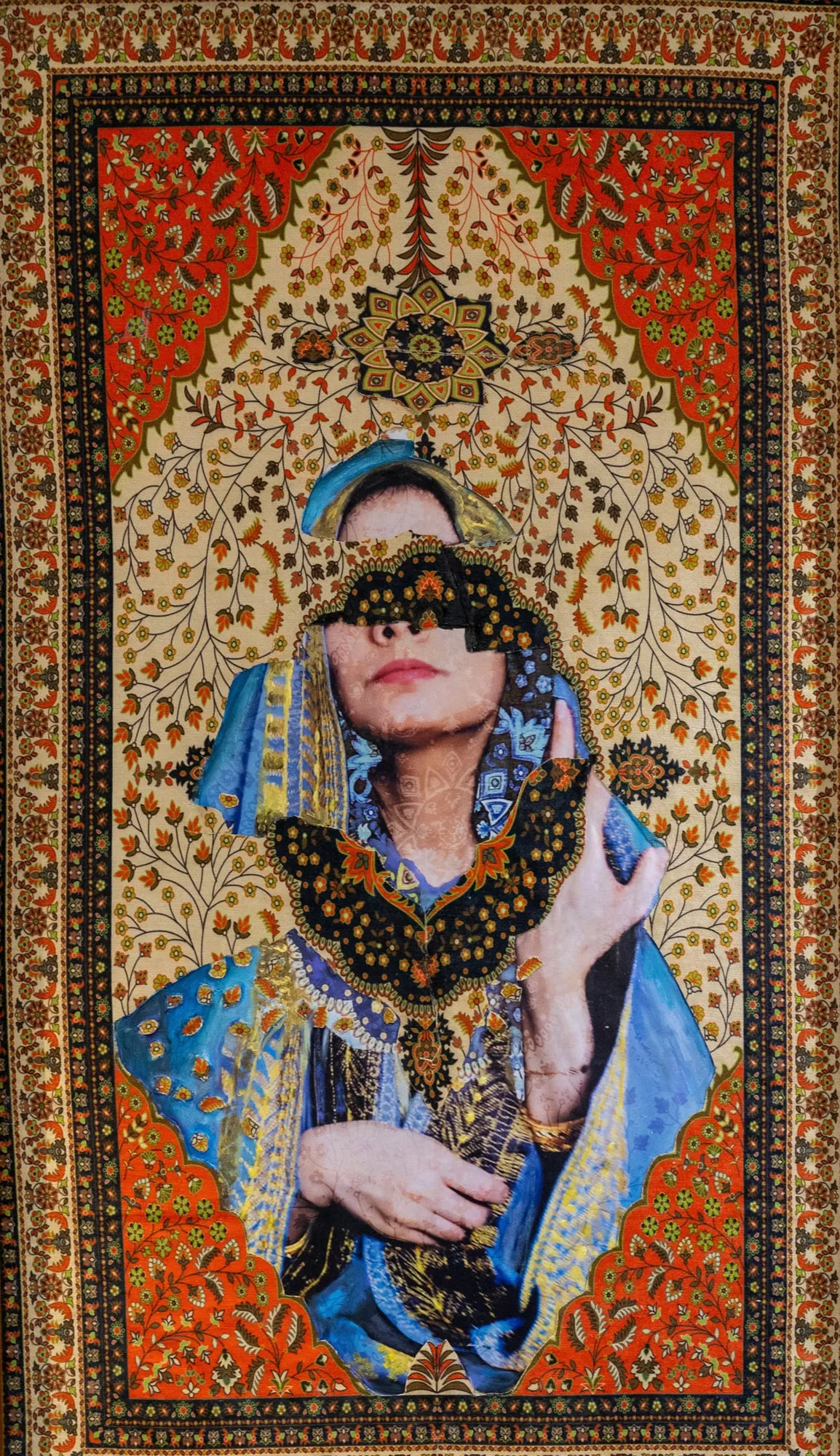
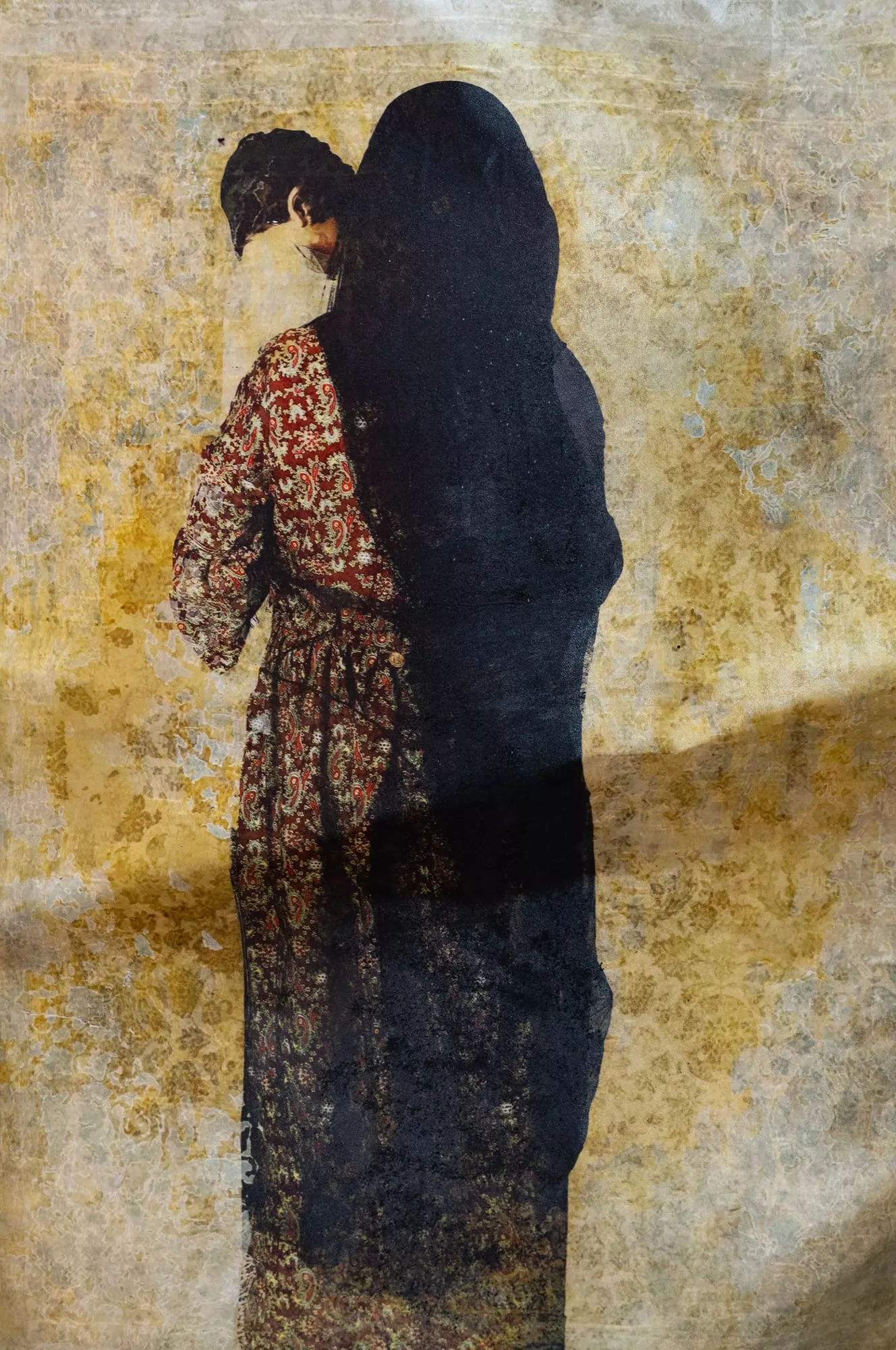
Al-Nemer's works incorporate her visual research and experimentation.
Al-Nemer's works incorporate her visual research and experimentation.
Al-Nemer's works incorporate her visual research and experimentation.
Al-Nemer's works incorporate her visual research and experimentation.
Al-Nemer's works incorporate her visual research and experimentation.
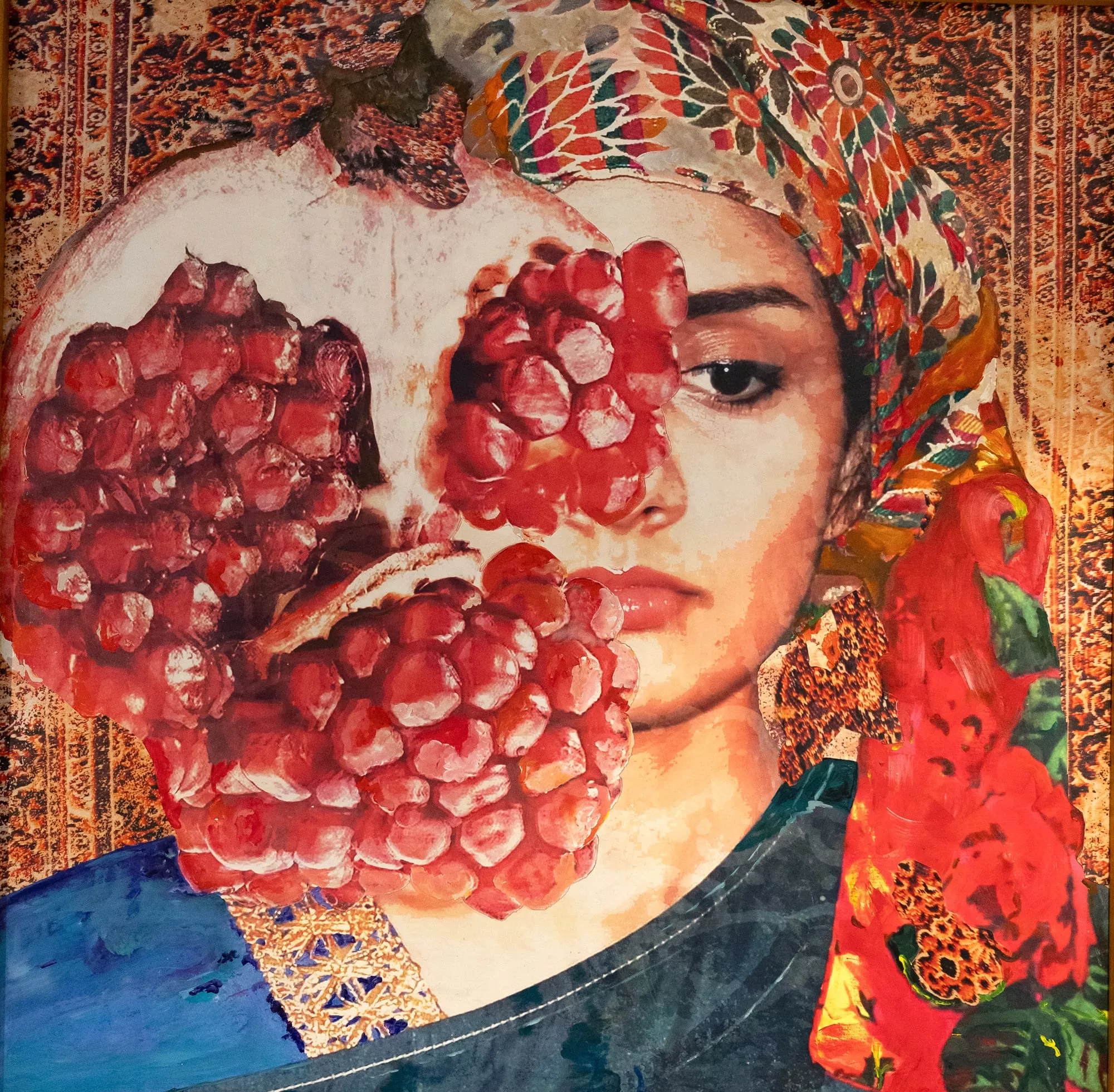
Al-Nemer's works incorporate her visual research and experimentation.
'Visual Feminine Archive'
Women remain central in Al-Nemer's works, layered with identity and heritage. The iconic body becomes a focal point for stories and ornamentation. Often women appear with covered eyes or one eye hidden, while their hands hold traditional objects—poised between fragility and strength, silence and deferred speech.
Some critics describe her work as "a Gulf visual feminine archive blending nostalgia and memory."
She doesn't deny that description. "I spent nearly nine years archiving photos, writings and testimonies of real women so individual and collective memory becomes living artistic material."
This archival practice gives her work intellectual richness beyond the local context. She aims to present it as a universal language, introducing other cultures to the strength of Saudi and Arab women's heritage and opening cross-border dialogue—a living legacy continually reborn in contemporary language.
You may also be interested in...
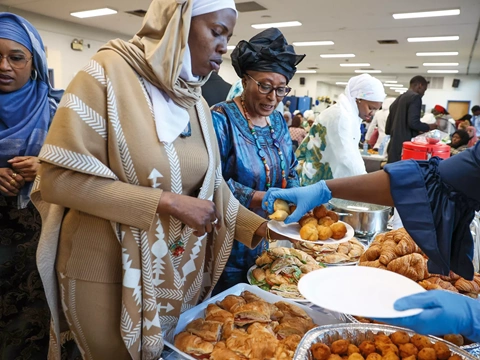
Diaspora Match Days: Food, Ritual and the World Cup
From New York to Toronto to Houston, immigrant communities re-create the rituals of the World Cup through food and shared traditions.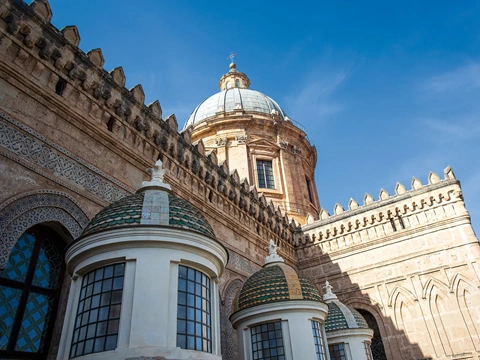
A Conversation With Islamesque Architecture Book Author Diane Darke
Arts
Culture
In Islamesque Diana Darke argues that Europe’s most celebrated architecture, including the Palermo Cathedral in Sicily, owes its sophistication to cultural exchanges with forgotten Muslim craftsmen.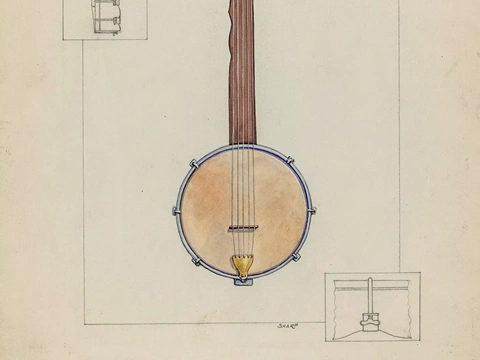
Banjo on the Atlas: An Instrument’s Journey Across Continents
Arts
How did an instrument with West African ancestors, entwined with Americana music, appear in the lineup of a North African orchestra? Two parallel narratives hold the answer.