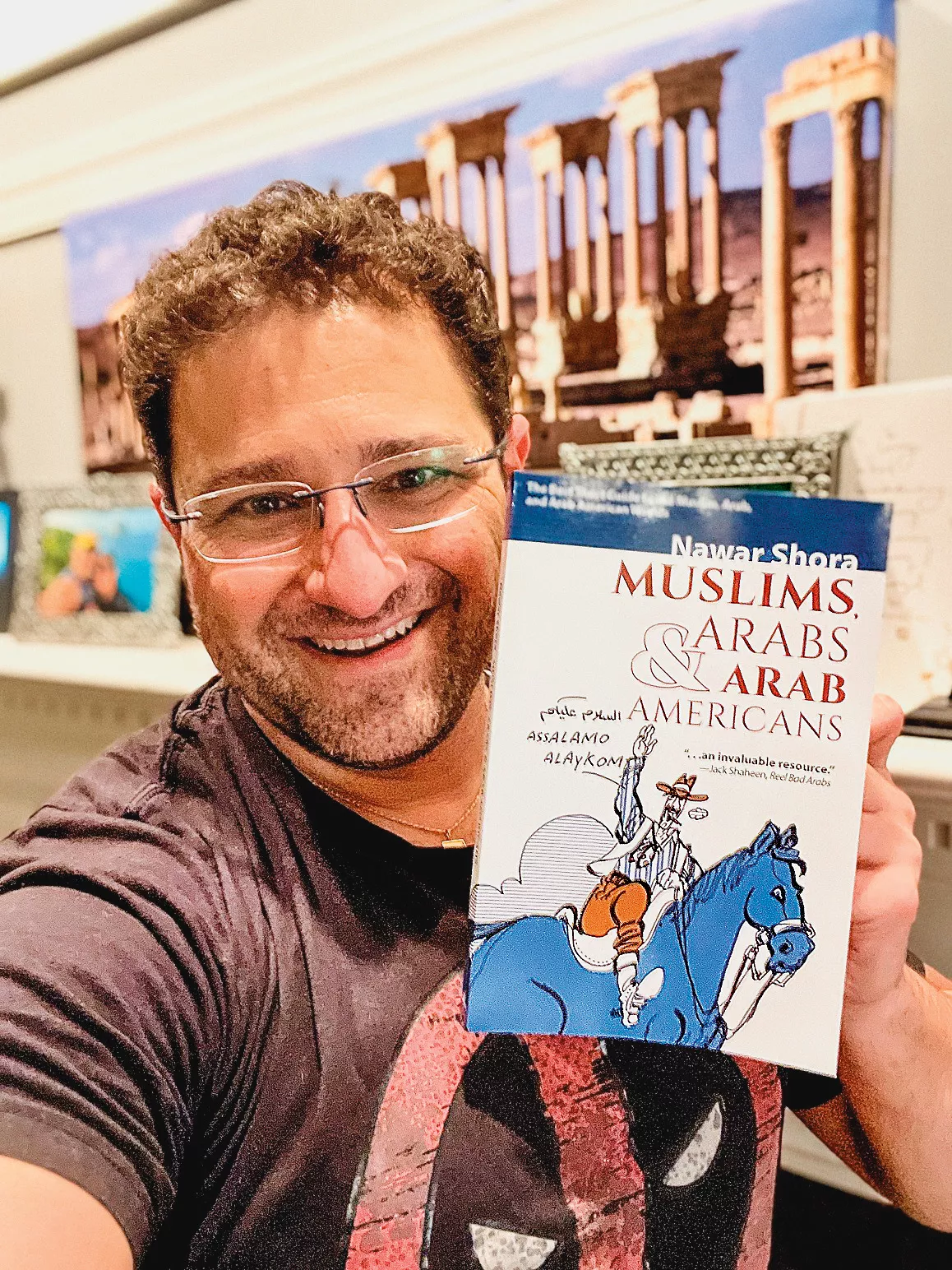
Connecting Across Cultures: A Conversation With Author Nawar Shora
Through humor and shared stories, Nawar Shora explores how understanding builds trust across cultures and communities.
What happens when humor becomes a bridge between cultures? For more than two decades, Nawar Shora has used laughter, storytelling and conversation to help audiences discover the unexpected connections among Arab, Muslim and American experiences.
As conversations about identity, belonging and cultural understanding continue to evolve in the United States, we talked with Shora—who was born in Syria and immigrated with his family to the United States as a child—about inherited assumptions, the surprising cultural threads that connect communities and why he believes the most radical thing he can do in a room full of strangers to change perceptions is simply be seen.
Shora, an author, educator and advocate, has spent more than 25 years working to help audiences better understand how Arab, Muslim and Arab American communities are perceived and who they are. His book Muslims, Arabs & Arab Americans has become a resource for law enforcement, universities and corporations alike. But it’s his seminars—built on humor, personal storytelling and what he calls “infotainment”—that tend to leave a deeper impression.
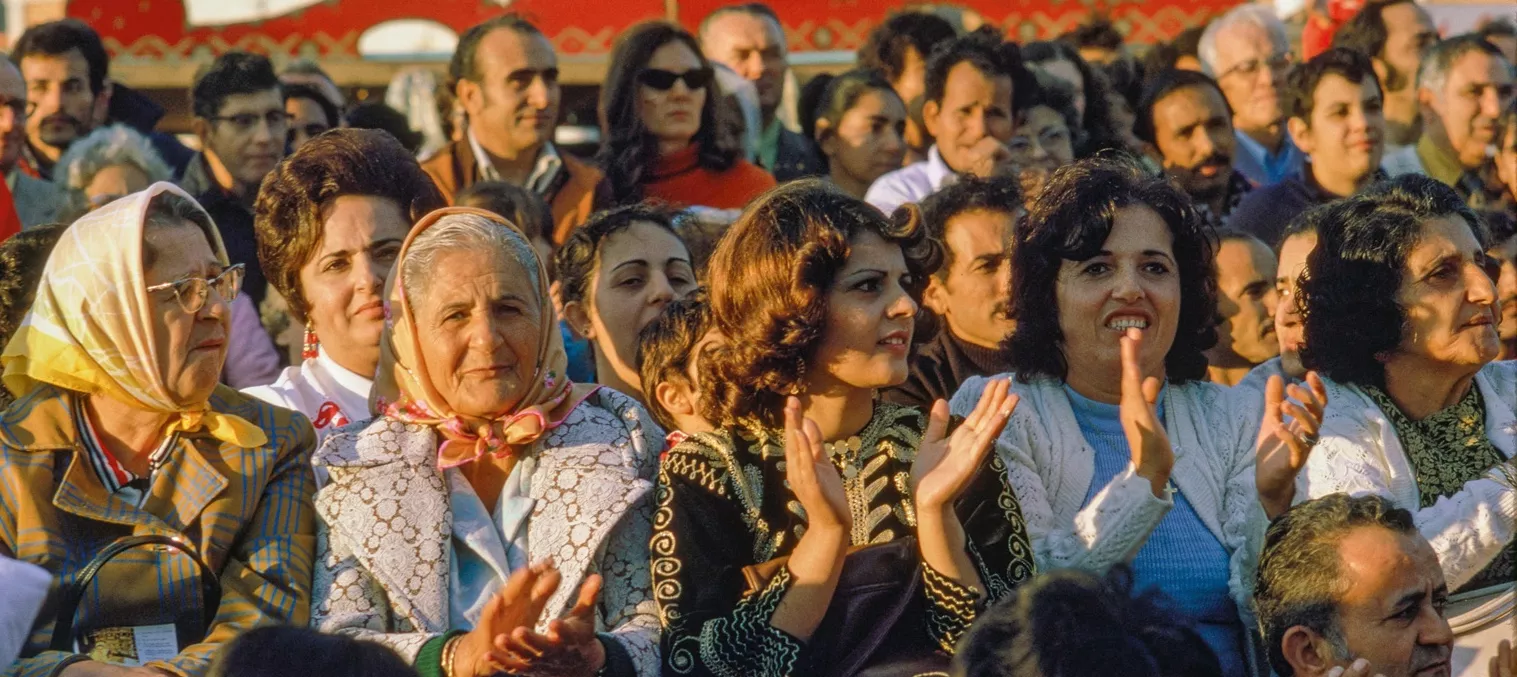
A 1975 gathering of Arab Americans in Detroit, in the US state of Michigan. Nawar Shora reflects on why personal stories and shared experiences resonate more deeply than facts alone.
When people first encounter Arab or Muslim communities, what tends to shape that initial understanding most?
It’s the media. I was a journalism major before I went to law school, and I still believe to this day it is the biggest shaper of perceptions and misperceptions. I hear people say, “Everything I learned about Islam, I learned from Jack Bower in the TV series ‘24.’” I am immediately like, “Sit down. Let’s talk.” I see that in my seminars, specifically for law enforcement national security attendees.
I was teaching a group of officers two years ago on the northern [US] border and an instructor—the equivalent of SWAT—walked up to me, shook my hand, and he’s like, “This class is nothing like I thought it was going to be. Thank you. I learned so much.” That anecdote happens time and time again.
Where do people most often discover unexpected connections with Arab and Muslim cultures?
Culture overall. It’s just that we don’t learn about it. My natural instinct is to bond with people. I love telling people that we have a thousand words in English derived from Arabic. I love telling Spanish speakers that about 3,000 Spanish words are also from Arabic because we were all the same people for 800 years in Spain. People are shocked to find that out.
Mandingo [West Africa’s Mandinka] people, while not Arab, were Muslim. And many of the slaves [in the United States], though they were not Arab, spoke Arabic because many of them were Muslim. Arabic was used as a secret language to plan slave revolts. And so I say that to people and they’re like, “Oh my god, now there’s a bond. Now I see me in you.” And I’m a big fan of seeing people and being seen.
All I’m saying is just see me, and I want to see you. I’ve said it for 25 years. Our greatest challenge in society is lack of trust. And we get to lack of trust through lack of communication and lack of understanding. You flip all those elements into the positive, and the formula is so simple.
What makes your seminars resonate with so many audiences?
So, the content is easy. Here are the countries. Here’s the geography. Here are cultural norms. What makes this a winner is humor. Time and again people say, “You take a topic that is intimidating, that is foreign to me, that is frankly mysterious and scary, and you disarm it with humor.” I use personal stories. I use a lot of humor. I use a lot of self-deprecations. I call myself an Arab redneck.
When I explain that I grew up in Syria and I grew up in West Virginia, all of a sudden, people are like, “Wow, you just blew away everything I was expecting to hear.” So, I pride myself on it being almost infotainment.
What have those conversations taught you about people?
People aren’t often malicious. Yes, there’s hate and there’s fear and all that, but in most cases, people learn. When I tell people I was born in Syria, they’re like, “Oh, you speak such good English.” I’m like, “Thanks. I’ve been here 40 years.” Or I tell people I’m Muslim, and they’re like, “But you’re not an extremist.” I’m like, “No, of the 1.8 billion Muslims in the world, most aren’t.”
After all these years, what have you learned about changing perceptions?
Helping people see that we are not what they think. I’m a big superhero fan. If you recall, in the first “X-Men,” Professor X says, “We are not what you think.” I remember watching that thinking, “We’re not what you think. … That’s true for Arabs, Arab Americans and Muslims, too.”
People walk up to me expecting an accent. ... They’re expecting some rich guy driving a Bentley. ... I’m like, “I have a Subaru.” I may not have claws that come out of my hands, and I may be a superhero only in my own head, but we’re not what they think. And in most cases, we’re better.
More from AramcoWorld
America's Arab Diaspora
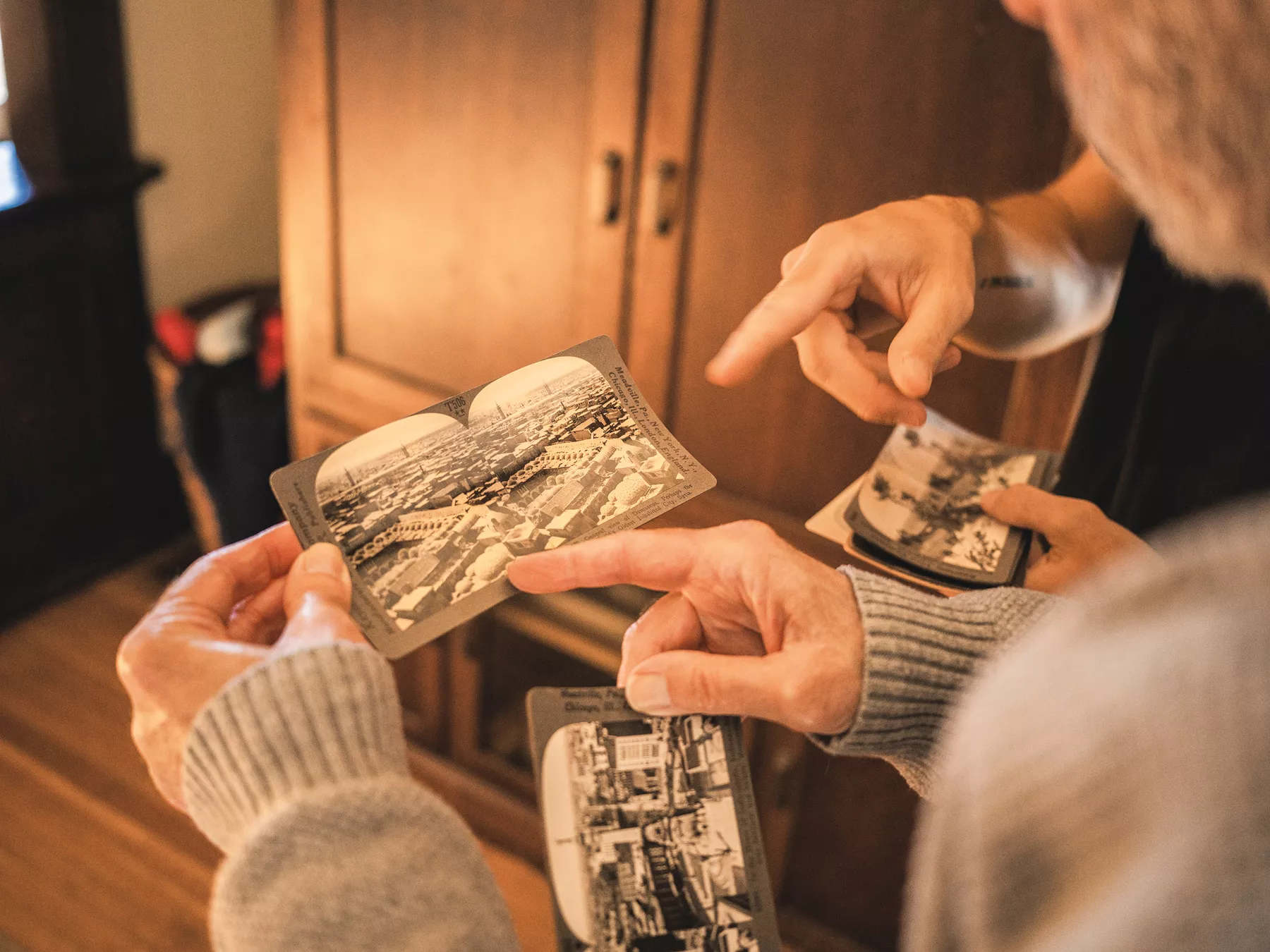
Filmmaker Josh Chitwood is reclaiming a forgotten Syrian Lebanese legacy
You may also be interested in...
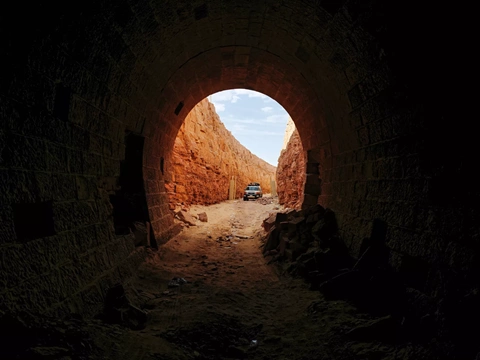
Ottoman-Era Hijaz Railway’s Legacy Endures, Chugging Toward Revival
History
The legacy of an Ottoman-era project to connect Damascus, Syria, to the holy site of Madinah in modern Saudi Arabia and beyond is breathing new life into today’s vision for rail in the region.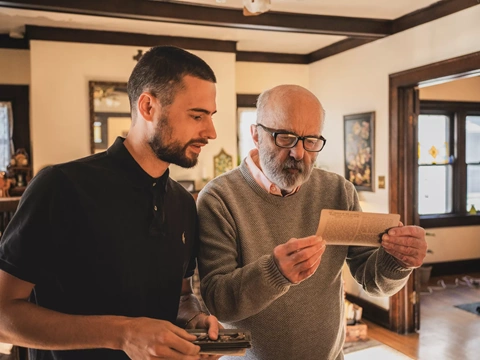
How a US Filmmaker Reclaimed a Forgotten Syrian Lebanese Legacy
Josh Chitwood belongs to a small group of American descendants trying to document and preserve their Syrian Lebanese history before it disappears. What compels people like him to recover what remains?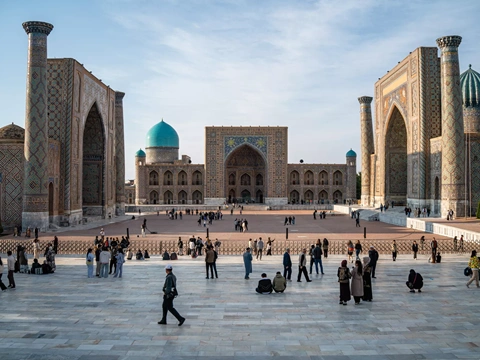
Inside the Fight To Preserve Samarkand’s Ancient Wonders
With earthquakes, weather, tourism and time threatening some of the world's most celebrated Islamic architecture, restorers ensure that the knowledge behind the monuments survives alongside the buildings themselves.