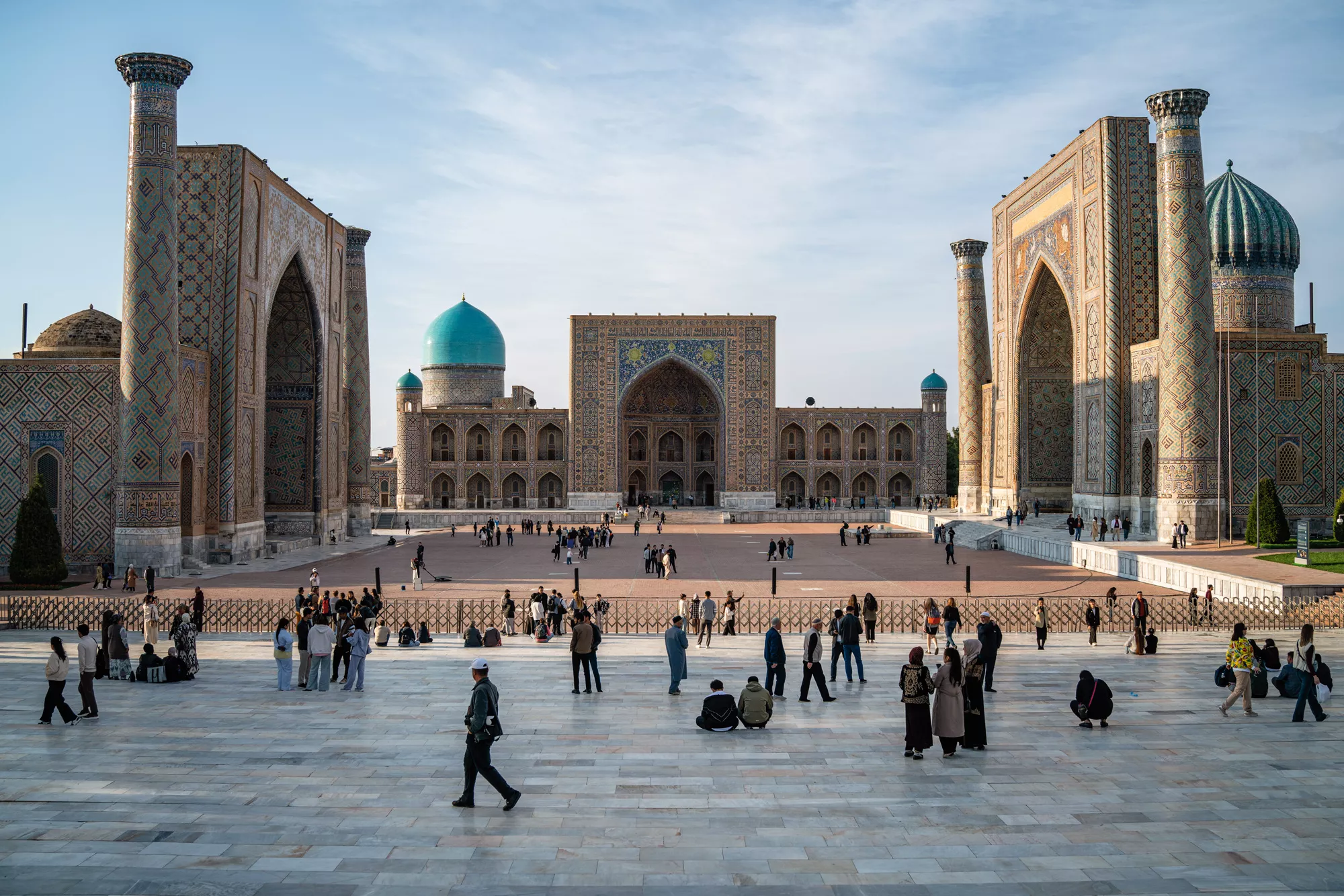
Inside the Fight To Preserve Samarkand’s Ancient Wonders
With earthquakes, weather, tourism and time threatening some of the world's most celebrated Islamic architecture, restorers ensure that the knowledge behind the monuments survives alongside the buildings themselves.
As restorer Bakhodir Baltayev, 58, fits fragments of blue mosaic back into the walls of the Registan complex, he is helping preserve architectural traditions of Samarkand passed down since the era of Emir Timur, the 14th-century conqueror of Transoxania, who transformed the city into the capital of a vast empire.
Inside the towering madrasas of Uzbekistan's historical city of Samarkand, restorers like him safeguard inherited knowledge that has survived over 600 years.
"The work [here] never really stops," says Baltayev, who has worked at the Registan since 1992.
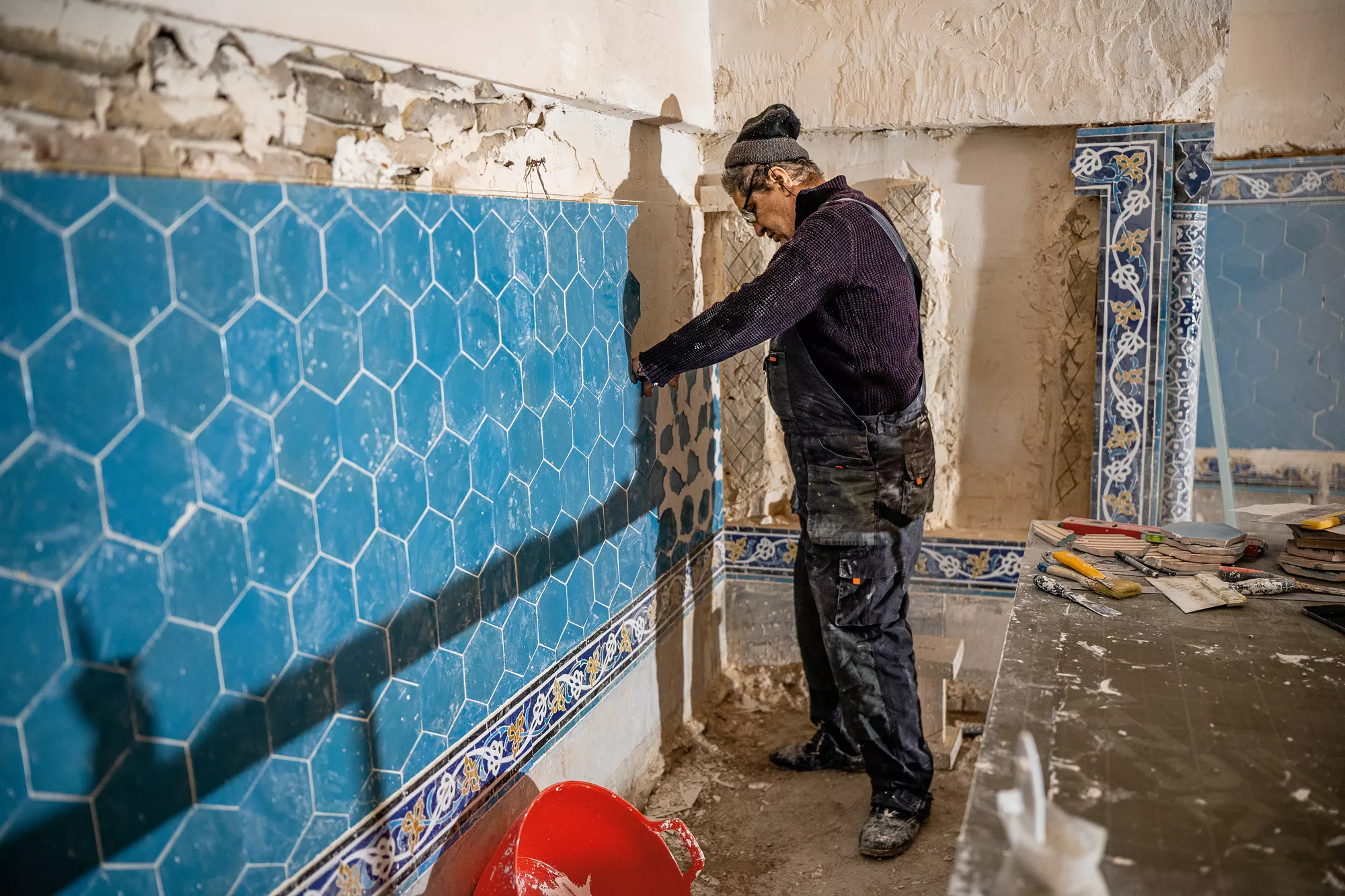
Restorer Bakhodir Baltayev crafts and installs ceramic panels in one of the halls of the Ulugh Beg Madrasa. Top Registan Square in Samarkand, Uzbekistan, is one of Central Asia's most celebrated examples of Islamic architecture.
The monumental square-whose name roughly translates as "sandy place" in Persian-is framed by three intricately tiled madrasas, or Islamic schools, and is considered one of the great architectural ensembles in the world.
The day we meet him, he is restoring a mosaic from the Ulugh Beg Madrasa, the oldest structure on the square and once one of Central Asia's leading centers of science and Islamic scholarship. The madrasa was named after Timur's grandson, a renowned 15th-century astronomer and ruler.
"There are 42,000 square meters of mosaics here, and it's all in plaster," Baltayev says. "Their lifespan is 50 to 55 years at most. They need constant restoration."
Doing an almost invisible job of slowing down an inevitable aging process, the artisans preserving Samarkand's monuments are also keeping centuries-old building techniques alive by passing down artistic traditions dating to the Timurid Empire (1370-1507). As earthquakes, weather, tourism and time threaten some of Central Asia's most celebrated Islamic architecture, restorers in the ancient Silk Road city are racing to ensure that the knowledge behind the monuments survives alongside the buildings themselves.
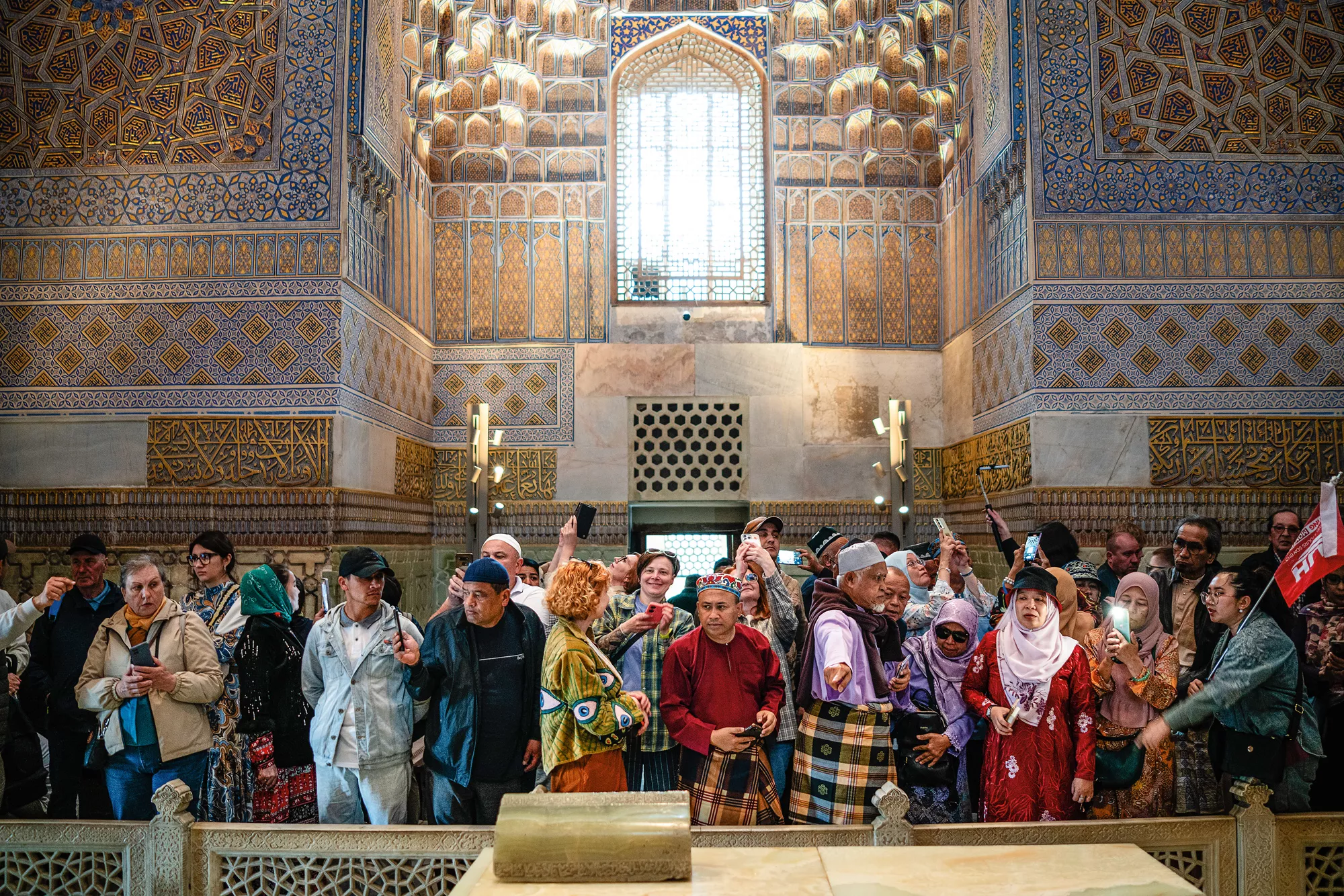
Tourists and locals are drawn to Gur-e-Amir Mausoleum.
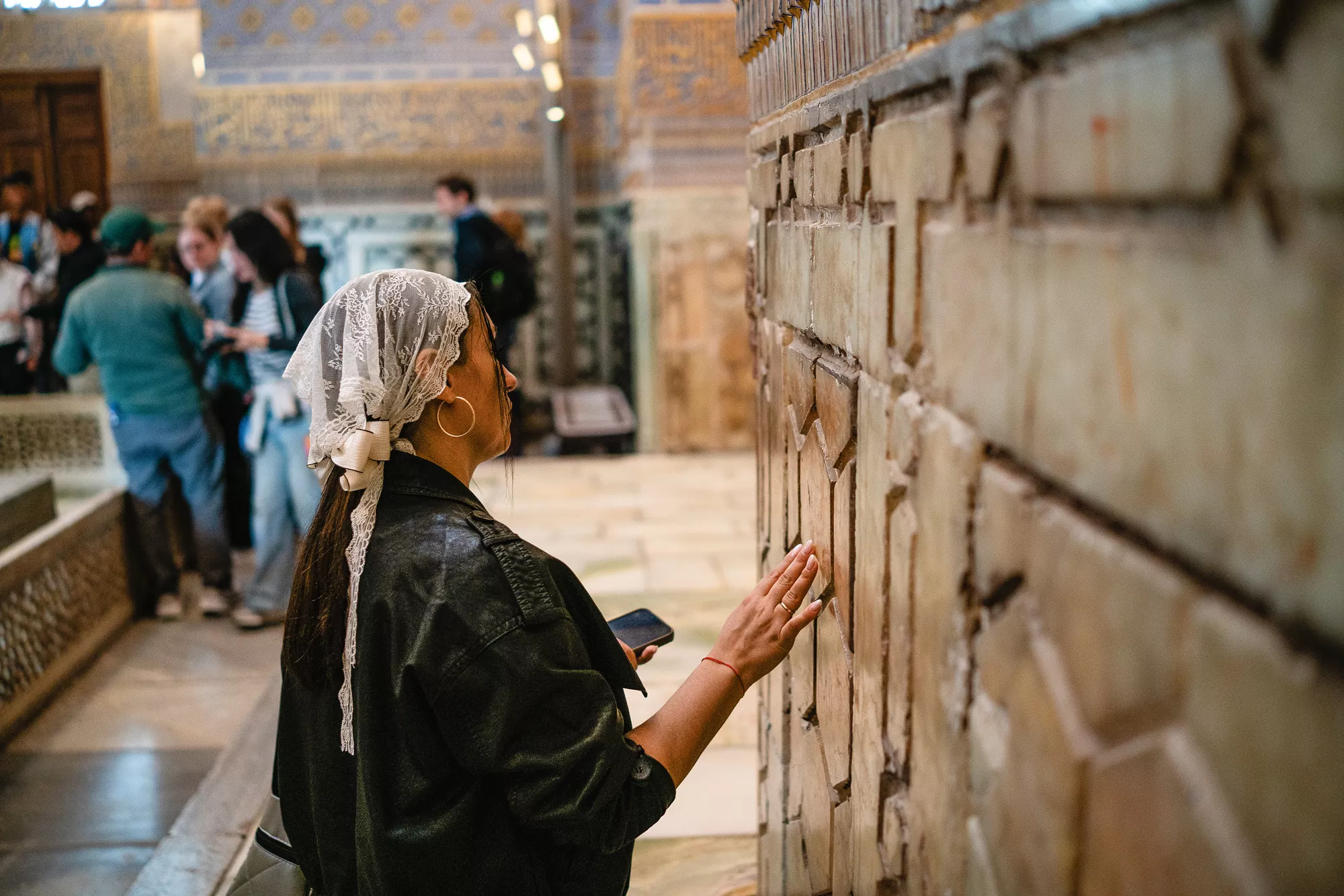
Where dynasties left their mark
For centuries, Samarkand-its name meaning "stone city" in the ancient Persian Sogdian language or "rich settlement" in Uzbek-stood at the crossroads of empires, trade routes and artistic traditions that stretched across the Islamic world. The city became the capital of Timur's empire in 1370 CE and later evolved into one of the great centers of Islamic architecture. Last year, UNESCO recognized the city's revised age as 3,000 years old, underscoring its place among Central Asia's oldest continuously inhabited urban centers.
Today, the city's cream-colored facades and cobalt-blue mosaics still reflect the artistic exchange that once connected Central Asia with Persia, India, Anatolia and the Arab world.
Within a short walk, hundreds of years of imperial ambition unfold in stone and tile: Timur's mausoleum at Gur-e-Amir; the monumental Registan Square; the Bibi-Khanym Mosque, named after Timur's senior wife (one among dozens); and the Shah-i-Zinda necropolis whose tiled tombs pre-date the Timurids themselves.
Under Timur, Samarkand's skyline blossomed with domes, minarets and colossal madrasas. At the age of 33, Timur succeeded in unifying the nomadic tribes of Central Asia before expanding his empire into Afghanistan, northern India, Persia and parts of the Caucasus.
"The Timurid dynasty [14th to early 16th centuries] is extremely important, and you cannot overstate [its] appeal to later dynasties across the region and the eastern Islamic world, from India to Central Asia, Iran and Türkiye today," says art historian Jaimee Comstock-Skipp, a junior research fellow at New College, University of Oxford. She studies the patterns and artistic traditions of Islamic manuscripts, especially those from the Abu'l-Khayrid (Shaybanid) dynasty of 16th-century Central Asia.
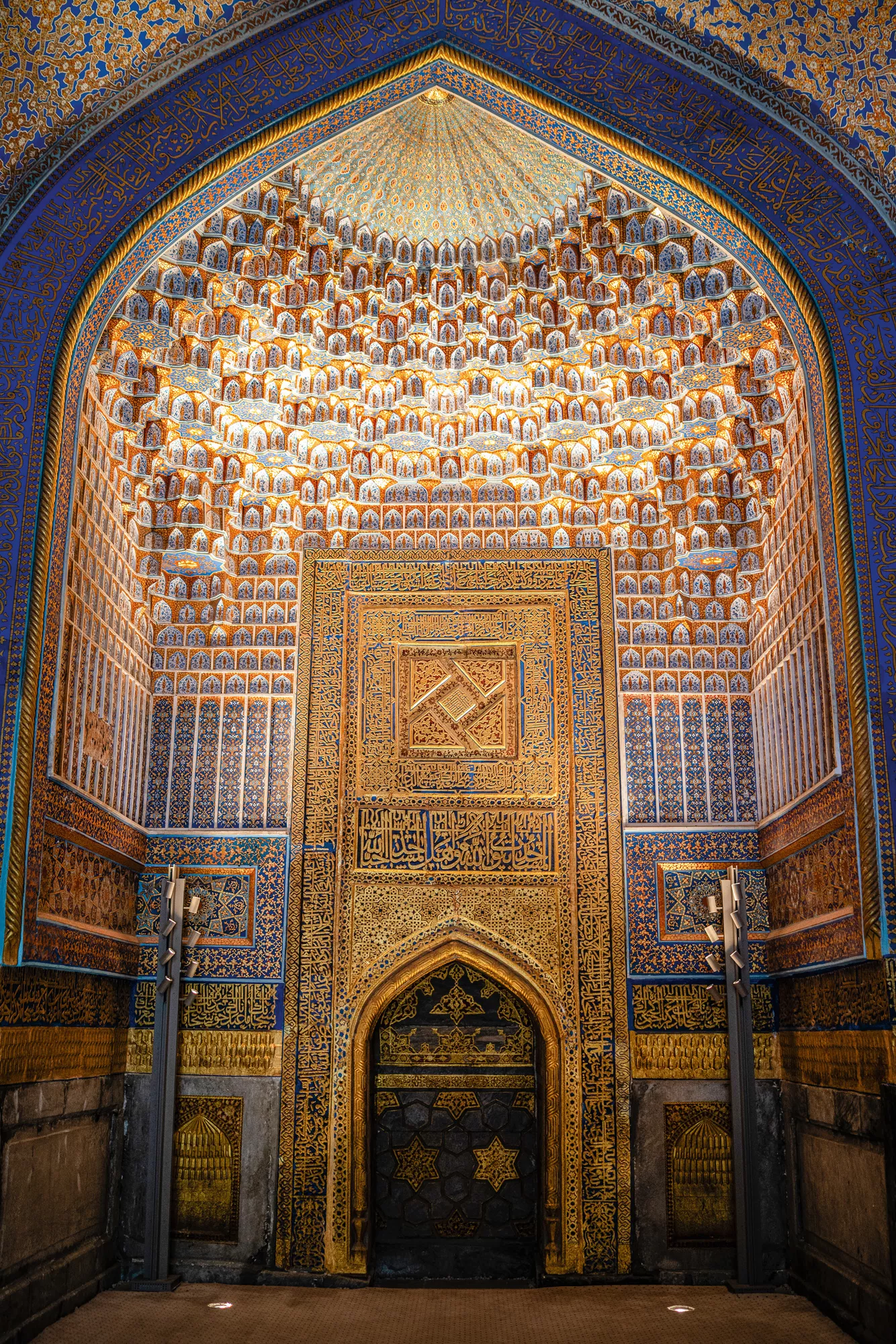
Restorers routinely maintain the intricate interior adornment of Tilya-Kori Mosque's gilded dome and walls.
While remembered in many parts of the world as a conqueror, Timur also sought to transform his capital into the cultural center of his empire-both to legitimize his rule and to project power through architecture, scholarship, religion and urban grandeur.
Artisans, architects, engineers and scholars from across the Islamic world were brought to the city, helping transform Samarkand into one of the great cultural capitals of the time. The resulting explosion of architecture, science, manuscript production and urban design would later influence dynasties across the region in what historians now describe as the Timurid Renaissance.
"It seems that the motifs get built upon. The dynasty that comes and replaces the other one just uses those models and expands the forms. You can tell that there's a transition that takes place, but [it's] very much indebted to these earlier models in terms of structure and an overall look," says Comstock-Skipp.
She adds, "It's interesting how later in the 1500s, you start getting this cry to be different [from the Timurid style], the emphasis on ... developing an individual, visual vocabulary in the built environment, in architectural forms and in the manuscripts."
The architecture of the Registan reflects this layered history. The three madrasas in the complex were built under two dynasties: the Ulugh Beg dates to the 15th-century Timurid era, while the Sher-Dor and Tilya-Kori were added in the 17th century under the Shaybanids, the Uzbek dynasty that succeeded the Timurids after the rise of Muhammad Shaybani Khan.
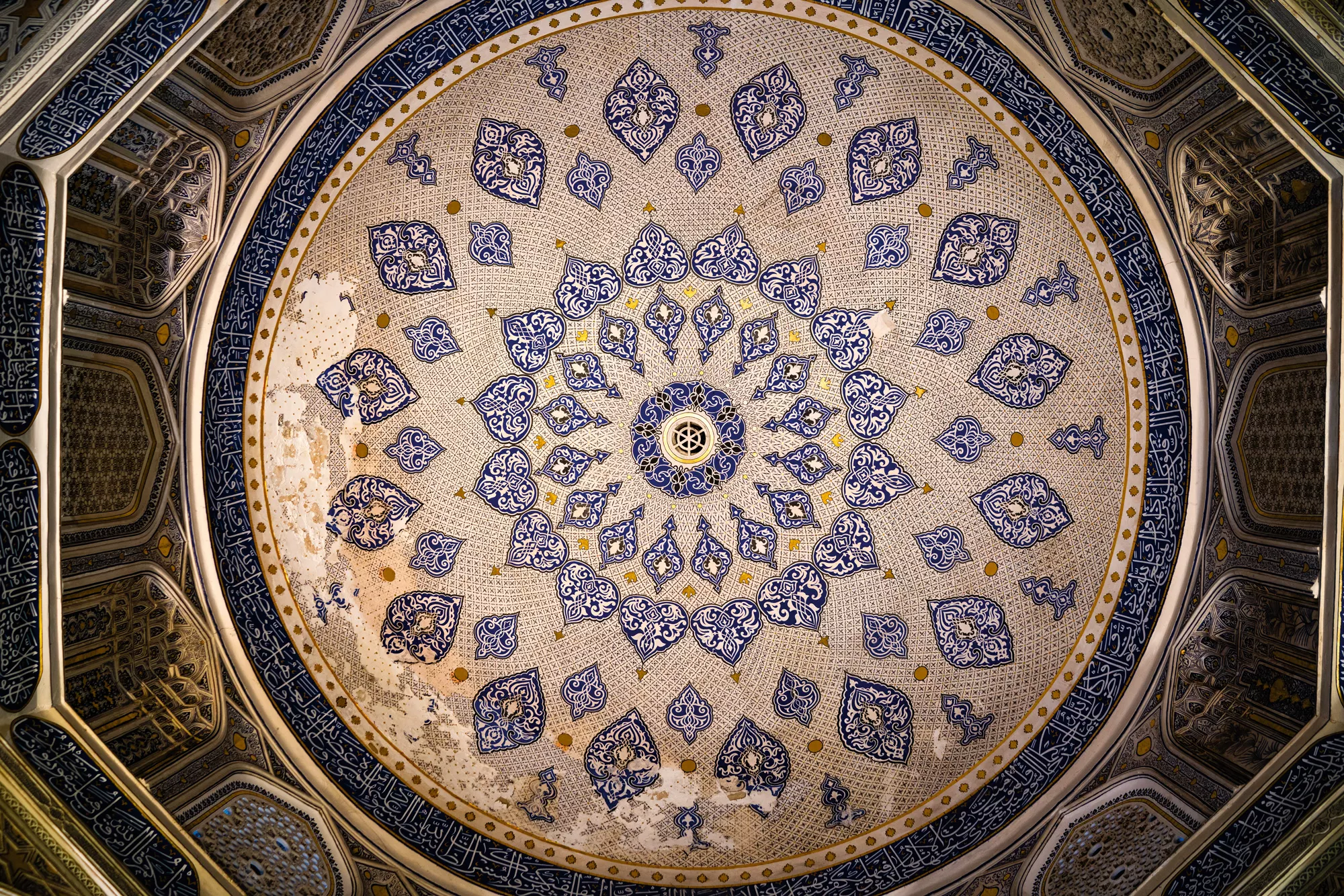
The towering mosaics of the Shah-i-Zinda necropolis and the Gur-e-Amir Mausoleum.
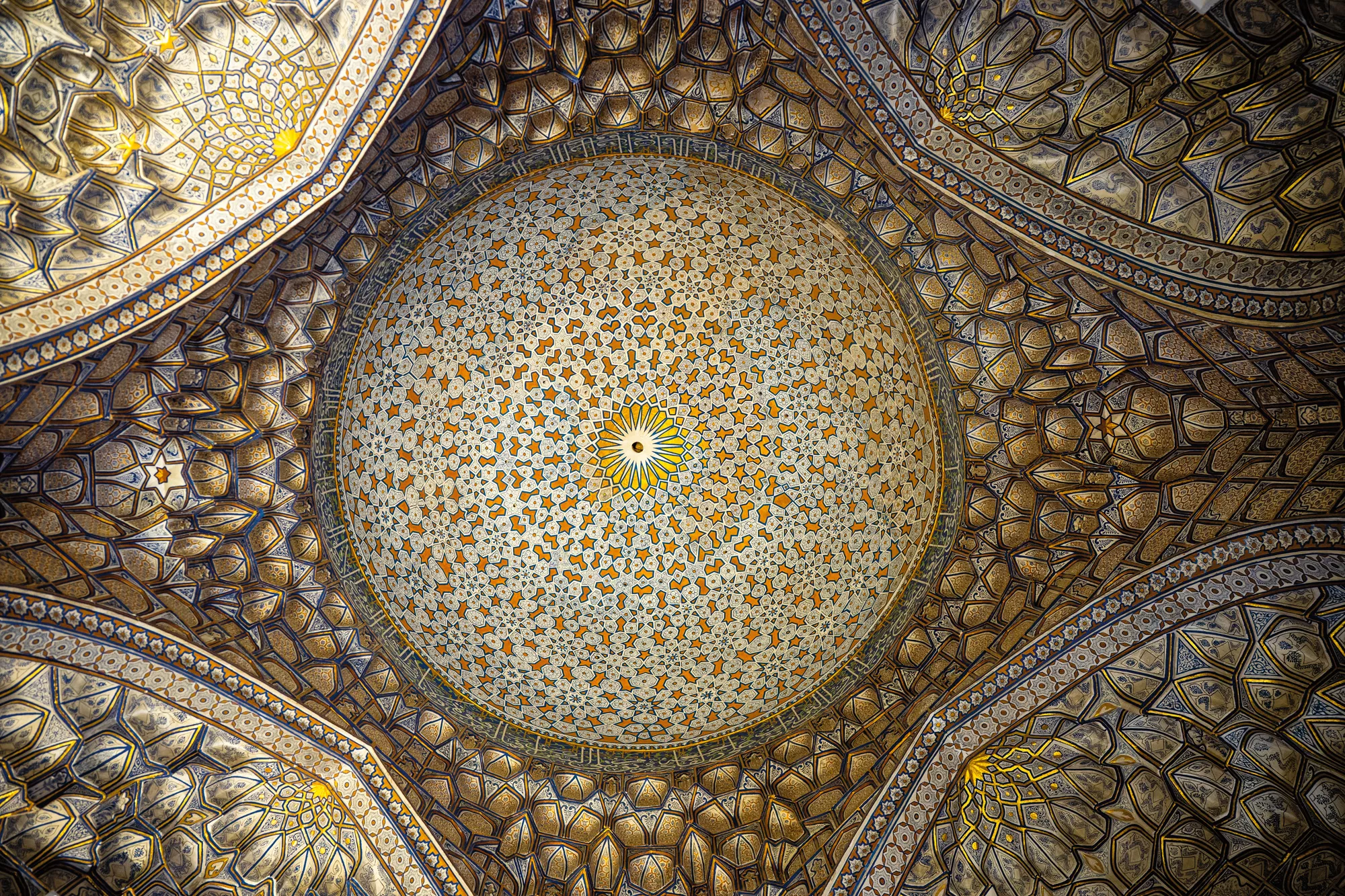
Uzbek craftsmanship over generations
For Baltayev, preserving these buildings also means preserving the regional school of craftsmanship that developed here over generations.
"Our Uzbek school [of craftsmen] was among the very best in the Soviet Union-if not the first then certainly second," he says.
He explains that local artisans worked alongside specialists evacuated to Central Asia during World War II, many of whom remained after the war ended.
"It became a kind of symbiosis," he says. "Up until [the mid-1990s], our craftsmen, artists and sculptors were recognized around the world." Painter Pavel Benkov, collector and archeologist Igor Savitsky and sculptor Aleksandr Matveyev were just a few among many who spent time in Samarkand, contributing to the development of its artistic and craft traditions.
The results are visible everywhere across the square-in the restored domes, glazed mosaics and geometric vaulting that continue to dominate the skyline centuries after they were built.
As visitors step onto the Registan Square, they become immersed in the symphony of its Islamic architecture: a special harmony and openness that is unique to Central Asia and comes from the abundance of space.
Architect Mamatgul Halikulov, 77, who oversaw architectural and restoration projects across the historic center during the late Soviet and early independence years, says proportion is central to the region's architectural identity.
"Islamic architecture has always maintained proportionality because it brings precision," Halikulov says. "And where there is precision, there is beauty."
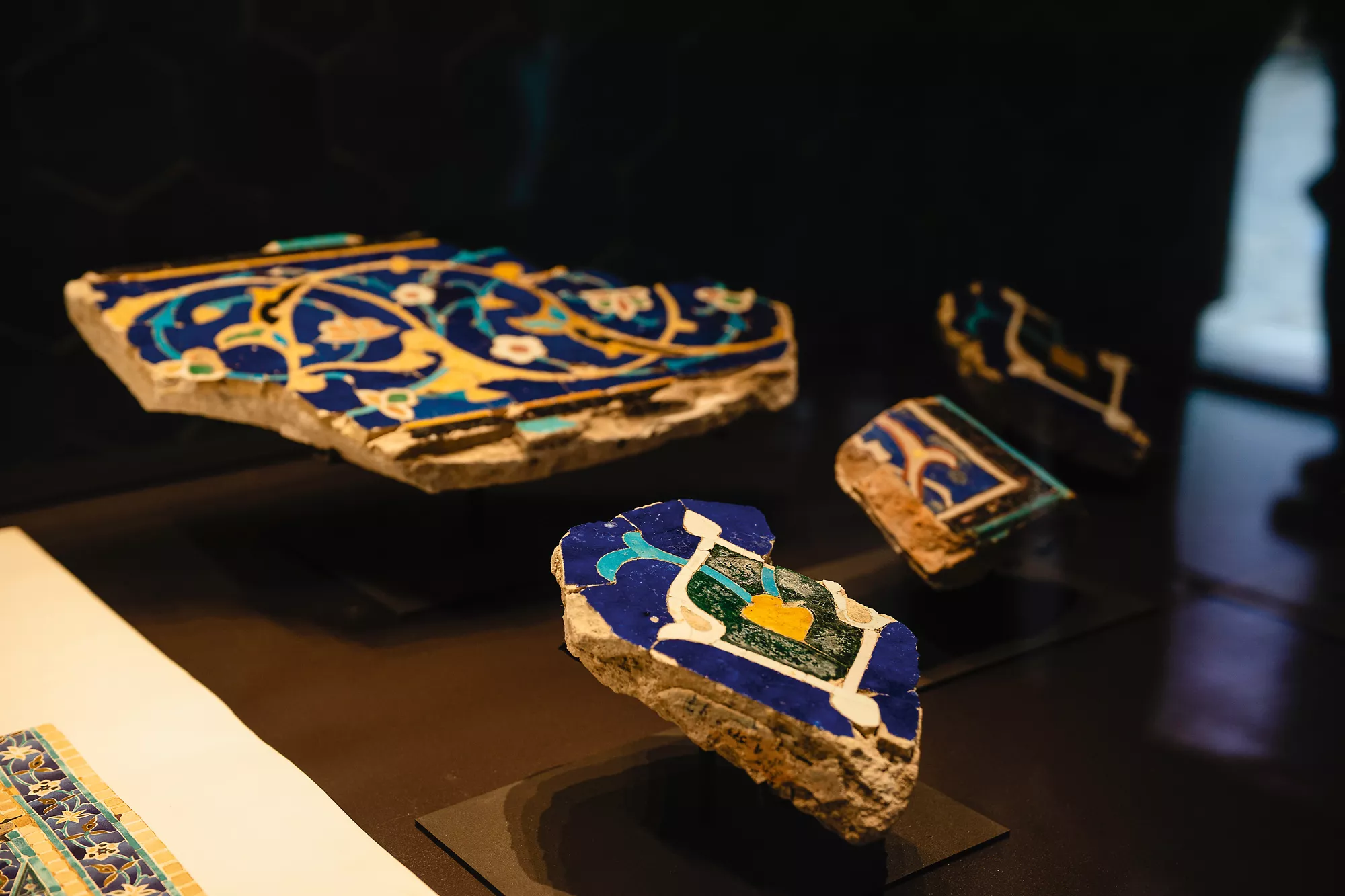
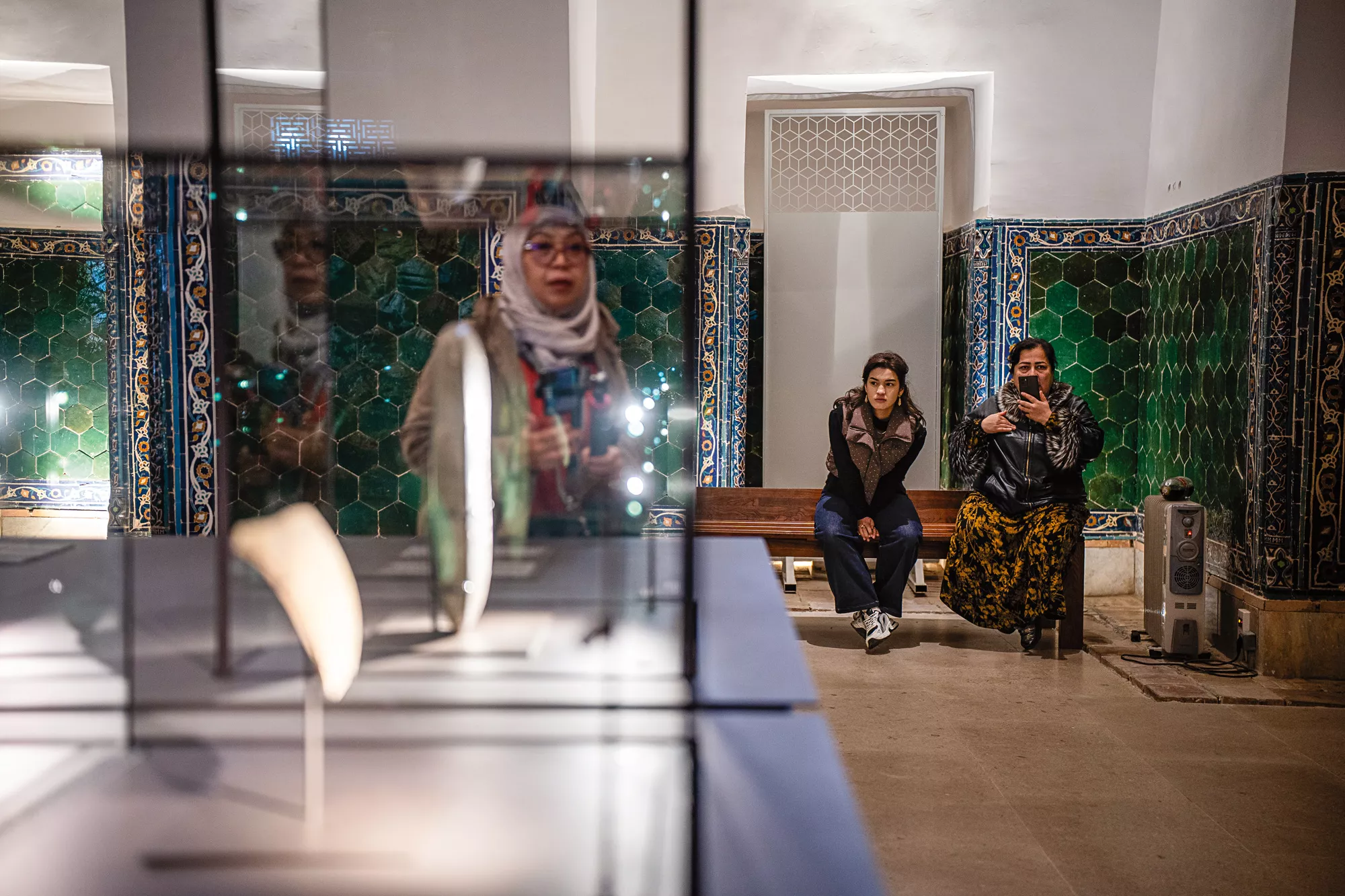
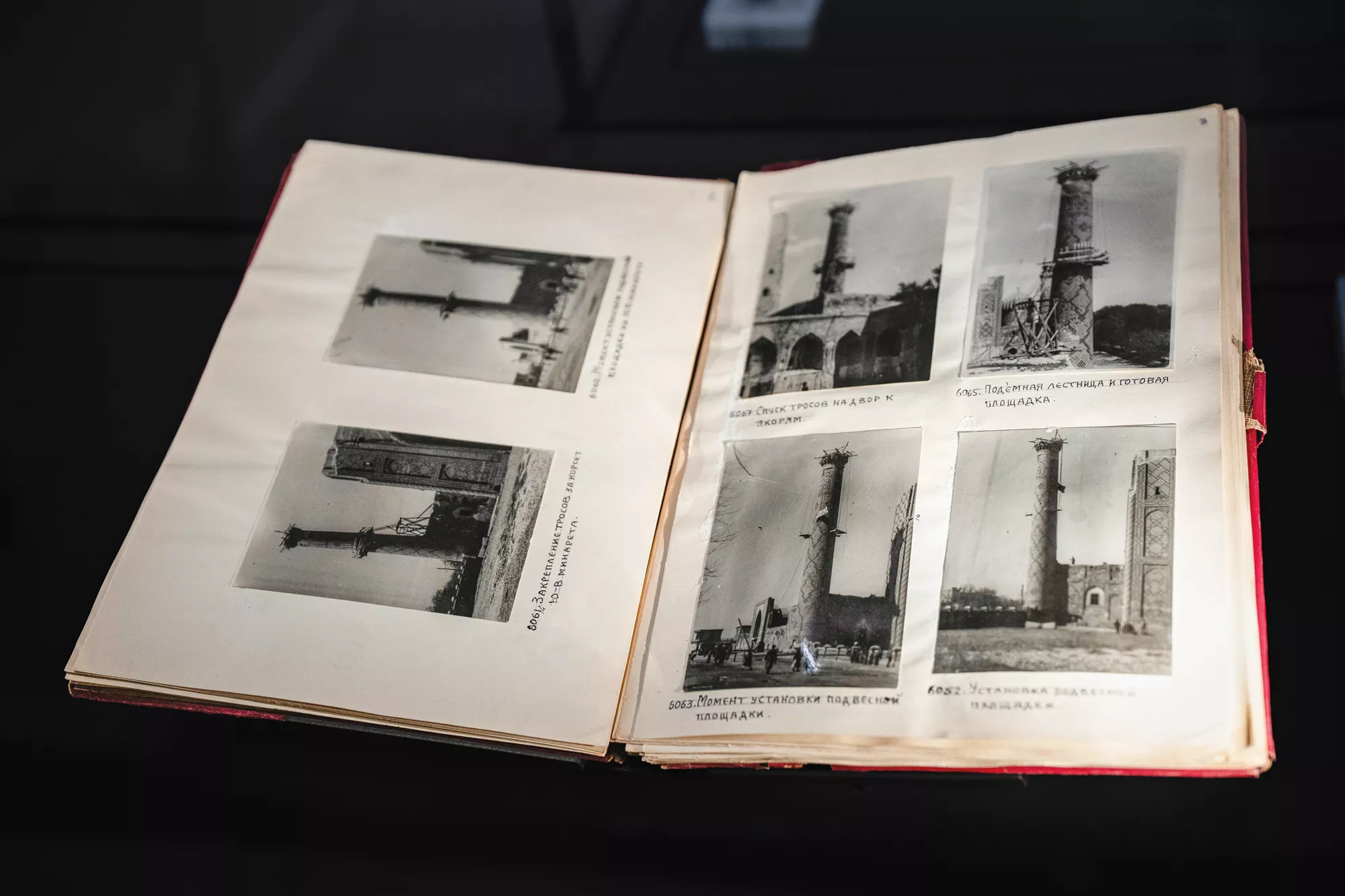
Exhibitions at the Gur-e-Amir Mausoleum, top left, and Ulugh Beg Madrasa, top right and above, preserve and share the cultural history embodied in Samarkand's architecture.
Walking alongside the Sher-Dor madrasa, Halikulov points upward toward the muqarnas-the honeycomblike vaulting common in Islamic architecture.
"[On muqarnas] you can see palms of our hands raised in prayer," he says. "And those flat panels, the ones right after the inscription, represent a jainamaz [prayer rug]. All those hands converge at the very center, like a ray. This symbolizes the ascent of the Prophet Muhammad to the Seventh Heaven."
Another element he points out is the guldasta, the cylindrical towers placed at the corners of mosques and mausoleums.
"When they [architects] began to design all these buildings, they made them smooth and rounded," Halikulov explains. "They also act as defense towers at the corners, like guards. The pattern on it resembles a rope, which has philosophical meaning: The Prophet Mohammad spoke to his companions, the Sahabas: 'Hold on to the rope of the prayer tightly.'"
For restorers and architects working here today, understanding the philosophy behind the design is just as important as preserving the structures themselves.
Islamic architecture contains thousands of technical terms and ornamental forms-more than 3,700 by some counts-many of which a trained eye can still trace across the city's surviving monuments.
The transmission of knowledge from master to apprentice was central to the Timurid world itself, where artisans and scholars moved freely among courts across Central Asia, Persia and Ottoman lands.
"What's very important to remember is that this period is very mobile," says Comstock-Skipp. "People are really coming [and] going back and forth, whether they're going on the pilgrimage route to get to Makkah, Madinah or just going from one court to the next."
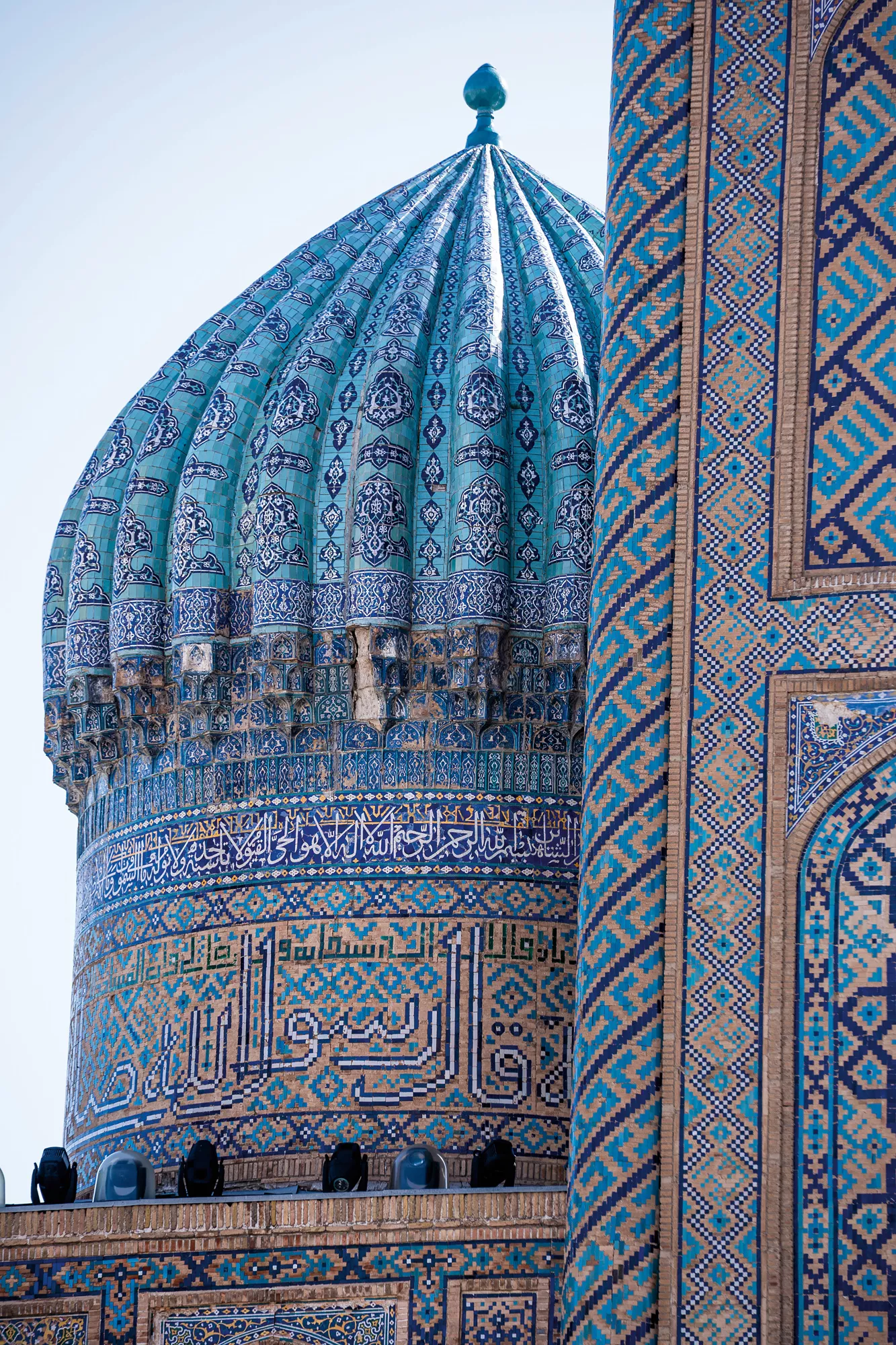
The facade of Registan Square's Sher-Dor Madrasa, which dates to the early 1600s, bears ornate tilework and mosaic patterns.
"Where there is precision, there is beauty."
Timurid inspiration in architecture
By the 16th century, patterns, particularly foliate motifs and geometric designs such as stars and hexagons, influenced artistic traditions of the Safavids, the Ottomans and beyond.
Such patterns are present in Persian structures, says Comstock-Skipp, "but it really seems to me that the appeal is from Central Asia."
Architectural choices were influenced by Timurid tradition as well.
"[From manuscripts] we see [that] the older Timurid inspiration of a dome extending into the upper margin gets modified in each of the later dynasties," she says. "The Ottomans have a distinctive onion shape to theirs, with the courtly figures wearing their oversize turbans; the Safavids open up the architecture to render a party on different levels of the pavilion; the Abu'l-Khayrids really perpetuate the Timurid legacy most closely, but they will go their own way in the 1560s."
For Halikulov, preserving the monuments also means preserving the philosophy behind them.
"Everything that I've learned shouldn't be lost," he says. "I shouldn't keep it to myself but pass it on to others."
That central belief shapes the work of restorer Davlat Khakimov, 72, who entered the profession through family tradition and has spent more than four decades working on the Registan.
Now, one of his primary tasks is to monitor structural weaknesses before they become catastrophic.
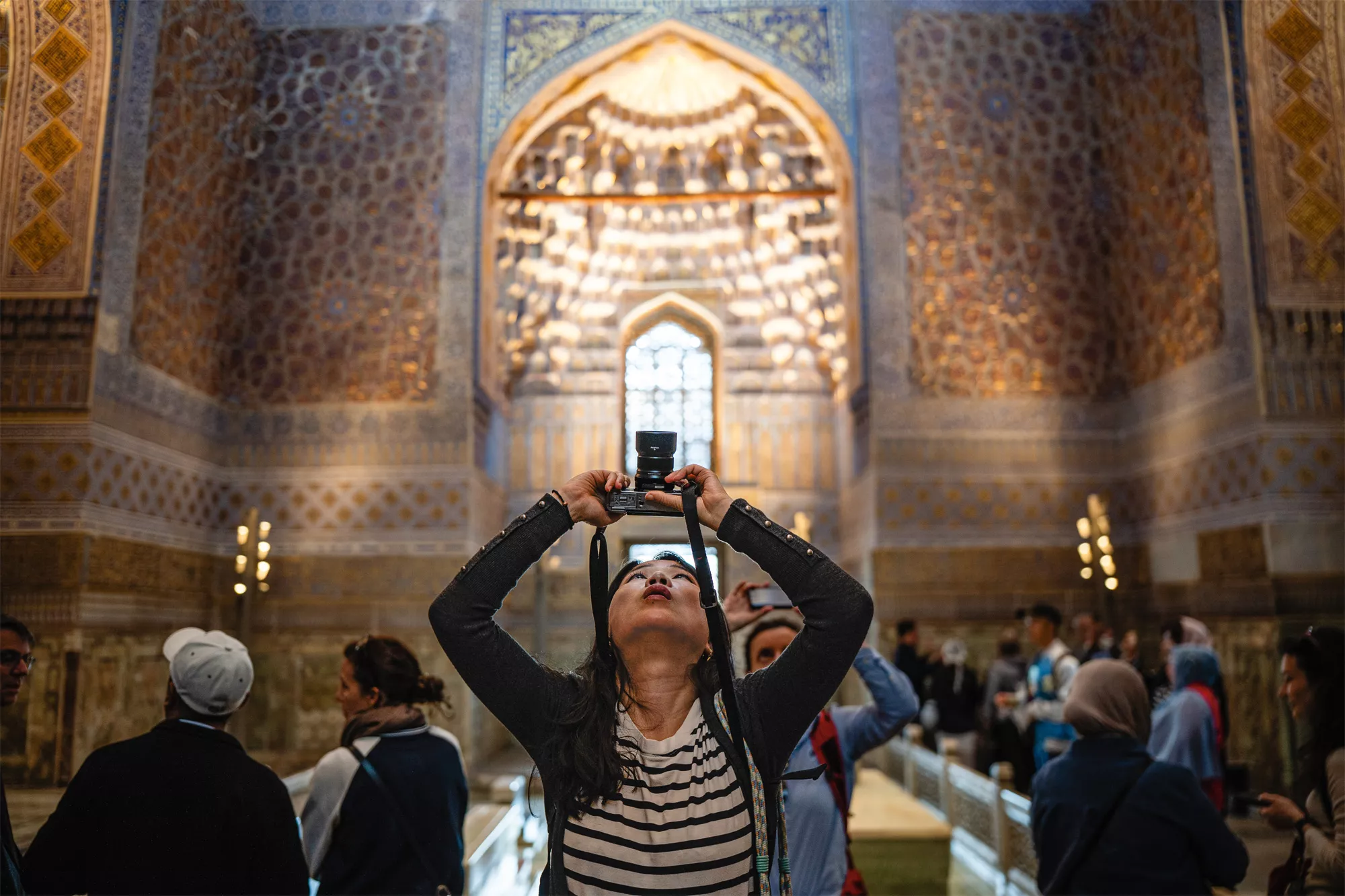
Visitors take in the distinctive buildings in which artisans and scholars across dynasties worked.
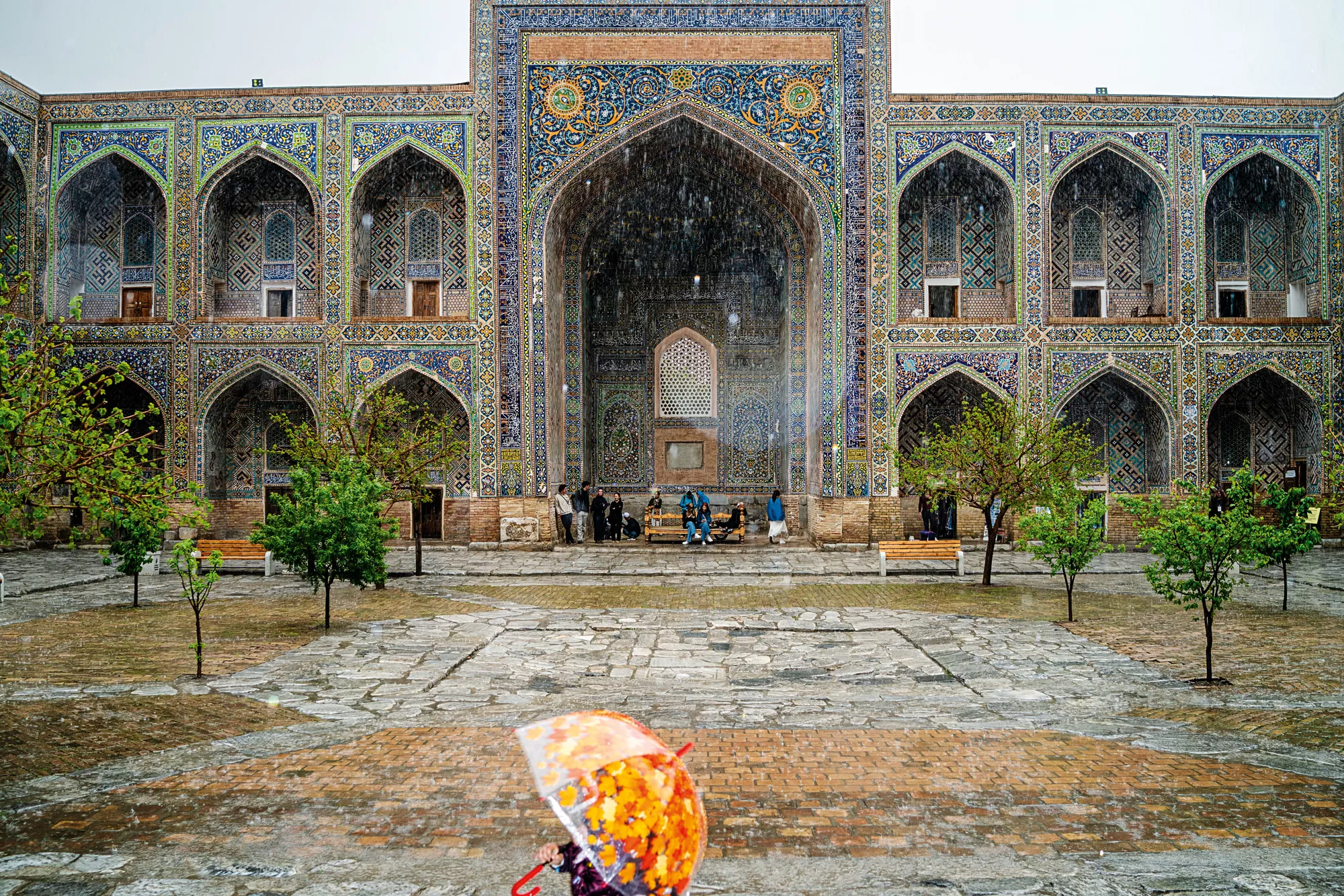
Standing inside the courtyard of the Tilya-Kori Madrasa, he points toward a crack running across the plaster before shifting his attention to a bulge caused by moisture trapped inside the wall. "Look," he says regretfully. "This part now is in a bad condition."
Samarkand lies in a seismically active zone and was repeatedly shaken by major earthquakes in the 18th and 19th centuries, which caused heavy damage to its historic monuments, including the Ulugh Beg Madrasa and the Bibi-Khanym Mosque. According to Khakimov, several domes and minarets collapsed as a result. Smaller tremors, typically reaching magnitude 4.5 to 5.5, still occur from time to time, so the threat remains ever present.
The historic monuments also face constant threats from a buildup of moisture from heavy rains and other factors, and the natural aging of materials. Conservationists like Khakimov monitor the buildings continuously, often searching for changes so subtle that visitors would never notice them.
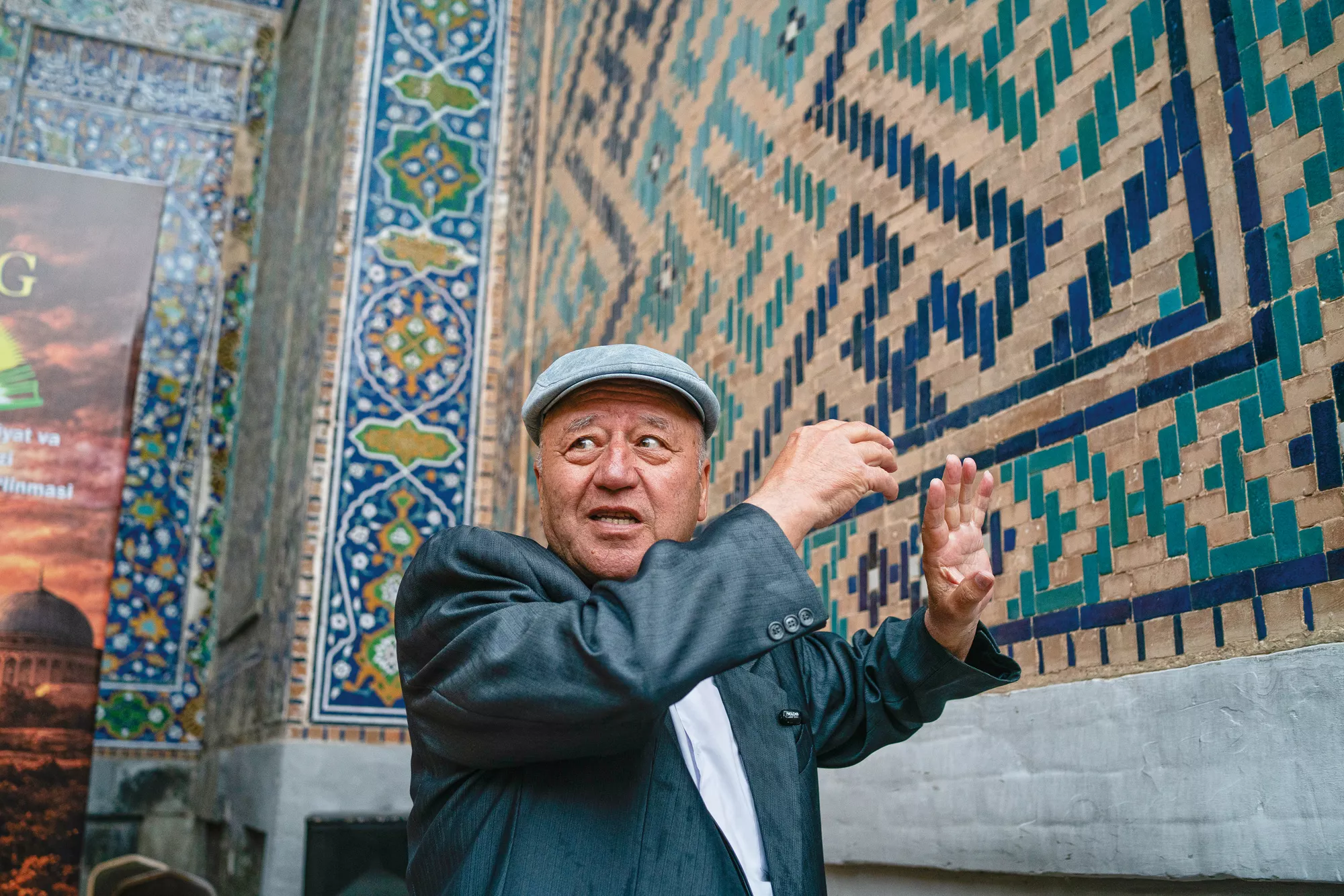
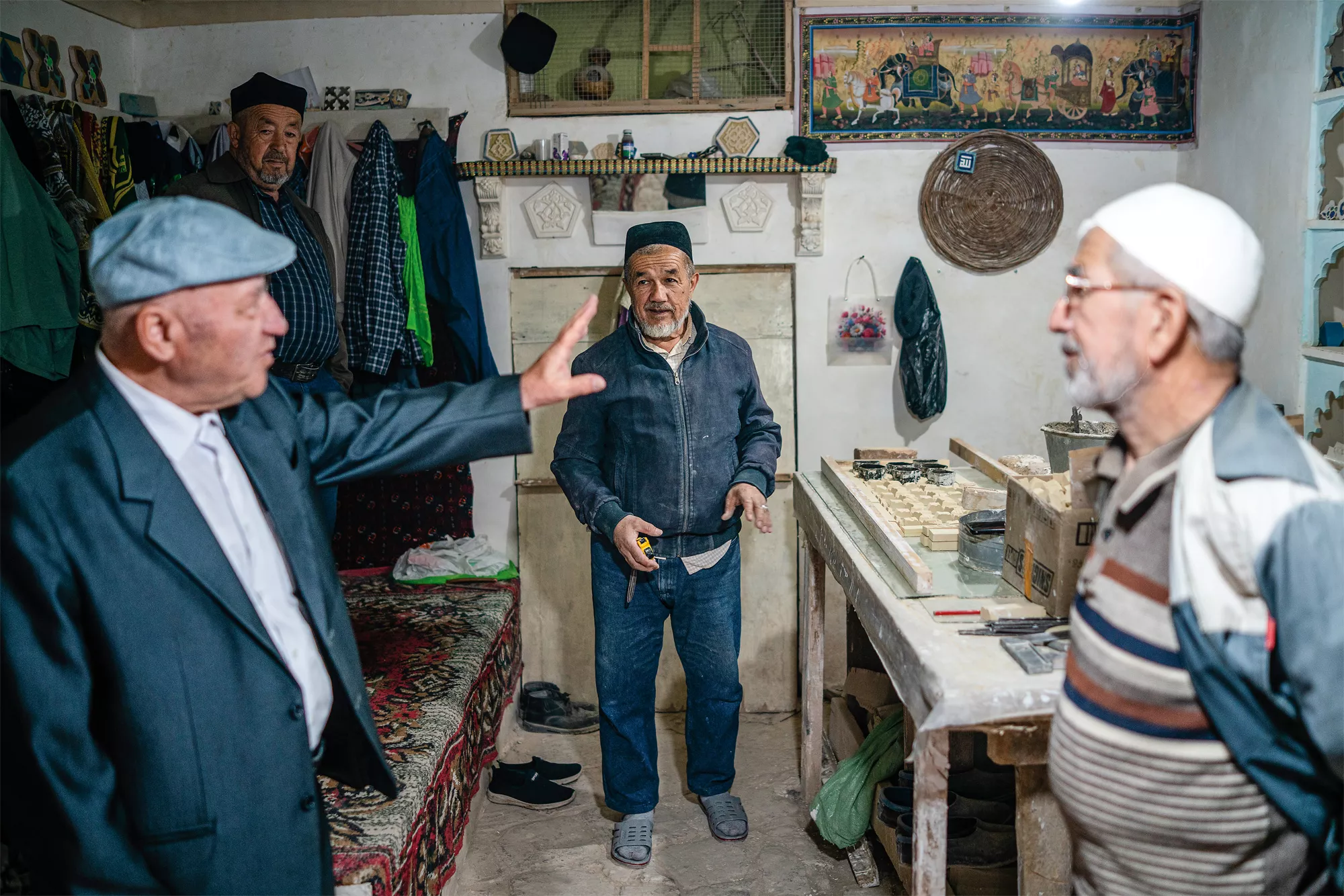
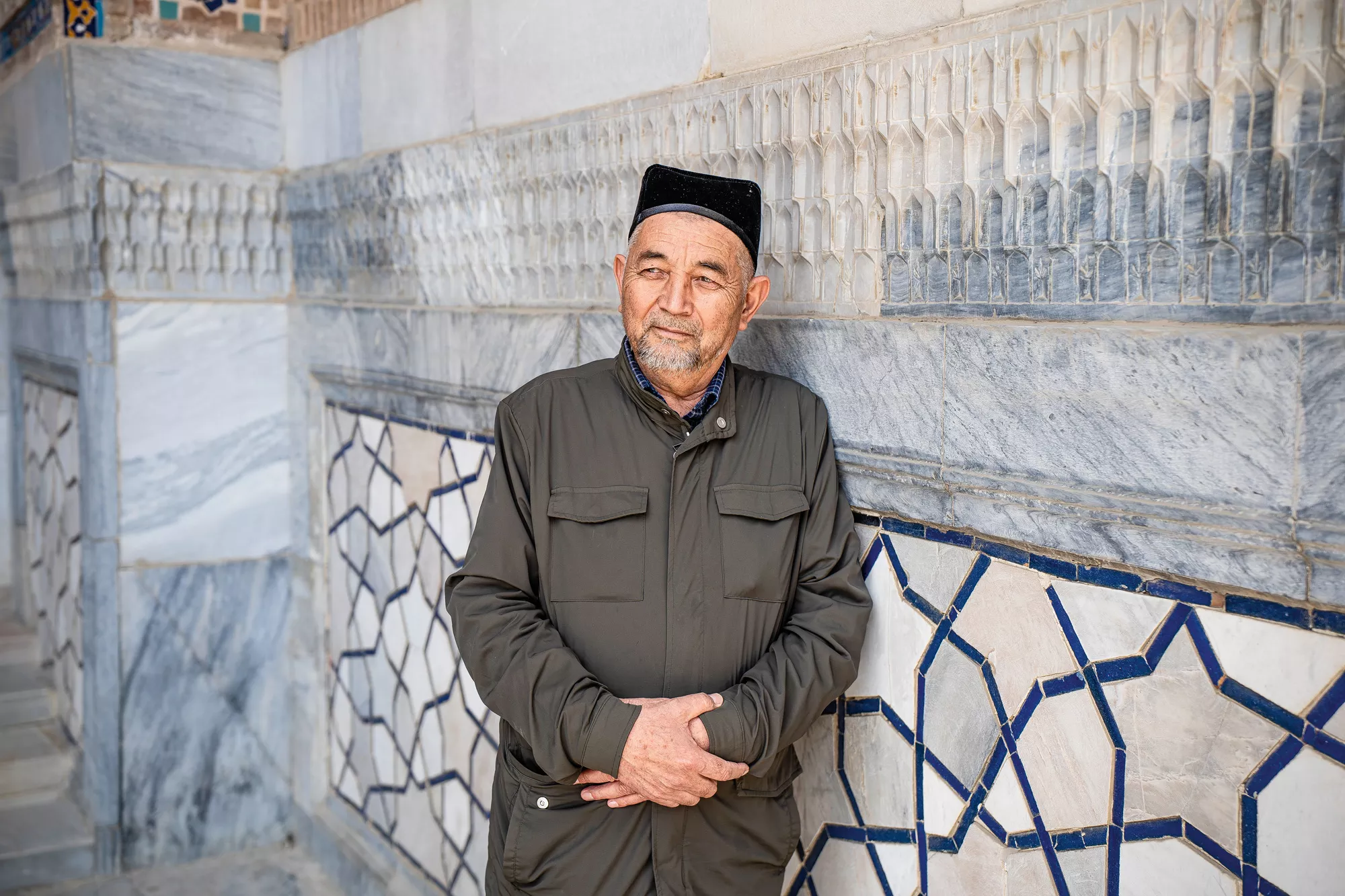
Clockwise from top, left Restorer Davlat Khakimov notes the decorative details of a madrasa at the Registan complex; Khakimov and another restorer, Numon Tairov, discuss their task in a workshop of the Sher-Dor Madrasa; and architect Mamatgul Halikulov muses on the importance of preserving not only the monuments but also the philosophy behind them.
Yet many of the engineering techniques that have allowed the structures to survive for centuries are still functioning today.
"Any architectural monument over a hundred years old is like a wise elder," says Khakimov. "It settles over time."
He explains that the foundations beneath some monuments contain layers of reeds designed to absorb vibrations during earthquakes.
"For example, this monument [the Tilya-Kori Madrasa] sits on a 9-meter foundation with a 10-centimeter layer of reeds beneath it," he says. "When affected by earthquakes or water levels, the reeds act as a natural cushion. Our ancestors calculated all this."
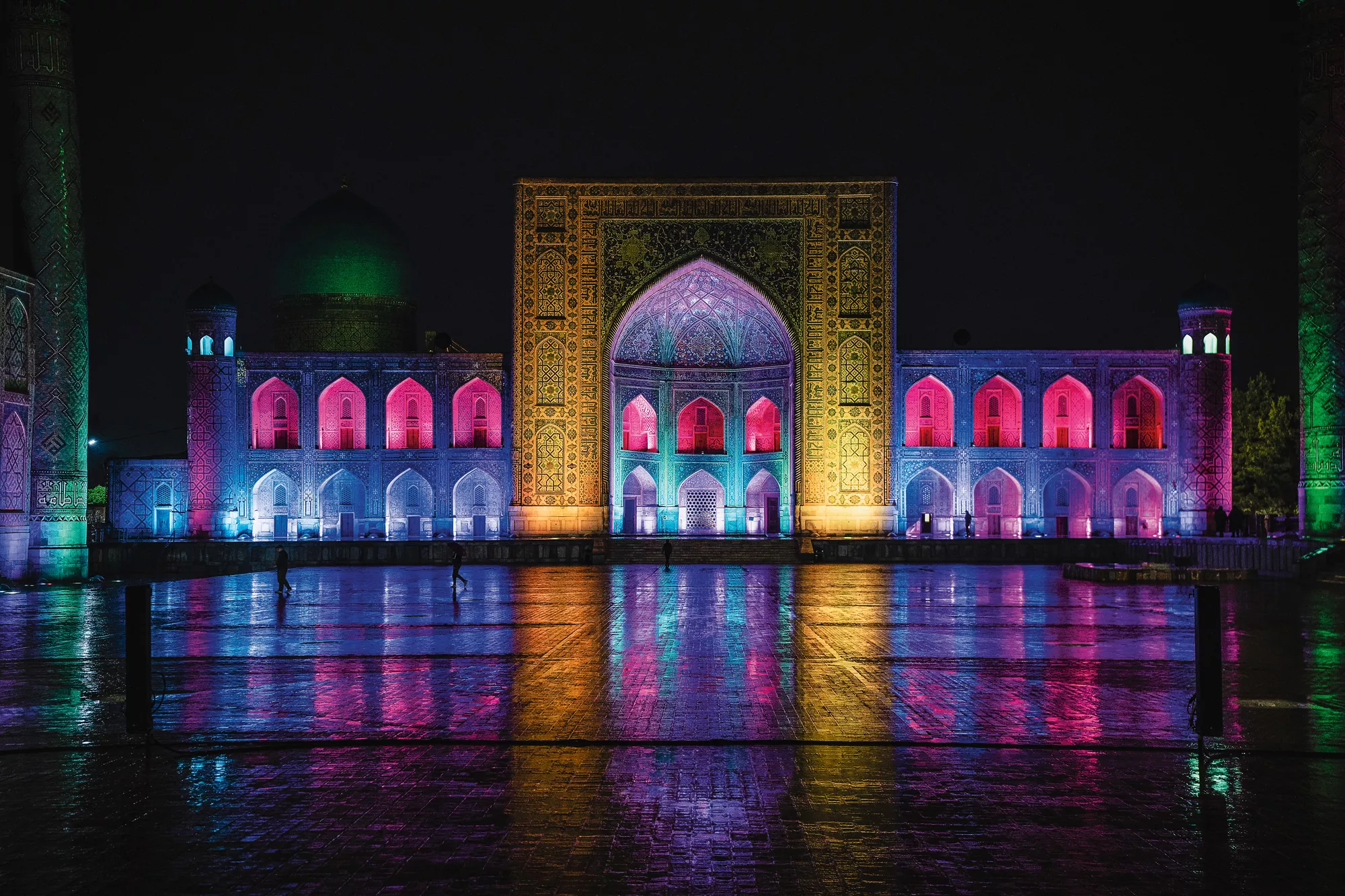
Light shows at night lend drama to the Registan complex, which has survived earthquakes, heavy rains and natural aging thanks to the continual work of conservationists.
Painstaking restoration is a calling
Another challenge facing restorers is deciding how much to reconstruct.
Inside the Tilya-Kori Madrasa, visitors now walk alongside large brick surfaces where decorative stone carving once existed.
"These burnt bricks are conserved areas. Before, there was astonishing stone carving everywhere. Only about 2% of it remains," says Khakimov.
Restoration work attempts to preserve surviving fragments while re-creating missing sections as faithfully as possible.
"We've completely restored the Ulugh Beg Madrasa," he says. "Now, when you walk in, it feels as though it has always been that way."
He points toward a surviving section of carved ornament embedded on a sand-brick wall. "There's a sample here," he says. "We can build on it. Now we can re-create this [mosaic] on all these walls."
The process is painstaking. One square meter of mosaic can contain roughly 2,000 individually cut pieces, all assembled by hand.
To preserve the historic buildings, restorers argue that it is equally important to preserve the traditional methods used to maintain them. Baltayev believes that conservationists must remain loyal to centuries-old technologies and materials.
"You can use modern tools, but the restoration technology is better to stay the same. If we change the technology, this all will die."
"You can use modern tools, but the restoration technology is better to stay the same. If we change the technology, this all will die," he says.
Traditional mosaics here were originally affixed using gypsum plaster rather than cement or industrial adhesives.
"Cement immediately affects the color of the tiles," Baltayev explains. "Over the years, it gets worse and worse. Only gypsum maintains the purity of color. It has been used by humans for 5,000 years," says Baltayev.
His work has taken him across Central Asia, Indonesia, Germany, Türkiye and Russia, yet he always has returned home.
"We have craftsmen who came here as kids, retired and are still working. They've never worked anywhere else except the Registan."
For many restorers, the profession is less a career than a lifelong calling.
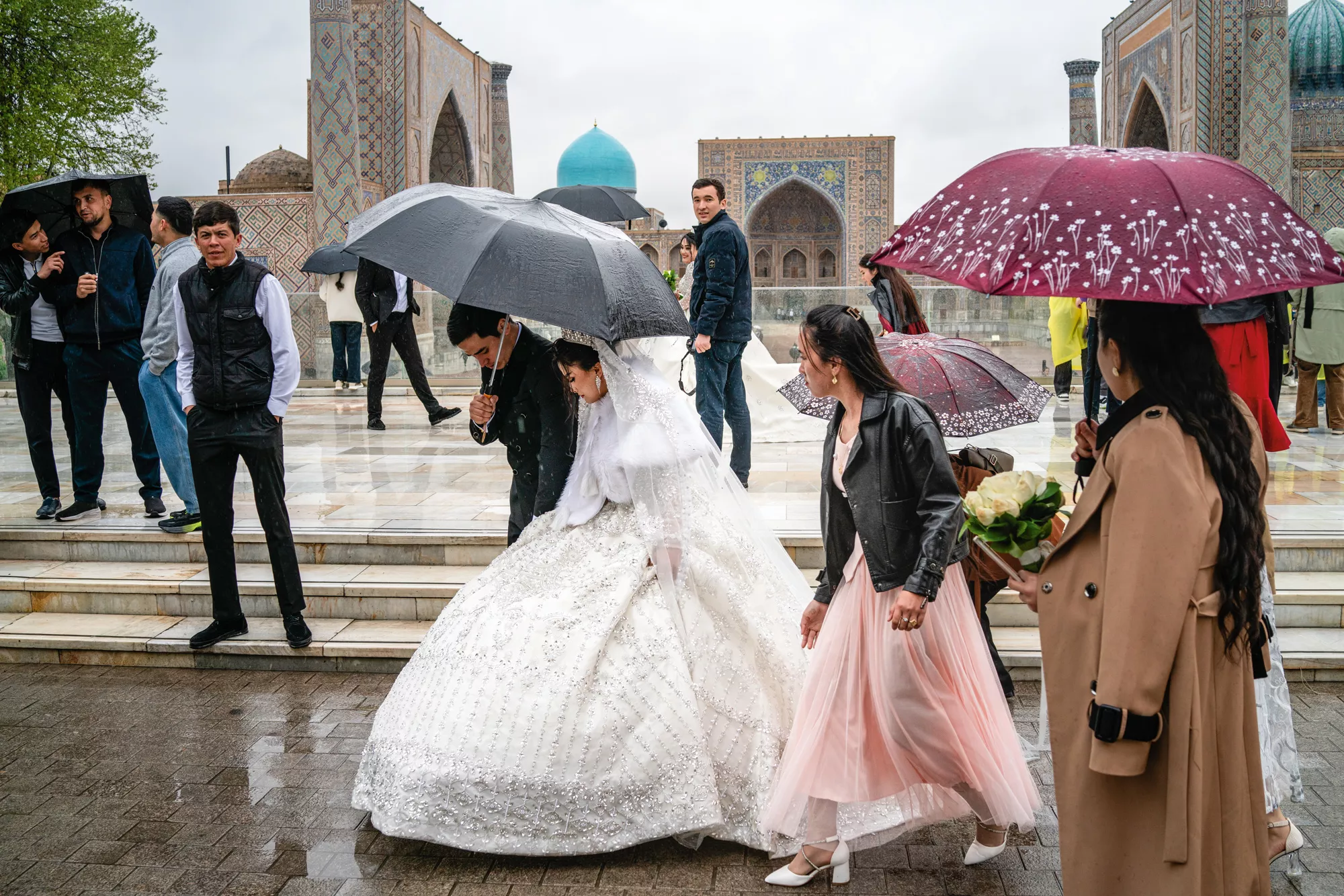
The picturesque Registan Square has seen countless examples of culture and tradition, including weddings, pass through its buildings and courtyards.
"My teacher once looked at me and said, 'Welcome to the ranks of both happy and unhappy people,'" Baltayev recalls. "I asked him what that meant. He replied, 'A happy person is generally someone who has a job he loves. And the unhappy side is that many people don't understand him; he's on his own wave.'"
Outside, visitors continue crossing the Registan beneath its newly restored domes and mosaics. Inside the workshop above the square, artisans quietly continue piecing together fragments by hand, sustaining heritage among monuments that continue to age.
About the Author

Aibarshyn Akhmetkali
Aibarshyn Akhmetkali is a contributing writer to AramcoWorld based in Astana, Kazakhstan. Her work mainly focuses on the culture, history and arts of Central Asia.
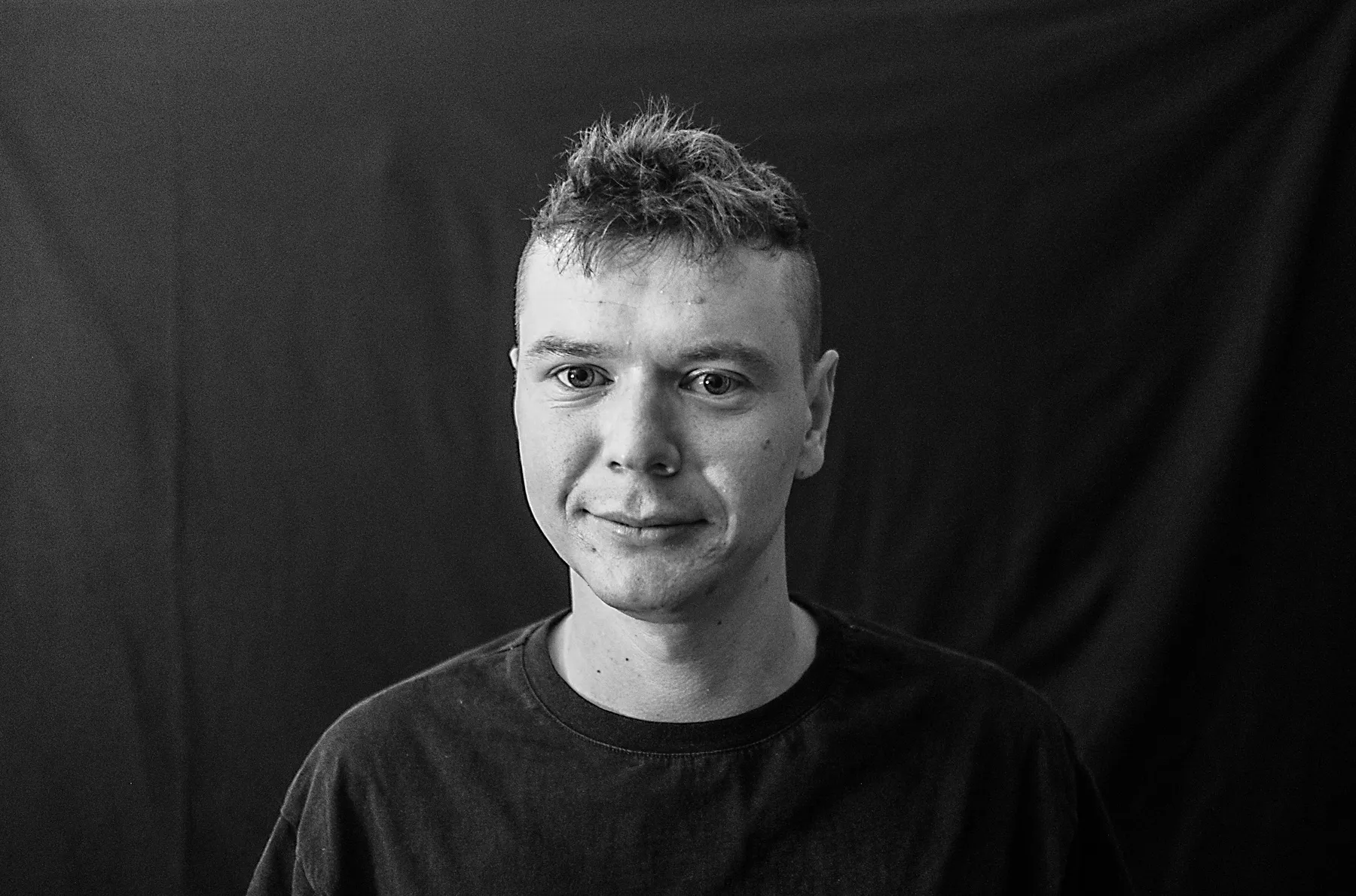
Danil Usmanov
Danil Usmanov is a documentary photographer dedicated to capturing the untold stories of Central Asia. His work has been featured in The Guardian, Die Zeit, Meduza, Le Monde, New Lines Magazine and Der Spiegel.
You may also be interested in...

Journalist Leyla Hamed Finds Her Voice in Football's Human Stories
Moroccan Spanish journalist Leyla Hamed has built a career telling the human stories inside football, the world's largest sport.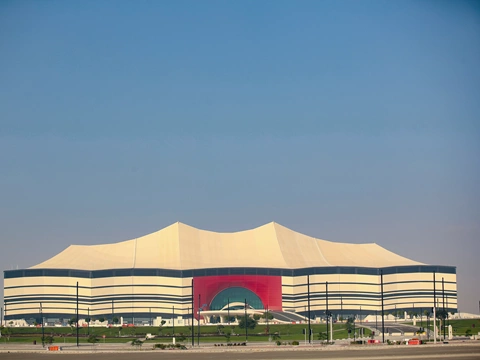
World Cup Stadiums Built on Nations’ Living Heritage
Culture
Football grounds are no longer just engineered arenas. They are designed to project cultural and national identity—and leave a legacy long after the final whistle.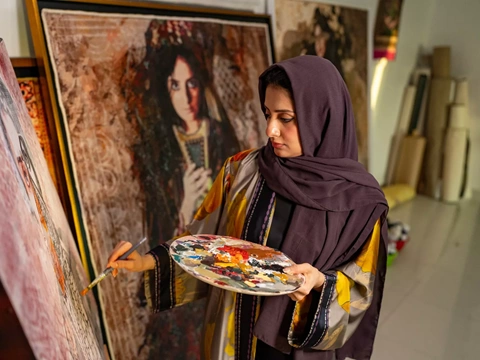
Fatimah Al-Nemer: Art Beyond Esthetics
Saudi Arabian visual artist Fatimah Al-Nemer's contemporary pieces place women at the center of an exploration of identity and heritage.