From Influence to Innovation: How Cultural Exchange Shaped Gaudí’s Architecture
Architecture
Art
History
Europe
Can cultural influence inspire originality? Students examine Gaudí’s buildings to trace how Islamic forms and ideas became architectural innovation.
The following activities and abridged text build off, "Celebrating Antoni Gaudí, Visionary Architect, 100 Years Later," written by Jacky Rowland and photographed by Matthieu Paley.
WARM UP
Scan the articles photos and captions to predict its main idea.
IF YOU ONLY HAVE 15 MINUTES ...
Analyze textual evidence to explain how cultural influences, color and light shaped Gaudí’s architectural innovations.
IF YOU ONLY HAVE 30 MINUTES ...
Extract and analyze evidence to explain how Gaudí transformed cultural, natural and technological influences into architecture.
VISUAL ANALYSIS
Compare three Gaudí buildings to trace how cultural influences evolved through adaptation into architectural innovation.
From Influence to Innovation: How Cultural Exchange Shaped Gaudí’s Architecture
Directions: As you read, watch for highlighted vocabulary words. Use context clues to predict their meanings, then check your understanding. After reading, answer the questions.
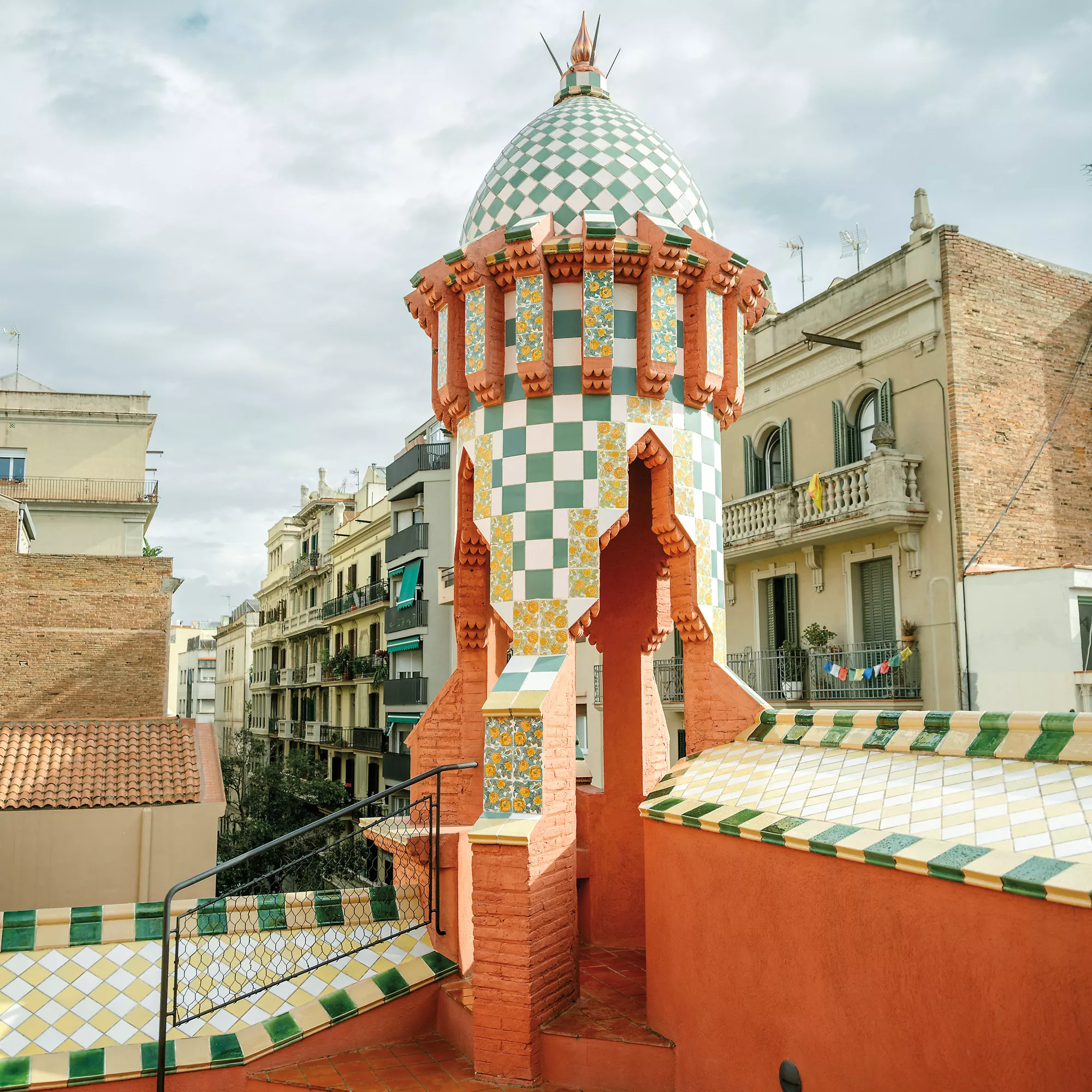
On an ordinary street in Barcelona, an extraordinary building rises from the ground. Clad in green-and-white tiles and crowned with small towers that resemble minarets, the house can seem like an architectural postcard from beyond Spain’s borders.
The building is Casa Vicens, the first major project of Catalan architect Antoni Gaudí. Its Islamic and Mudéjar influences reveal an idea that would develop throughout his career: Gaudí studied architectural traditions he encountered, combined them with other influences and gradually developed a language of his own.
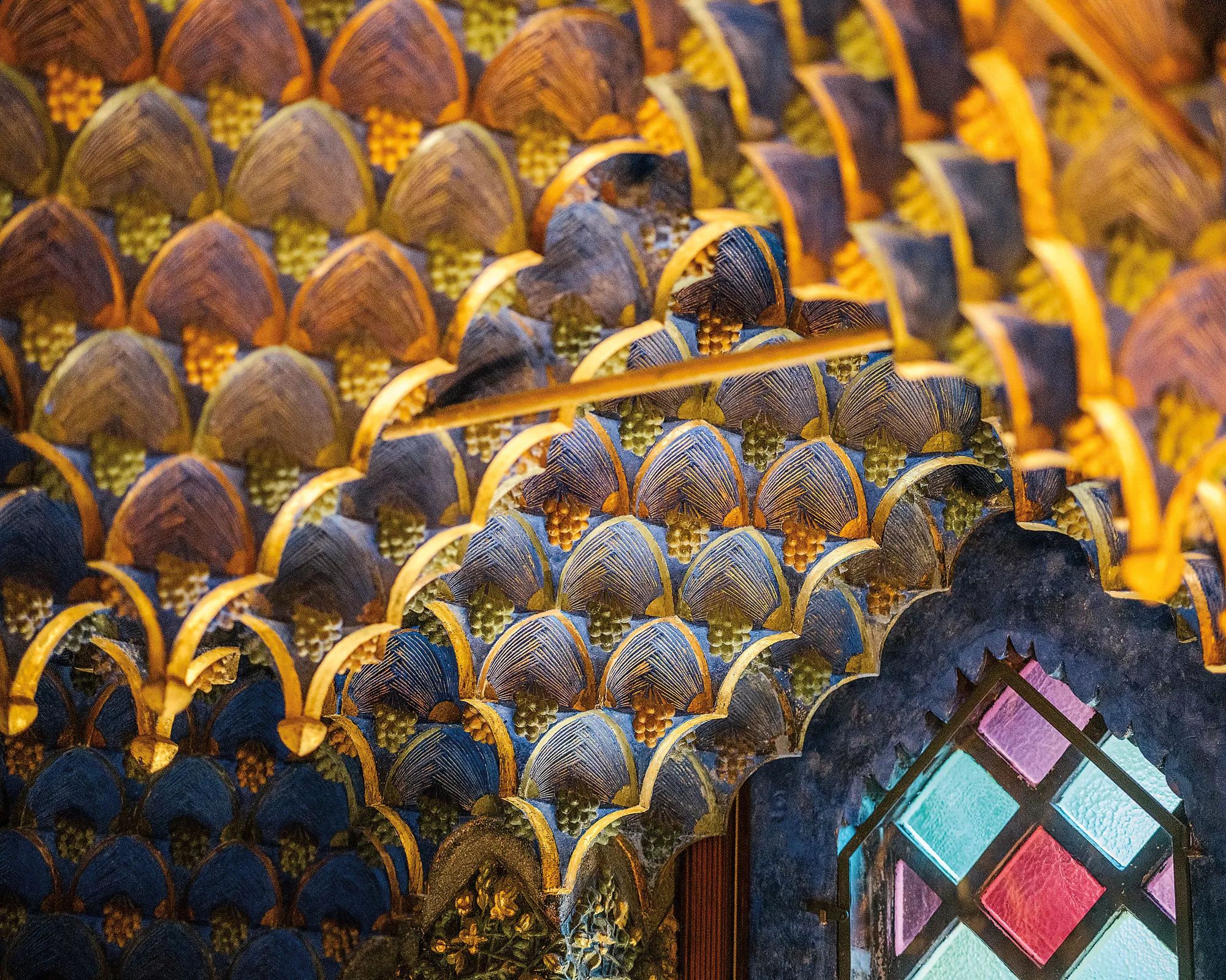
Mudéjar architecture developed in medieval Spain as Muslim craftsmen incorporated Islamic artistic techniques into Christian buildings. At Casa Vicens, latticework evokes the carved wooden screens known as mashrabiya, while muqarnas—three-dimensional decoration that creates honeycomb-shaped niches—covers a vaulted ceiling.
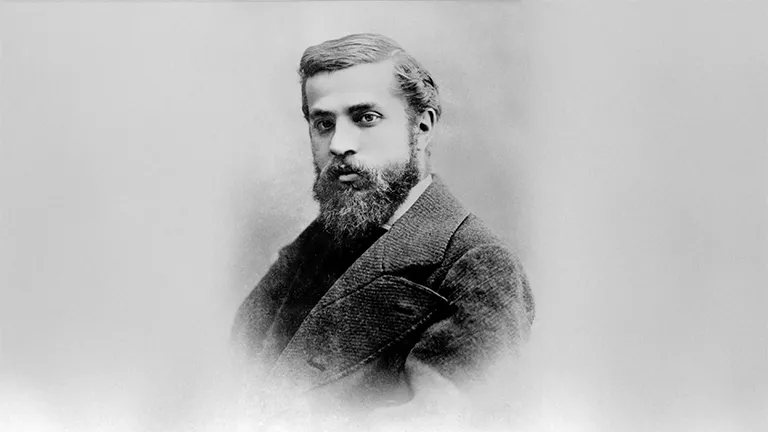
Gaudí’s Early Life and Influences
Born in 1852 in Catalonia, Spain, Gaudí grew up surrounded by natural forms that would later surface in his architecture. At age 16, he moved to Barcelona during the Industrial Revolution and La Renaixença, a cultural revival promoting Catalan language and identity. This combination of modernity and tradition helped shape his worldview.
Gaudí sometimes clashed with his teachers but excelled at drawing, geometry and history. When he graduated in 1878, school director Elies Rogent famously said, “We have either given a diploma to a madman or to a genius.”
Inspiration From Islamic Art
As an architecture student in the 1870s, Gaudí studied images of Egyptian, Indian and Persian buildings and the Alhambra in Granada, one of the best-preserved palaces of the historical Islamic world. At the time, Orientalism was popular throughout European art. But Gaudí’s engagement with Islamic architecture went beyond decoration.
“I think what Gaudí did really well in his architecture is that his Islamic influences were more complex than just borrowing its forms,” said Sofya Abramchuk, former head of design at the Gaudí Foundation.
Gaudí became interested not only in architectural forms but also in the principles behind them. Geometry could communicate order and unity. Light could transform how people experienced a space, while ceramic tiles offered both color and architectural function.
From Influence to Innovation
As Gaudí’s style developed, recognizable Islamic references gave way to more fluid, organic forms. Yet ideas involving light, color, geometry and ornament remained part of his architectural language.
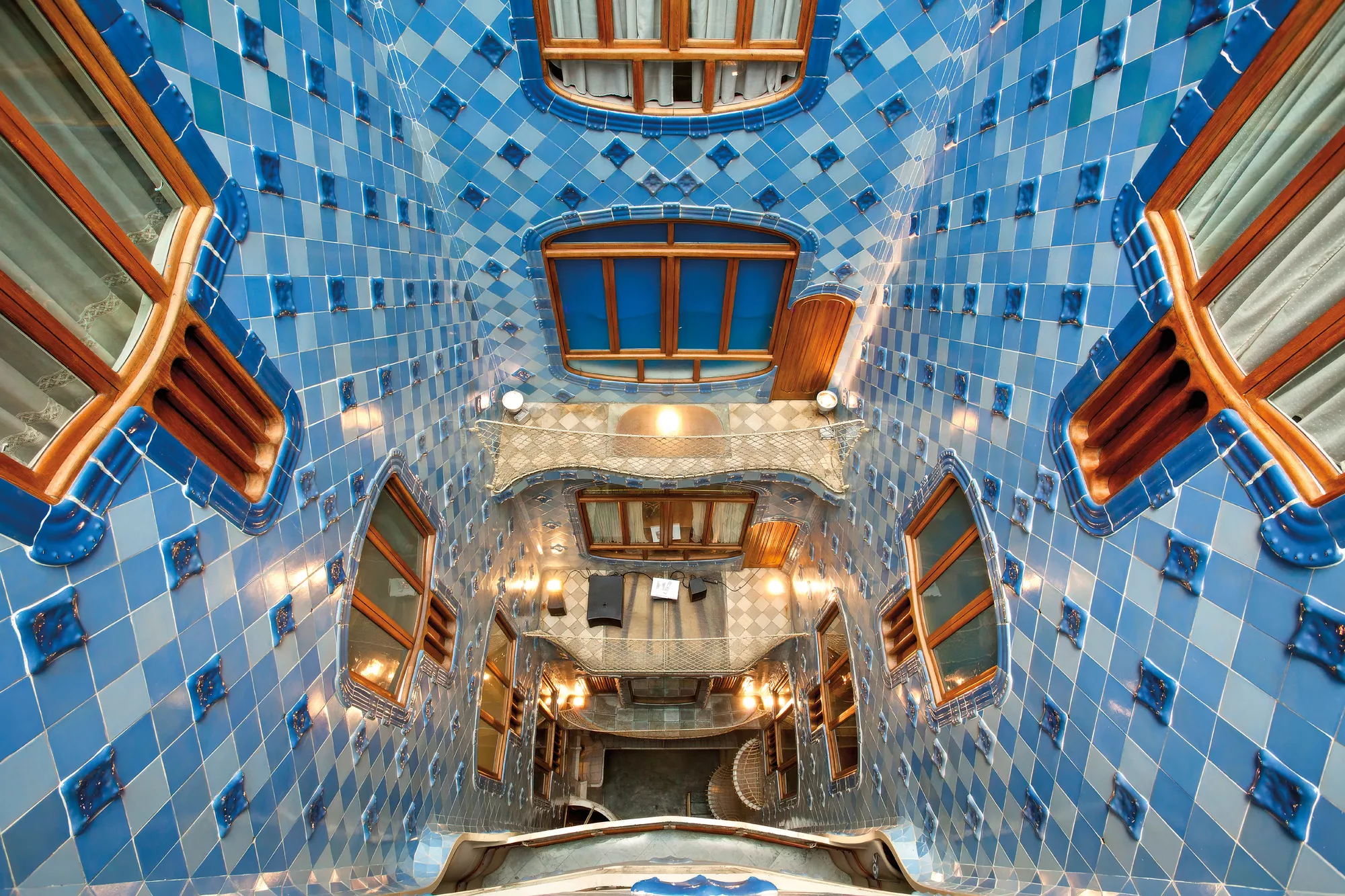
Casa Batlló demonstrates this transformation. Its curved forms differ from Gaudí’s earlier work, but an inner courtyard channels sunlight and ventilation, much like a riad, or traditional Islamic home. Tiles shift from dark blue at the top to lighter shades below, helping distribute light evenly.
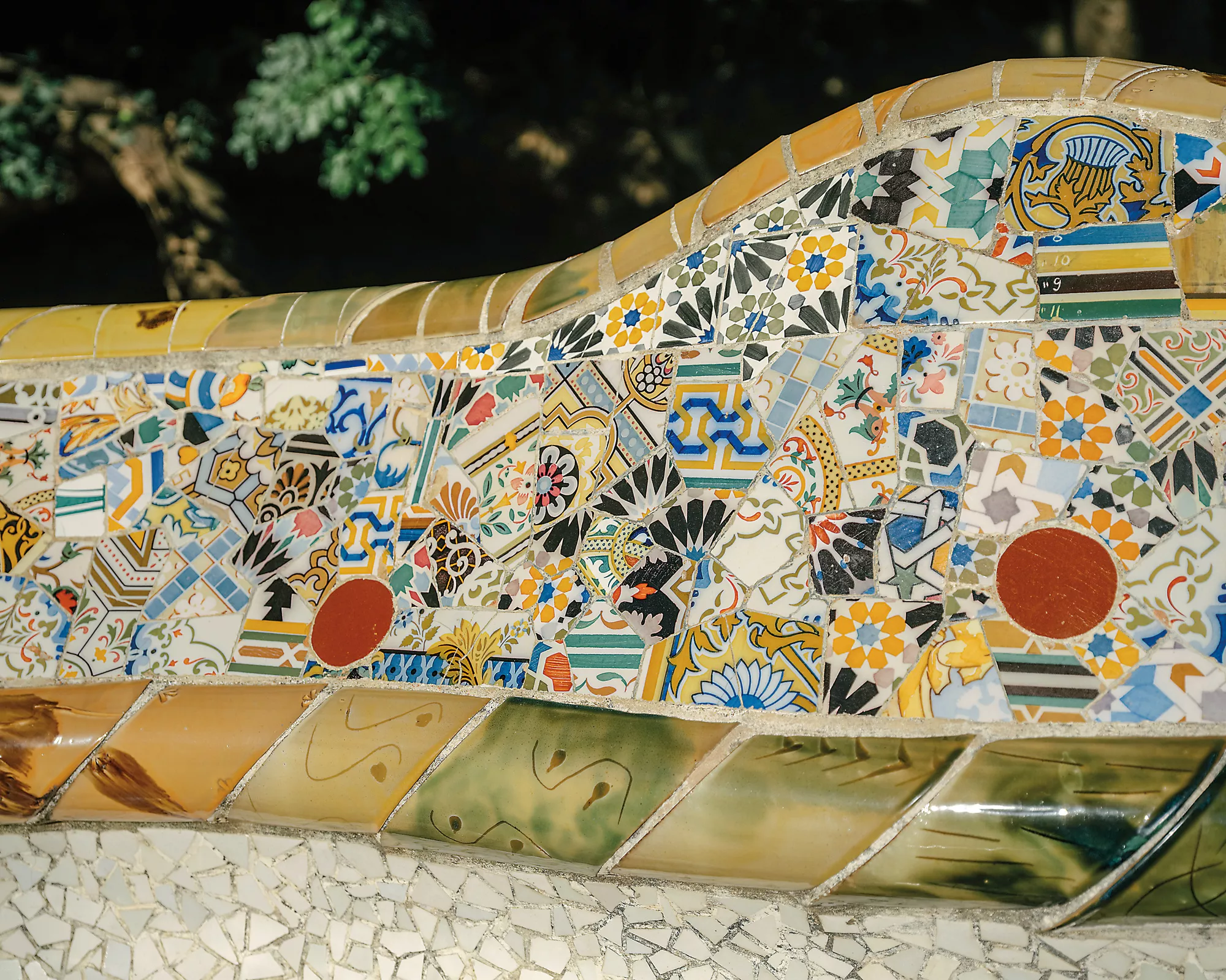
Gaudí also used trencadís, a mosaic technique made from shattered ceramic. Its patterns have been compared to zillij, the geometric mosaics found on Moroccan walls and fountains. While zillij relies on precision-cut pieces, trencadís embraces irregularity. Both transform small fragments into patterns that interact with light and shadow.
The Sagrada Família: A Lifetime Project
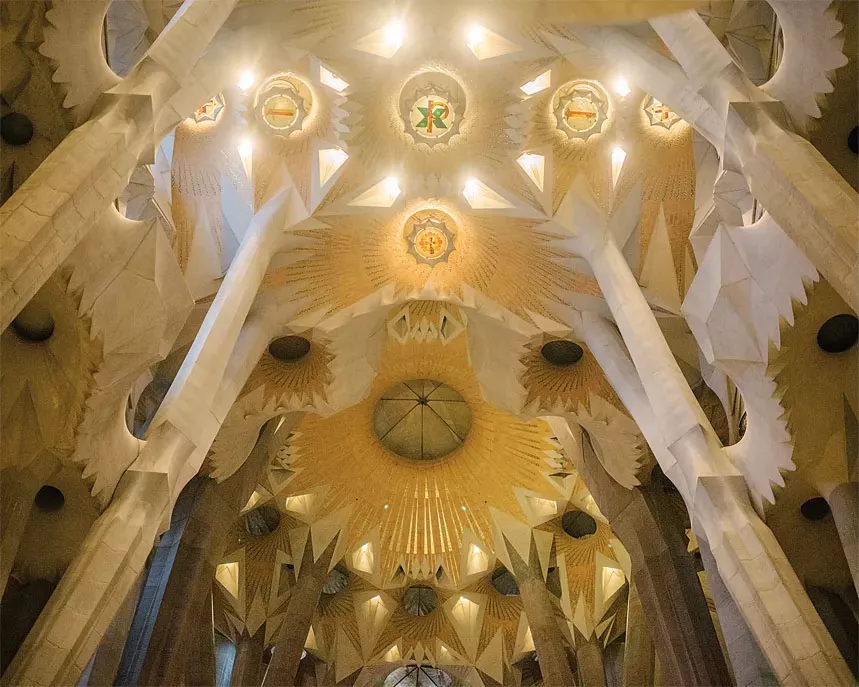
Gaudí’s most famous work, the Sagrada Família, shows how far his architectural language had developed. Inside, columns branch out like trees, while light pours through stained-glass windows, filling the space with changing colors throughout the day, from cool blues in the morning to warm golds in the evening.
“Gaudí recognized in Islamic esthetics the same spirituality he sought to re-create in his own spatial concepts,” said Middle East cultural historian Diana Darke.
“He was inspired by the relationship between nature and the divine that he saw in Islamic art and architecture, sensing God in the same spatial uncertainties, the same interplay between light and shadow.”
Near the tops of the spires, words appear in white ceramic tiles. Historian Joan Aicart notes that calligraphy and invocations commonly appear on walls in Islamic architecture but are less common in Christian architecture.
Gaudí’s Legacy
Today, Gaudí is recognized as a leading figure of Modernisme, Catalonia’s version of art nouveau. Seven properties containing his works are recognized by UNESCO as a World Heritage Site.
Gaudí’s architecture demonstrates how cultural influence can lead to innovation. His early buildings contain recognizable elements of Islamic and Mudéjar architecture, while his later works transform ideas about geometry, color, light and spirituality into something increasingly his own.
His buildings show that originality does not require creating without influence. New ideas can emerge when people study other traditions, understand the principles behind them and transform what they encounter. Gaudí’s architecture thus represents a continuing dialogue across cultures, expressed through geometry, color, light and space.
Other lessons
How To Improve Student Confidence Through Seeing Math Differently
For the Teacher's Desk
Hands-on activities shift math from memorization to exploration—building confidence and curiosity in the classroom.
Visualizing From Where Food Comes: Teaching Environmental and Social Impacts of Global Farming
Environmental Studies
Geography
Examine global food production through George Steinmetz’s aerial imagery and evaluate how farming affects people, ecosystems and sustainability.
How Saffron Took Root in America: Tracing a Global Spice Through Pennsylvania Traditions
History
Americas
Analyze how the movement of saffron through premodern networks into Pennsylvania farms reveals how labor, migration and tradition shape local culture.