
Sevdalinka in Dubrovnik: A Lesson in Music, Tradition and Change
Anthropology
Europe
Examine how singer Ibrica Jusić connects Dubrovnik and the Bosnian musical tradition of sevdalinka to reveal how personal interpretation carries music forward.
The following activities and abridged text build off, "Echoes Through Dubrovnik: Sevdalinka’s Timeless Tales of Longing," written by Ian Bancroft and photographed by Armin Durgut.
WARM UP
Scan the articles photos and captions to predict its main idea.
IF YOU ONLY HAVE 15 MINUTES ...
Compare scenes from Jusić’s “Katarina” video with the reading to discuss music, place and human connection.
IF YOU ONLY HAVE 30 MINUTES ...
Map evidence, compare change and continuity, and build an argument about how musical traditions continue.
VISUAL ANALYSIS
Interpret a photograph’s use of setting, then storyboard a musical practice to communicate transmission, interpretation and connection.
Directions: As you read, watch for highlighted vocabulary words. Use context clues to predict their meanings, then check your understanding. After reading, answer the questions.
Echoes Through Dubrovnik: Sevdalinka’s Timeless Tales of Longing

From beyond Dubrovnik, Croatia’s commanding stone walls, an elderly gentleman with swept-back gray hair emerges with cautious steps. In his left hand, a guitar case; in his right, a long lead restraining an Akita named Simba. These are his two anchors, his two loves.
For more than 60 years, Ibrica Jusić has been one of the stars of sevdalinka, a musical genre associated with neighboring Bosnia and Herzegovina. Through acoustic guitar and deeply emotional vocals, he has woven a distinct and recognizable style.
The word sevdalinka derives from sevdah, or in Ottoman Turkish sevda, meaning love, longing or passion.
For Nirha Efendić, an ethnologist and curator at the National Museum of Bosnia and Herzegovina, sevdalinka is a “traditional Bosnian love song that appeared in a Muslim environment … rooted in the local Slavic tradition but heavily influenced by the Oriental way of living.”

It flourished from the 16th century in the mahalas (urban neighborhoods) where the lives of men and women were strictly separated and meetings between young people before marriage were heavily supervised. Often the woman could see the man completely, but he couldn’t see her. “That environment is exactly where sevdalinka appeared in its most beautiful verses—born from that tension of intense desire on one side and an insurmountable barrier of tradition on the other,” Efendić explains.
Many of the songs are not abstract reflections but instead capture a lived moment—a chance encounter, longing and yearning, a forced separation.
What distinguishes sevdalinka, or sevdah, is the emotional weight with which it is sung.
“Sevdah is lived,” Jusić continues. “It has to deeply move us, to season our souls. That is how it has always been.”
Zanin Berbić, one of the rising stars of sevdalinka in Bosnia and Herzegovina, started singing these songs as a child. “For me, sevdalinka means life,” he says. It is “a unique song because it represents a conglomerate of different cultural influences that permeated Bosnia and Herzegovina for centuries.”
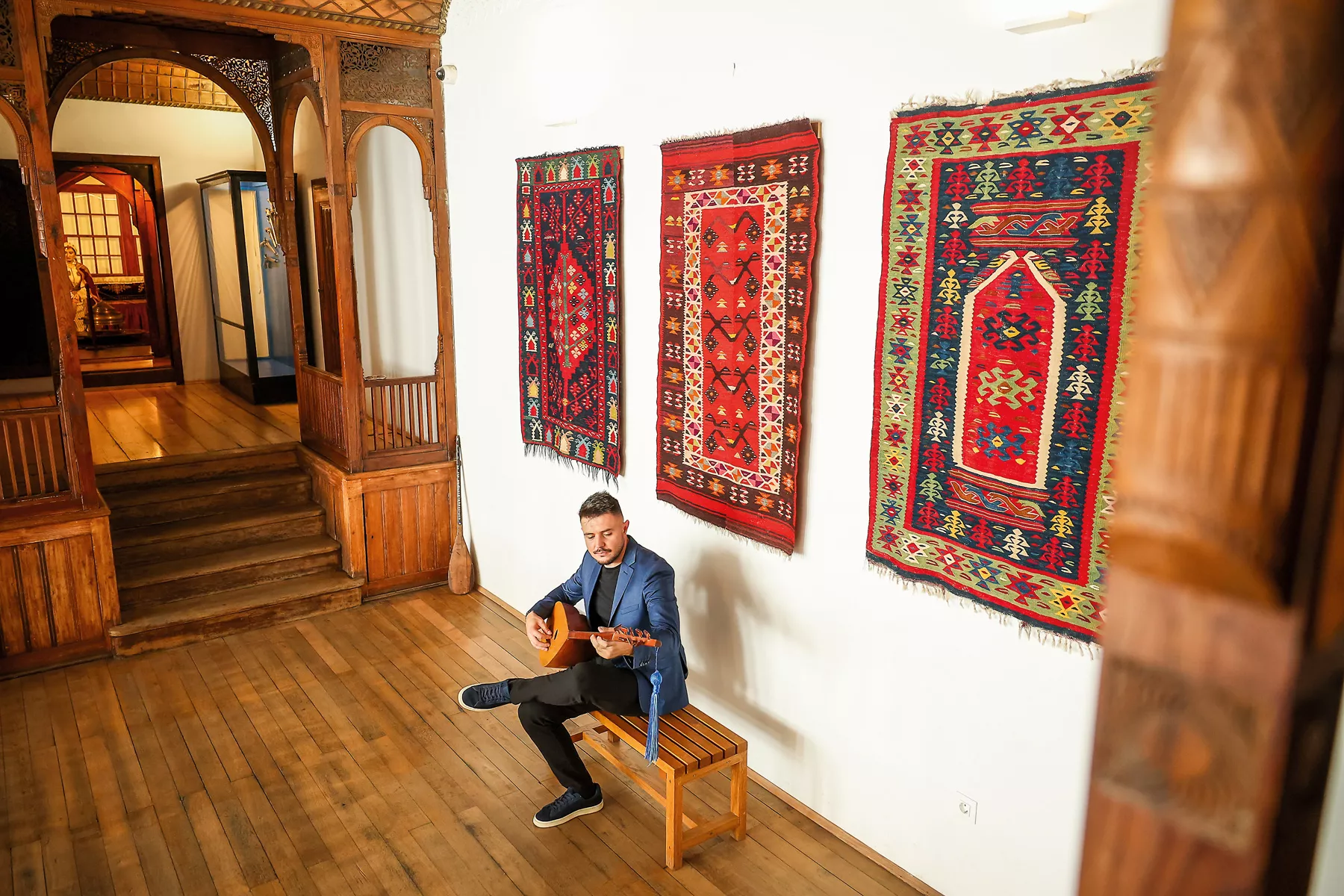
The genre has evolved through several distinct historical phases, according to Efendić.
“That first phase was when public meetings were problematic and the songs lived in private spaces,” she says. The transition to Austro-Hungarian rule in the late 19th century saw sevdalinka “moving from private houses to cafes (kafanas, as the Ottomans called them) … blending a la Turca and a la Franca styles.” The advent of radio finally brought it into homes in urban and rural areas.
One of seven children, Jusić was born into a musically gifted but impoverished household. Music was both an inheritance and a form of escapism. “My mother sang very beautifully,” Jusić continues. “She had a gentle soprano voice … around the dinner table, it sounded gorgeous.” Her delivery became a blueprint for his own.
After serving in the Yugoslav army, he returned broke and desperate. He took his guitar to the stone stairs, known as skaline, outside the Dominican monastery. A young couple stopped to listen. “My heart was captured,” he says, adding, “Someone is listening to me. I’m not alone!”
Those steps became his stage and emotional home, his audiences drawn from the different religious traditions of Dubrovnik.
Sevdalinka was not the only musical influence he was exposed to in his youth. Along with local legends, Jusić became a definitive pillar of the coastal chanson style. Wherever Jusić went, however, he carried sevdalinka in his soul, remaining true to its ideals.
“Ibrica is incredibly knowledgeable and truly understands the tradition of sevdalinka,” Efendić says. “He lives it and feels it deeply. He knows how to transmit the genre in his own specific way. He creates modern arrangements, but he deeply respects and knows the ‘soul’ of sevdalinka.”
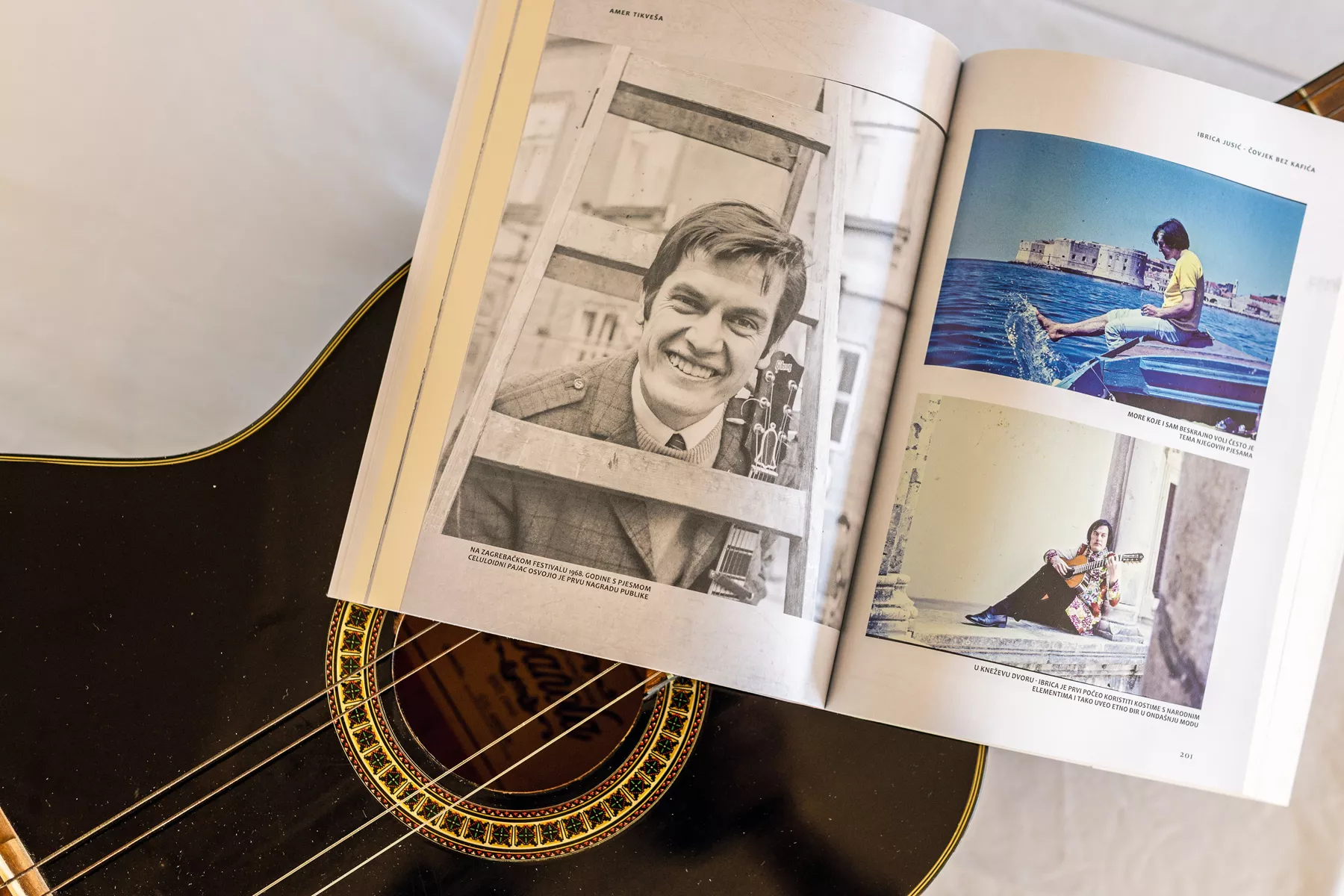
As the older generation has passed away, responsibility for guarding these principles has fallen on Jusić’s shoulders. For him, the future of sevdalinka depends entirely on that spiritual preservation.
It requires a certain setting, a venue where an audience member can feel that it is them, and only them, who is being sung to. It is about proximity, not amplification.
Other lessons
Learning Center Lesson: How Saffron Took Root in America: Tracing a Global Spice Through Pennsylvania Traditions
History
Americas
Analyze how the movement of saffron through premodern networks into Pennsylvania farms reveals how labor, migration and tradition shape local culture.
Teaching Science? Start With a History Lesson
For the Teacher's Desk
Including historical findings can help students understand how science advances—one step at a time, often with a bit of help from serendipity.
Teaching Empathy: Five Classroom Activities From AramcoWorld
For the Teacher's Desk
Help students build empathy and community for the academic year with AramcoWorld’s stories and Learning Center lessons.