Meet the Gemologist Who Digs Into Nigeria's Little-Known Treasures
Engineer, gemologist and jeweler Lotanna Amina Okpukpara explores rural artisanal mining sites to promote gems in Nigeria.
Every gemstone has two stories. One begins millions of years ago, beneath the earth’s surface. The other begins when someone discovers it.
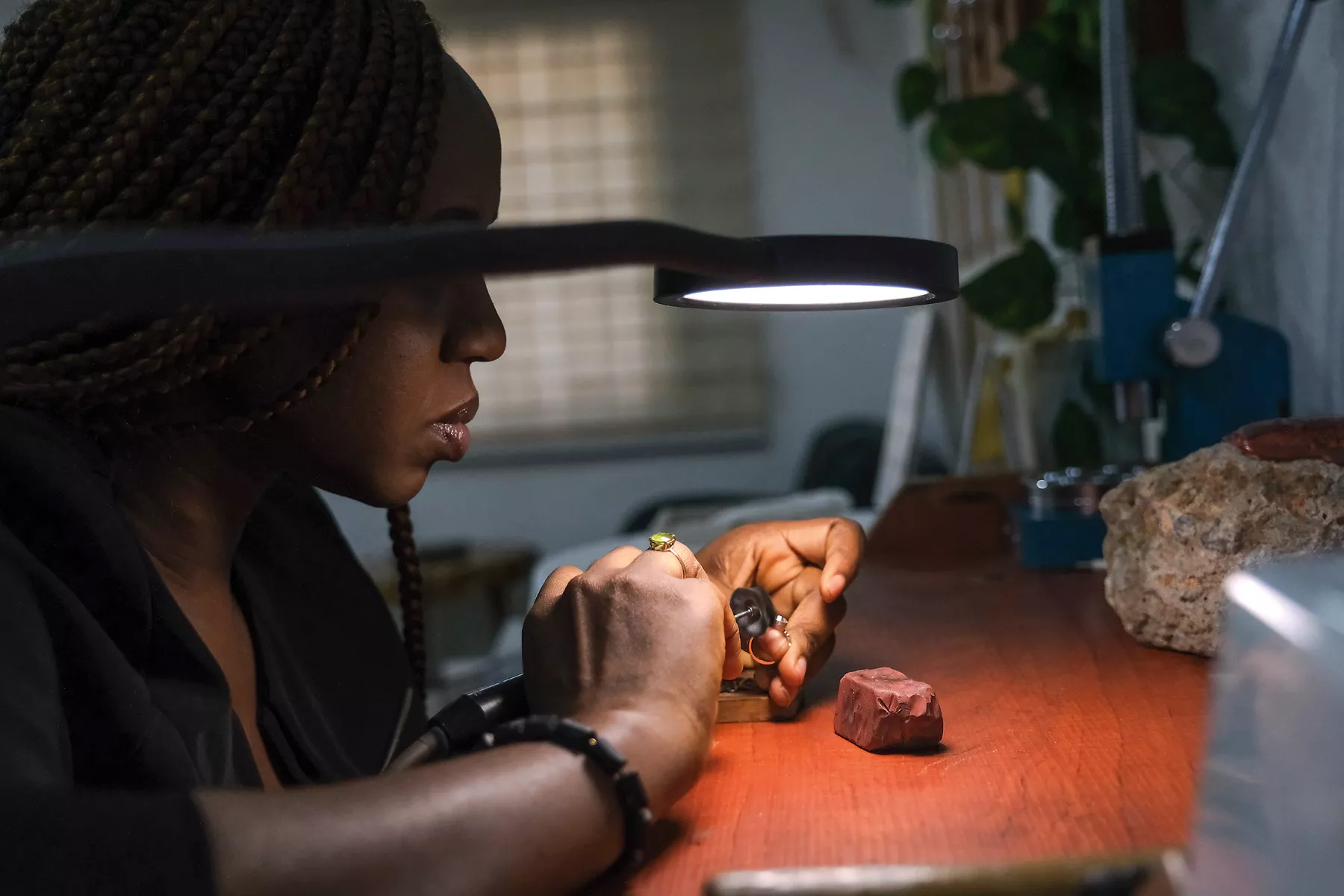
For engineer, gemologist and jeweler Lotanna Amina Okpukpara, the search to discover such stones has become her life’s work.
Long before she could identify quartz or distinguish aquamarine from sapphire, Okpukpara spent her childhood collecting unusual stones on walks home from school in Abuja, the capital of Nigeria. She lugged them home simply because they fascinated her, unaware that those small discoveries hinted at one of Nigeria’s richest natural treasures.
Years later, while studying through a scholarship with the Gemological Institute of America (GIA), she made a discovery that surprised even her. Nigeria, she learned, possessed an extraordinary diversity of colored gemstones—yet few people, either inside or outside the country, knew much about them. “I’m a Nigerian,” she remembers thinking. “I’m going to find the stones.”
Nigeria is best known for its tourmalines, according to the GIA, but its ancient rock formations also produce sapphires, emeralds, aquamarine and other members of the beryl family. Most are mined by artisanal miners working across the country’s central and eastern regions.
Through her company, Mina’s Stones, Okpukpara works alongside artisanal miners to build transparent supply chains, encourage fairer trading practices and ensure mining communities remain partners in the value created by the gemstones they uncover. She also helped organize West Africa’s first gemstone and jewelry show, introducing many Nigerians to the remarkable variety of stones found beneath their own landscape.
AramcoWorld spoke with Okpukpara about discovering Nigeria’s hidden gemstone landscape, working alongside artisanal miners and why she believes the country’s geological treasures deserve greater recognition.
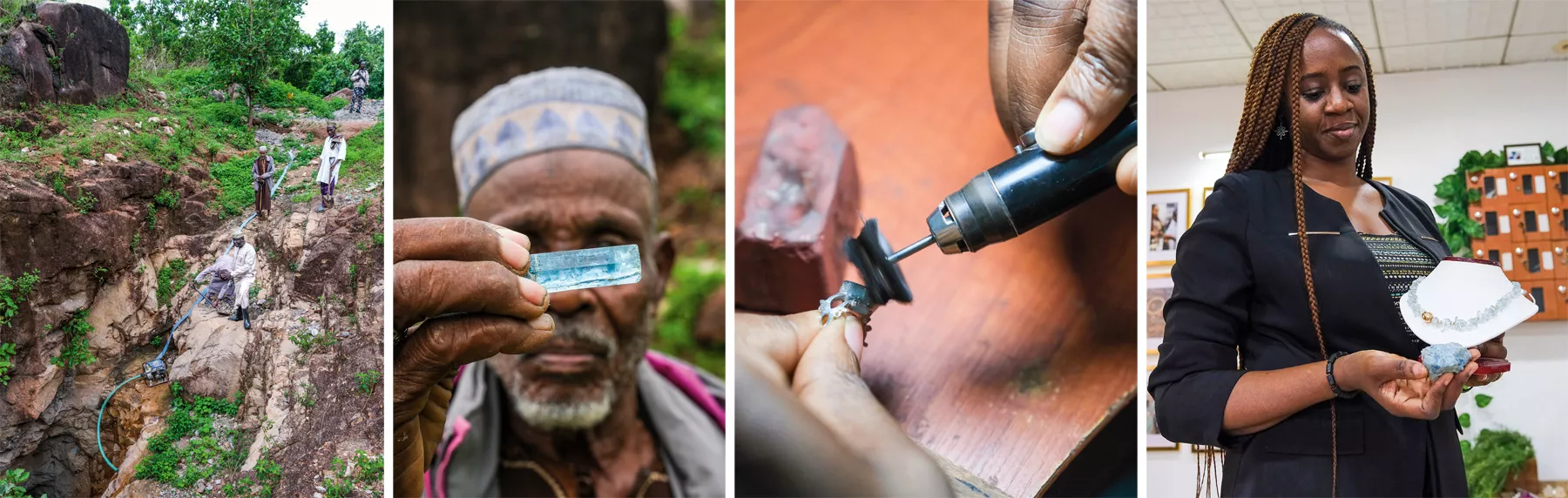
Through her company, Mina’s Stones, Okpukpara partners with artisanal miners to unearth a variety of gemstones that, once crafted into jewelry pieces, showcase an element of Nigeria’s rich history.

Lotanna Amina Okpukpara touts Nigeria’s geological treasures.
Courtesy of Lotanna Amina Okpukpara
Can you take us back to the first gemstone you ever found?
I was 7 years old. It was a quartz, and it just felt different. I don’t really know how to explain it. I knew I was holding something unique, or just something that had some sort of connection to somewhere. … I found it after school by the side of the playground. It wasn’t a completely clear gem, but it was shiny and kind of whiteish. I remember taking it back home, and I got in trouble because my mum was like, “Why are you bringing rocks home?”
What kind of gemstones do you source today?
It’s mostly aquamarine, so beryl. Then we get some heliodor as well. Heliodor is a yellow version of the beryl family. They all have the same chemical composition and physical structure. The only thing that makes one gemstone pink, blue or yellow is a trace element. The beryl family has aquamarine, emerald, morganite, heliodor and goshenite. Goshenite is colorless, heliodor is yellow, aquamarine is blue, morganite is pink, and emerald is green.
Beryls occur a lot in that area, and tourmalines as well, in greens, pinks and oranges.
For readers who aren’t experts, what counts as a small stone and what counts as a large stone?
We don’t really have a standard for a small stone or a big stone.
Stones between 0 to 3 millimeters in diameter or in length are called “melees” in the industry. They are usually used as accent stones around a larger center stone. A small stone could be compared to a piece of confetti—literally a dot. A raisin is definitely large.
But there are much larger stones. There are stones that are as big as my head. We’ve literally carved a quartz that size.
What is the process for finding gemstones?
It’s very grassroots work. There are gemstones that I already know, from experience, where they are. The sapphires, for example, are from Kaduna [in north-central Nigeria], and the tourmalines as well. Now, having a team, I don’t necessarily do all the exploring [myself anymore]. People travel on the ground, but essentially that’s what it is—boots on the ground.
We’ll go to somewhere like Kaduna State or [the adjacent] Nasarawa State and ask the locals. When we started, many people didn’t necessarily know what gemstones were, so we’d always [carry] samples. …
Somehow, somebody knows somebody, or someone has seen something, or heard something. They’ll take you to [one person] who may take you to somebody else. That’s how I met many artisanal miners. It’s very informal.
How are these gemstones relevant to Nigerian art and culture or history?
For example, in the southeastern parts [of Nigeria], they’ve used jasper, agate and some of these gems as ornaments for their chiefs and village leaders. There’s a jewelry history, for sure. … Then, in the Benin Empire [circa 1180-1897 in southern Nigeria], they had similar traditions, using red-toned gemstone beads for their royal processions and things like that. I think it was mostly agates that were used.
Do you think about that heritage when you’re crafting and cutting the gemstones? If so, how does it influence your work?
I know I’m connected to stones. … We have so many minerals and gemstones around us here.
That’s why most of our crafts—not just the cut stones but the jewelry too—have a unique feel to them because I’m more interested in letting people know about the origins, the history, the story behind them.
For example, we recently made a ring with a heliodor. I’d had those heliodors for many years but never really did anything with them. Then I was looking through them one day and thought, “Oh, there’s a rock there that [stands] out. This would be perfect for a ring.”
It’s from Kaduna State, which is symbolic in my gemstone story because that’s where … I began my real gemstone discovery.
[The ring] has its own name, “Hasken Rana” [in Hausa, a primary language in Nigeria and Niger also spoken in Chad, Cameroon and Ghana), and it means the illumination of the sun.
My mum’s family settled in Kaduna, so it is … a big part of my story.
What was the most extraordinary gemstone you’ve ever found? Why was it unforgettable?
There are many of them, but I’ll just pick one. I think it would the perfectly, perfectly shaped dodecahedron, the specific garnet, the crystal. It had all 12 sides, and they were still intact. It wasn’t one of those trips where we went to the mines. This was when the miners came to us. I don’t remember what year it was, but some of the miners we work with in Oyo State [in southwestern Nigeria] brought spessartine garnets from their site. We found the crystal in the mix of the parcel and were like, “Whoa!” It was perfectly geometric. They called it Fanta garnet because it has the color of the Fanta [drink].
Is Nigeria’s gemstone wealth still relatively untapped? And what would you like to see change in the industry?
I still do think it’s untapped. Do I think it’s more developed than it was 10 years ago? Absolutely. But many of the conversations and recommendations we were making 10, 15 years ago still haven’t been acted on. For example, in Tanzania you have tanzanite, and in Zambia people know about Zambian emeralds. There has been a bit of intentionality around those projects.
We talk about Nigerian tourmalines all the time. We talk about our sapphires, we talk about our beryls, but there isn’t any kind of cohesive action around marketing them.
… There also needs to be more investment in the sector in terms of data and organizing it. Many of our gemstone miners work informally. They’re mainly farmers who farm during the farming season and mine during the mining season. It’s very subsistence; it’s similar to farming.
Looking ahead, what do you hope people around the world will better understand about Nigeria’s gemstones?
I don’t think we’ve done enough about putting [out in public] where some of the stones come from because people will see gemstones and assume they come from South America or Asia or just anywhere else. They don’t necessarily know that we actually have very high-quality gemstones coming out of Nigeria.

You may also be interested in...
How a US Filmmaker Reclaimed a Forgotten Syrian Lebanese Legacy
Josh Chitwood belongs to a small group of American descendants trying to document and preserve their Syrian Lebanese history before it disappears. What compels people like him to recover what remains?
Echoes Through Dubrovnik: Sevdalinka’s Timeless Tales of Longing
With his acoustic guitar and haunting vocals, Ibrica Jusić of Croatia has honed a distinct style of sevdalinka, a musical genre that is rooted in Slavic tradition and influenced by Islamic life.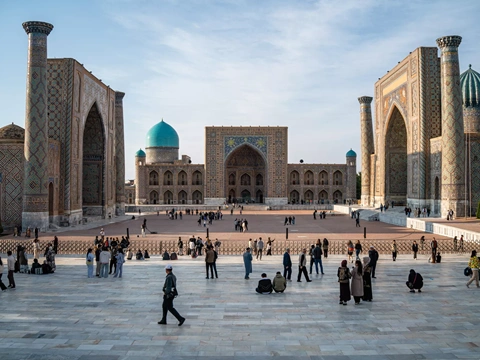
Inside the Fight To Preserve Samarkand’s Ancient Wonders
With earthquakes, weather, tourism and time threatening some of the world's most celebrated Islamic architecture, restorers ensure that the knowledge behind the monuments survives alongside the buildings themselves.