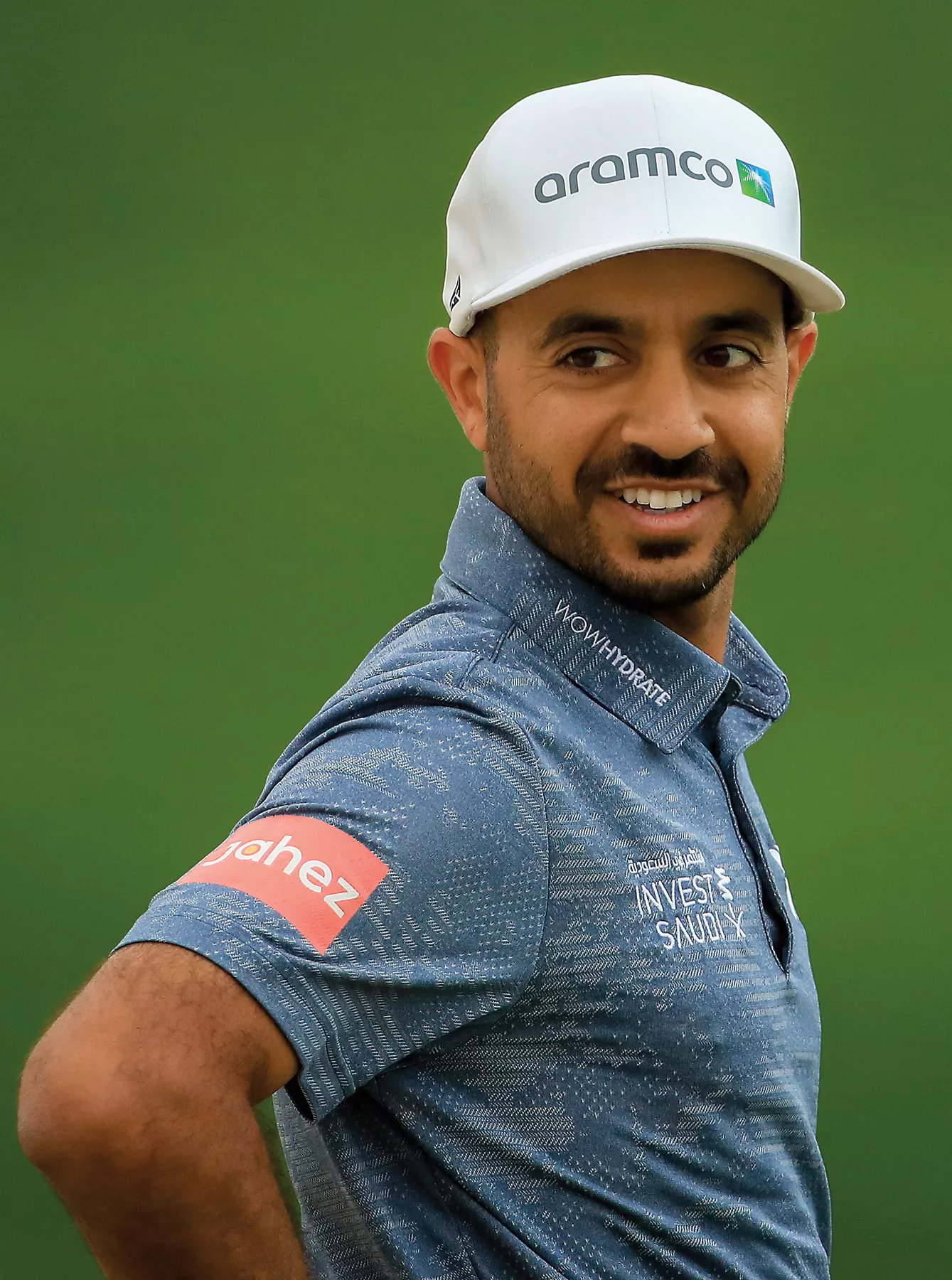
How Othman Almulla's Journey Reflects the Growth of Golf in the Arab World
History
Sports
Arab Gulf
Students trace how a sport introduced from outside can be adopted, adapted and eventually become locally meaningful.
The following activities and abridged text build off "Othman Almulla Embodies Arab World’s Dream of a Golf Championship," written by Michael Shagoury.
WARM UP
Scan the article's photos and captions to predict its main idea.
IF YOU ONLY HAVE 15 MINUTES ...
Analyze how golf first reached the Arab world and trace its transformation from an exclusive pastime into a growing regional sport.
IF YOU ONLY HAVE 30 MINUTES ...
Interpret how Othman Almulla’s career reflects the development of golf across the Arab world and its ambitions for future champions.
VISUAL ANALYSIS
Examine photographs from the article to interpret how people, places and tournaments illustrate golf’s changing role in Arab society.
Othman Almulla Embodies the Arab World’s Dream of a Golf Champion
Directions: As you read, watch for highlighted vocabulary words. Use context clues to predict their meanings, then check your understanding. After reading, answer the questions.
The smooth green fairways and polished clubhouse might make visitors think they are at a famous golf course in Arizona or California. But the Arabic signs tell a different story. This is Riyadh, Saudi Arabia, home of the PIF Saudi International, one of the region's most important professional golf tournaments.
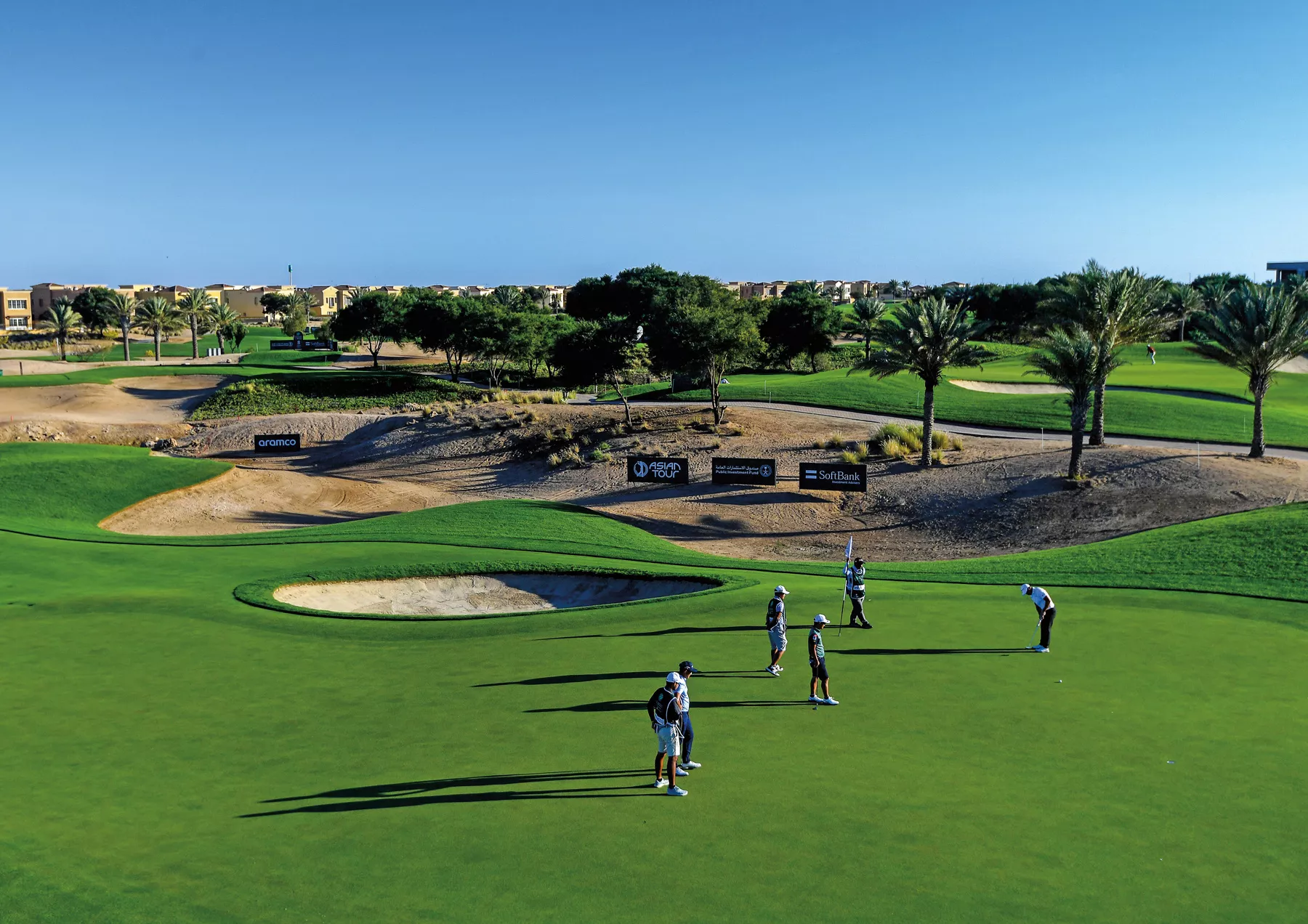
Among the competitors is Othman Almulla, Saudi Arabia's first professional golfer. More than any single victory, Almulla represents the remarkable rise of golf across the Arab world. His journey—from a sand course in Dhahran to competing against the world's best players—reflects how the sport has grown throughout the Gulf.

Today, the Arabian Gulf hosts more than 10 internationally recognized tournaments. The Arab Golf Federation, representing 17 countries, has set an ambitious goal: produce an Arab major champion by 2035. To reach that goal, golf organizations are expanding youth programs, improving training facilities, and creating more opportunities for young athletes. Although golf in the Middle East may seem new, its history goes back more than a century.
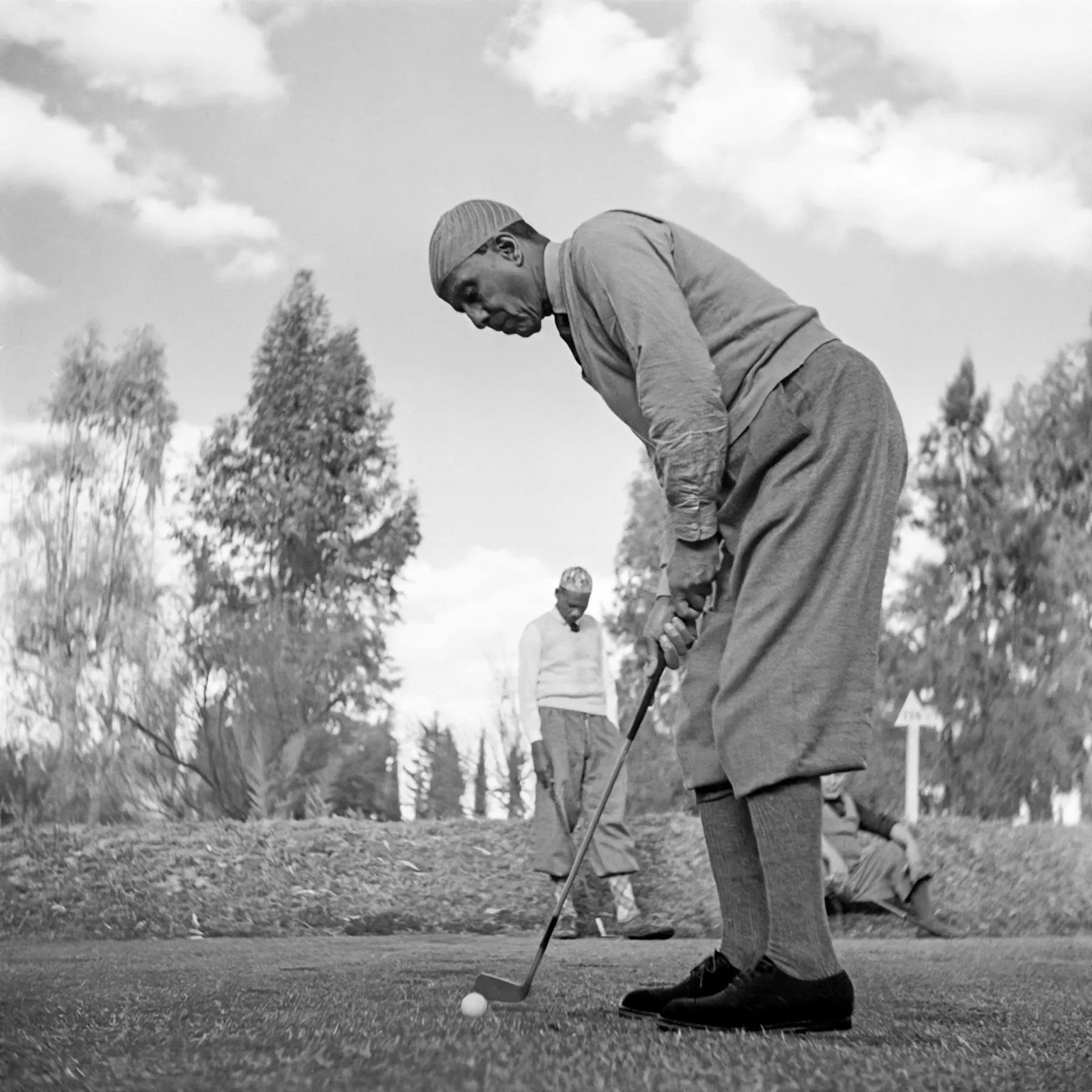
Although golf may seem like a recent sport in the region, its history stretches back more than a century.
Modern golf began in Scotland during the 1400s. By the late 1800s, European diplomats, tourists, and businesspeople introduced the game to North Africa. Morocco and Egypt built some of the region's earliest courses, including Tangiers Golf Club in 1897 and the Mena House course near Egypt's pyramids.
These early courses mainly served foreigners and wealthy visitors. Historian David Lesch explains that golf was largely an exclusive pastime rather than a sport for local communities.
The sport spread farther during the 1930s as oil exploration expanded across the Gulf. Oil companies built courses for employees in Bahrain, Kuwait, and Saudi Arabia. Because grass was scarce, many were sand courses carved directly into the desert. One of the best known was the Aramco Rolling Hills Golf Club in Dhahran.

Even with these developments, golf remained uncommon among local citizens. That began to change when governments and sports leaders recognized the game's potential. Morocco's King Hassan II promoted golf by opening Royal Golf Dar Es Salam in 1971 and launching the Hassan II Trophy tournament. Three years later, the Arab Golf Federation was established to coordinate the sport across the region. During the 1980s, countries such as the United Arab Emirates invested in championship courses, including Dubai's Emirates Golf Club, the Middle East's first all-grass championship course.
While golf was expanding, Almulla's own story was just beginning.
As a child in Dhahran during the 1990s, Almulla dreamed of becoming a football player. When his grades slipped, however, his mother would not let him continue playing. Looking for another activity, he tried golf with a friend.
He disliked it at first. The sand course looked nothing like the lush courses he had seen on television, and losing to players he usually beat in football filled him with frustration. Instead of quitting, however, he returned the next day determined to improve.
Between 2003 and 2013, Almulla won regional tournaments and qualified for international competitions. Even so, becoming a professional golfer seemed unlikely because opportunities in Saudi Arabia were still limited.
Everything changed in 2014. After losing the lead on the final hole of a tournament in Kuwait, Almulla went into the restroom and cried. Looking in the mirror, he realized how much the game meant to him. He made a commitment to keep pursuing his dream instead of walking away from golf.
That decision changed his future. In 2016, he helped Saudi Arabia win its first Pan Arab Championship. A few years later, Golf Saudi invited him to become the country's first professional golfer.
Today, Almulla's career reflects a much larger story. The Arab Golf Federation now offers scholarships and training opportunities for young players, while former golfers help lead national golf organizations. According to a 2024 report from the R&A, golf participation in the Middle East increased by 238 percent between 2012 and 2024.
For Almulla, the greatest reward is watching children arrive at golf courses eager to play. His journey mirrors the transformation of golf in the Arab world. What began as an imported sport for a small group of people is becoming a homegrown game that inspires a new generation of players—and perhaps, one day, an Arab major champion.

The Arab Golf Federation now offers youth programs and scholarships that allow talented juniors to train abroad. Participation is rising quickly. According to a 2024 report from the R&A, a leading body that monitors golf participation around the world, golf participation in the Middle East increased by 238 percent between 2012 and 2024.
Former players are also taking leadership roles in golf organizations, helping guide the next generation. Almulla believes this shift will be transformational. Other Arab golfers are now following similar paths, including players from Jordan, Egypt, Tunisia, Oman, and Morocco. Women golfers are also making strides, showing that the sport’s growth includes everyone.
Other lessons
Teaching Empathy: Five Classroom Activities From AramcoWorld
For the Teacher's Desk
Help students build empathy and community for the academic year with AramcoWorld’s stories and Learning Center lessons.
Learning Center Teaching Tip: Stories That Develop Media Literacy
For the Teacher's Desk
AramcoWorld stories help students learn how media is made, whom it’s for and how meaning is shaped through deliberate choices.
How Can Culture Build Bridges Across the World?
Language Studies
History
Central Asia
Europe
South Asia
How can one village inspire the world? Discover how literature and cultural heritage foster understanding across borders.